
Good News Media Investigative Reporters
All of the reporters donate their time to write or repost articles, report and investigate for GoodShepherdMedia.net


 Founded Good Shepherd Media to do the kind of reporting that keeps local government honest —
 I Martinez – Investigative Reporter – I Martinez – Investigative Reporter –Business Fraud • Misuse of Land • Zoning Violations • City Responses to Local Issues Santa Clarita, CAIsabella Martinez covers the systems and decisions that shape Santa Clarita’s neighborhoods and business community. Her reporting focuses on business fraud, misuse of land, zoning violations, permitting, development disputes, and the way city agencies respond to complaints from residents and businesses. She follows public records, planning documents, enforcement actions, and financial records to explain what happened, who was responsible, and how local government responded.Isabella approaches local accountability reporting with a research-driven style and a strong interest in making complicated municipal issues understandable to the public. Her work examines whether rules are being applied consistently and whether residents receive meaningful answers when they raise concerns about development, land use, or business practices. |
Daniel Collins reports on crime and public safety across Santa Clarita, with particular attention to illegal business activity, recurring criminal problems, police responses, and the effectiveness of local enforcement. He examines incident patterns, public records, calls for service, enforcement actions, and statements from public officials to determine how agencies respond when residents report problems. Daniel’s reporting asks a straightforward question: are local systems actually addressing recurring problems, or are they allowing them to continue? He covers police and city responses while giving residents clear information about public-safety concerns, enforcement decisions, and the steps being taken to make neighborhoods safer. |
 B Carrington B Carrington
Senior Investigative Reporter | Government Fraud • Public Corruption • Official Misconduct Carrington is a seasoned investigative reporter who has spent years working behind the scenes on stories that others ultimately received the credit for. He has built his experience through research, document review, source development, records analysis, and the patient pursuit of facts that powerful people would sometimes prefer to remain buried. Now, Carrington is stepping into the spotlight. At Good Shepherd News Media, B. focuses on investigations involving government fraud, public corruption, official misconduct, abuse of authority, taxpayer accountability, and failures within government agencies. His work examines allegations brought forward by government employees, public officials, whistleblowers, and ordinary citizens who believe something is wrong and want the facts independently examined. Carrington’s approach is straightforward: follow the evidence, document the facts, ask difficult questions, and let the evidence speak for itself. He understands that corruption investigations rarely begin with a complete story. They often begin with a complaint, an unexplained transaction, a questionable government decision, conflicting records, or a citizen who simply cannot get an answer. Carrington follows those threads through public records, government documents, financial information, interviews, correspondence, and other verifiable sources. After years of working without the recognition that often accompanies investigative journalism, B. Carrington is now putting his own name behind his work. His mission is simple: investigate the powerful, protect the public’s right to know, and give citizens a voice when government accountability appears to have failed. Beat: Government Fraud • Public Corruption • Official Misconduct • Government Accountability • Whistleblower Investigations • Taxpayer Fraud • Abuse of Authority |
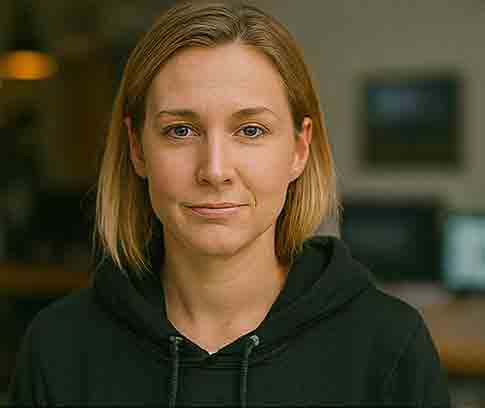
A. Okafor — Housing & Development Reporter Aisha Okafor covers the ground truth of housing policy — tracking rent trends, zoning fights, and Section 8 policy across Southern California to answer the question that matters most to residents: when a neighborhood changes, who actually wins, and who pays for it? Aisha’s reporting is defined by its dual approach. She pairs firsthand tenant voices — the people living the consequences of a zoning vote or a rent increase — with hard data and mapping that reveal the broader patterns beneath individual stories. The result is coverage that neither drowns in statistics nor rests on anecdote alone, but shows readers both the human stakes and the systemic forces driving them. Before joining the newsroom, Aisha reported for a regional housing lab, where she developed the data-driven, tenant-centered approach that now defines her beat — treating housing not as an abstract policy debate, but as the defining economic reality shaping who gets to stay in their community and who gets priced out of it. Beats & strengths: Rent trends & affordability · Zoning & land use · Section 8 & housing policy · Tenant advocacy · Data mapping & visualization |

S. Mendez — Education Reporter Sofía Mendez covers the institutions that shape a generation’s future — school boards, community colleges, and career-technical education pipelines across the Inland Empire. Her reporting consistently returns to the questions that matter most: what are the actual outcomes for students, and how do budget decisions made in boardrooms translate into what happens inside the classroom? What sets Sofía’s work apart is who she talks to and how. Known for sourcing students, teachers, and parents across languages, she builds trust in communities that other education reporters often overlook — ensuring that the people most affected by education policy are the ones telling the story, not just the officials making it. That multilingual sourcing gives her coverage a depth and authenticity that budget spreadsheets and board minutes alone can’t provide. From career-tech pipelines preparing students for the workforce to the funding fights that determine which programs survive, Sofía’s beat is a reminder that education policy isn’t abstract — it’s measured in classrooms, teachers, and the students whose futures hang in the balance. Beats & strengths: School boards & governance · Community colleges · Career-technical education · Student outcomes · Multilingual sourcing · Education budgets |

D. Park — Local City News Reporter Dan Park lives where most people tune out — city council agendas, budget audits, and the late-night sessions where policy actually gets decided. His beat is the machinery of local government itself: how an idea moves from committee discussion to enacted law, and what it costs taxpayers along the way. Dan’s edge comes from having worked inside the system he now covers. As a former legislative aide, he understands the procedural terrain most reporters miss entirely — he knows where amendments get quietly buried, how consent calendars get used to avoid scrutiny, and which committee votes actually determine an outcome long before it reaches a public hearing. That insider fluency lets him explain city governance in terms residents can follow, without losing the procedural precision that holds officials accountable. Whether it’s a late-night budget vote or a zoning amendment slipped onto a crowded agenda, Dan’s reporting operates on a simple premise: the process is the story, and the public deserves to see how the sausage actually gets made. Beats & strengths: City council & governance · Budget audits · Legislative process · Policy tracking · Procedural accountability · Public agendas & meetings |
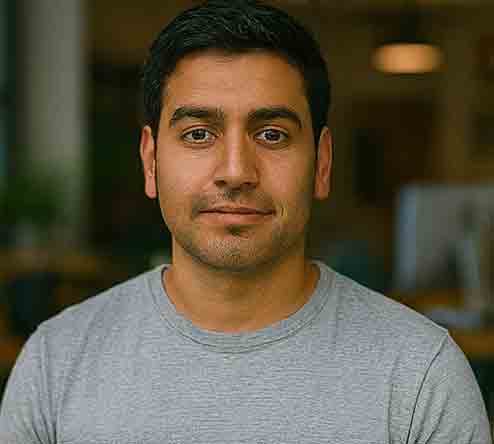
P. Menon — Environment & Water Reporter Priya Menon covers the resource fights that will define the Central Valley’s future — drought, groundwater adjudications, and air quality — reporting that sits at the intersection of science, policy, and survival for the farmers and residents who depend on both. Priya’s background in environmental engineering sets her apart on this beat. Where water rights disputes and air quality reports can quickly become impenetrable to general readers, she has the technical training to read the underlying science herself — and the reporting instinct to translate it into practical takeaways that matter to the people living with the consequences, whether that’s a farmer weighing next season’s water allocation or a family deciding whether it’s safe to let their kids play outside. In a region where water is currency and air quality is a public health crisis playing out in slow motion, Priya’s reporting bridges the gap between scientific studies and the everyday decisions residents and growers have to make because of them. Beats & strengths: Drought & water policy · Groundwater adjudication · Air quality · Environmental engineering · Agricultural impact · Science translation |
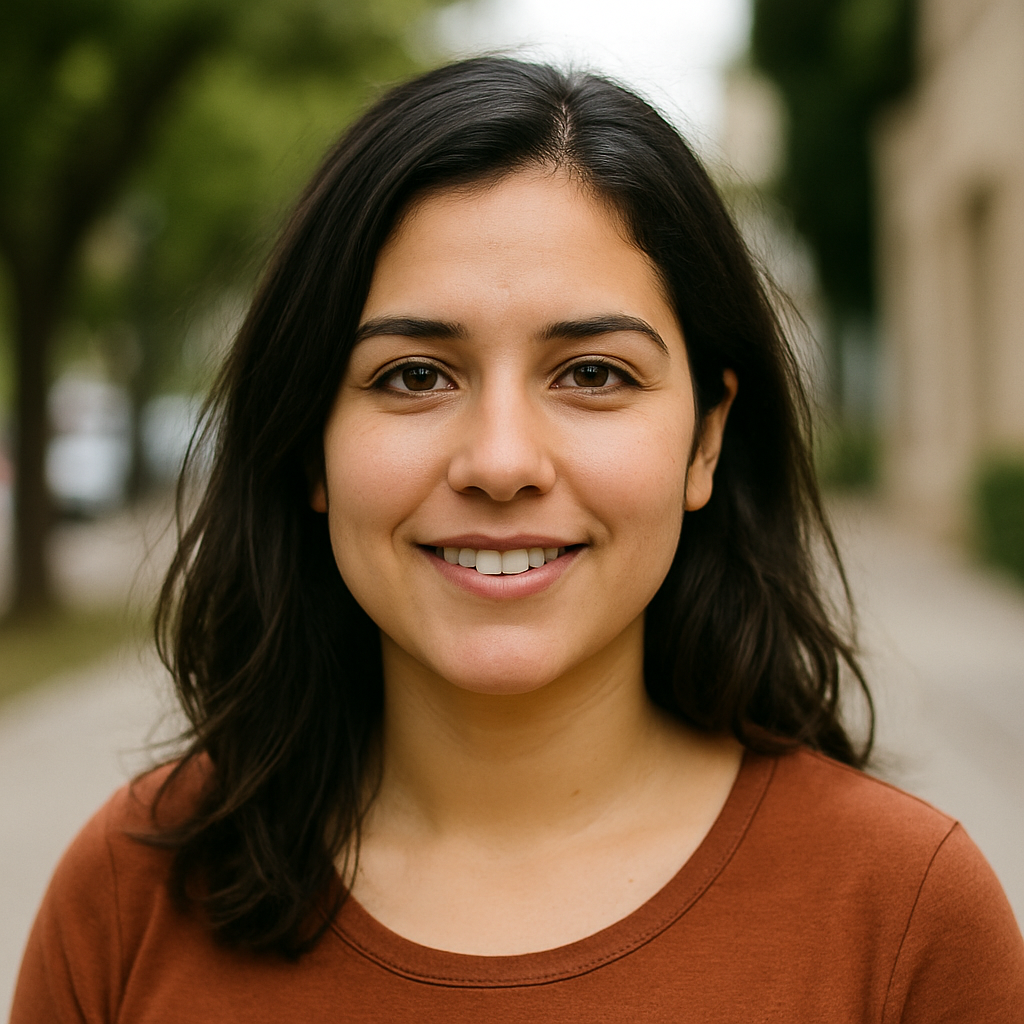
M. Torres — Public Safety Reporter Miguel Torres covers crime trends, emergency response, and community oversight with a deliberate emphasis on context over spectacle — reporting that resists the reflexive, incident-driven coverage that so often defines public safety journalism. Rather than chasing headlines, Miguel routinely files for the records that reveal the patterns behind them: use-of-force reports, dispatch logs, and disciplinary records that most outlets never request and most departments would prefer stayed buried. That persistence allows his reporting to answer harder questions than “what happened” — questions like whether a department’s response times are equitable across neighborhoods, whether use-of-force incidents cluster in predictable ways, and whether officer discipline is applied consistently. In a beat where sensationalism is the path of least resistance, Miguel’s approach is a corrective: public safety reporting that treats residents as people who deserve real accountability data, not just the next alarming clip. Beats & strengths: Crime trends & analysis · Emergency response · Community oversight · Use-of-force records · Police discipline & transparency · Public records requests |

E. Petrov — Business & Labor Reporter Elena Petrov tracks small-business trends, wage disputes, and the sprawling logistics economy that keeps Southern California moving — reporting that follows the money from venture capital deals to public contracts, always circling back to the workers whose labor those numbers represent. Elena brings a rare analytical edge to the beat. A lifelong chess competitor and math enthusiast, she approaches complex financial disclosures and labor filings the way she approaches a board position — methodically, several moves ahead, spotting patterns and discrepancies that a surface read would miss. That rigor shows in her work: she doesn’t just report a wage dispute or a contract award, she traces the full sequence of decisions that led to it. At its core, Elena’s reporting is built on a simple conviction — that the numbers in a spreadsheet represent real people, and that business journalism owes those people the same scrutiny usually reserved for the executives and institutions above them. Beats & strengths: Small business & labor · Wage disputes · Logistics economy · Venture capital & public contracts · Financial analysis · Worker-focused reporting |
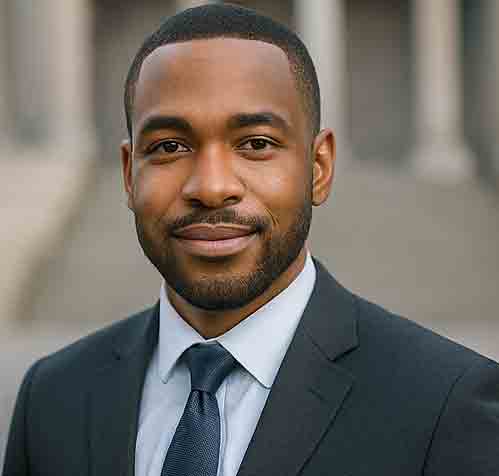
J. Carter — Politics & Policy Reporter Jamal Carter explains bills, budgets, and ballot measures without the spin — cutting through legislative jargon to show readers what a piece of state policy actually does, not just what its sponsors say it does. Jamal’s specialty is scale: he tracks how decisions made in the Capitol ripple outward, translating statewide budget lines and policy shifts into their concrete effects on cities and counties across California. It’s a beat that requires connecting dots most coverage leaves separate — the line between a line item in the state budget and a cut program in a local school district, or between a new mandate and the compliance costs it creates for a county government. He’s also known in the newsroom for his knack for clean, visual explainers — turning dense legislative text into graphics and breakdowns that make policy legible to readers who don’t have time to read the bill itself. Beats & strengths: State legislation & budgets · Ballot measures · State-to-local policy impact · Visual explainers · Policy analysis |

G. Chen — Technology & Disinformation Reporter Grace Chen investigates platform policies, government records, and the real-world consequences of online claims — reporting that treats disinformation not as an abstract internet problem, but as something with measurable offline impact. He blends OSINT techniques with traditional shoe-leather reporting to verify what’s true, debunk what isn’t, and trace how false claims move from online spaces into public consequences. Before joining the newsroom, Grace spent several years working at a handful of tech firms, giving him an insider’s fluency in how platforms actually operate — the policies, incentives, and blind spots that shape what spreads and what gets moderated. Success in that industry, including equity from his time at one of those firms, ultimately gave him the freedom to step away from the tech sector and dedicate himself full-time to the accountability journalism he does now. That combination — technical fluency earned from the inside, paired with an investigator’s skepticism — makes Grace one of the few reporters equally comfortable parsing a platform’s content policy and tracing how a viral falsehood translated into real harm. Beats & strengths: Platform policy & OSINT · Disinformation tracking · Tech industry accountability · Public records · Online-to-offline harm verification |
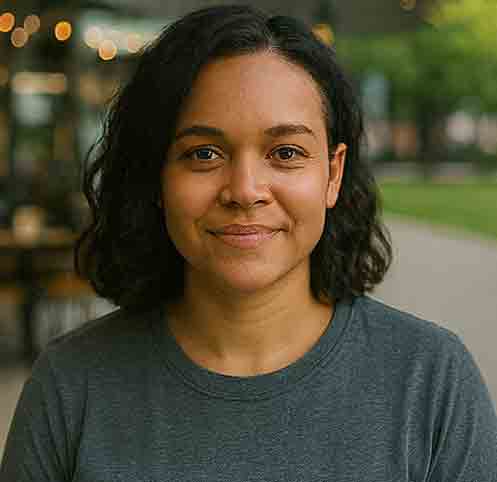
M. Delgado — Investigative Reporter Maya Delgado digs into public records, procurement data, and whistleblower tips to uncover waste, fraud, and abuse — the unglamorous, document-heavy work that underpins the newsroom’s biggest accountability stories. Her approach is methodical: follow the paper trail wherever it leads, verify everything twice, and let the records speak before anyone else does. Before joining Good Shepherd Media, Maya spent five years at a community watchdog nonprofit, where she built the investigative instincts and records fluency that now define her work — she has filed more than 300 PRA and FOIA requests over the course of her career, a track record that reflects both persistence and a refusal to take “no records exist” at face value. Fluent in Spanish, Maya’s language skills extend the newsroom’s reach into communities that English-only outlets routinely miss, ensuring that sources and whistleblowers aren’t limited by which language they’re most comfortable speaking in. Off the clock, Maya’s a fixture at newsroom potlucks — her contributions are consistently the first dish gone. Beats & strengths: Public records & procurement · Whistleblower reporting · Waste, fraud & abuse investigations · Bilingual sourcing (Spanish) · PRA/FOIA strategy |
|
West Hollywood Ca
Mark Reynolds covers West Hollywood with a focus on crime, city responses to local problems, illegal business activity, public safety, and the relationship between local government and the business community. He examines how city policies affect residents, business owners, workers, and visitors, while tracking how officials respond to complaints and recurring quality-of-life issues. Mark brings a practical local perspective to accountability reporting. His work looks beyond official statements to examine what is happening on the ground, how businesses and residents are affected, and whether city responses are effective. He is particularly interested in transparency, consistent enforcement, and constructive relationships between local businesses and government. |
Natalie Sanchez covers crime and public safety throughout the San Fernando Valley. She reports on violent crime, theft, gang activity, repeat offenses, neighborhood safety concerns, and the impact crime has on residents and local businesses. Her reporting places particular emphasis on obtaining answers from law enforcement and city officials when communities believe their concerns are not being adequately addressed. Natalie is committed to fact-based local reporting that keeps victims, residents, and community concerns at the center of the story. She follows cases beyond the initial headlines, examines public records and official responses, and reports on whether policies and enforcement strategies are producing meaningful results. |

J. Whitfield — Courts & Justice Reporter Jordan Whitfield covers civil and criminal courts across Orange County and beyond, with a sustained focus on transparency, due process, and judicial accountability. Where other outlets skim the docket, Jordan reads the filing — every motion, every exhibit, every procedural wrinkle that determines whether a case is decided on the merits or on a technicality. That instinct comes from experience most courts reporters don’t have: Jordan started as a records clerk, spending years inside the machinery of the court system before ever picking up a byline. It’s a background that shows in the work — Jordan doesn’t just report on hearings, but translates dense legal filings into plain English that readers without a law degree can actually follow, demystifying a system that too often relies on its own opacity. Known for live-blogging major hearings gavel-to-gavel, Jordan has built a reputation for real-time accuracy in a beat where delayed or secondhand reporting can distort the public record. Whether covering a high-profile criminal trial or a quiet civil motion with outsized consequences, Jordan’s reporting is grounded in the same principle: the public has a right to understand what happens inside a courtroom, not just the outcome that gets announced outside of it. Beats & strengths: Civil & criminal courts · Judicial accountability · Due process · Records & filings analysis · Live courtroom coverage |

L. Nakamura — Data & Accountability Reporter L. Nakamura brings a rare skill set to the newsroom: the ability to turn raw, unwieldy government data into tools the public can actually use. She builds the scrapers and interactive databases that let readers search campaign finance records, police stop data, and government contracting histories for themselves — turning opaque bureaucratic filings into searchable public accountability. Beyond her own reporting, Nakamura serves as the newsroom’s data backbone, training the full team on data hygiene and reproducible analysis so that every investigation built on numbers can withstand scrutiny — both editorial and legal. Her expertise is grounded in a career most journalists don’t share: as a cybersecurity specialist, she has worked alongside government institutions and their subcontractors, gaining an insider’s understanding of how sensitive data systems are built, secured, and — sometimes — mishandled. That technical fluency is what allows her to find the data other reporters don’t know how to look for, and to verify it once she does. Beats & strengths: Data journalism · Campaign finance · Police & public safety records · Government contracting · Cybersecurity · Reproducible analysis & data training |


 Natalie Sanchez – Crime • Law Enforcement Accountability • Community Safety