


Doxing VS the First Amendment: U.S. and California Law
YOUR IP ADDRESS IS: 144.208.71.49 This is your computer Internet Protocol Address A locator that leads to your very machine!
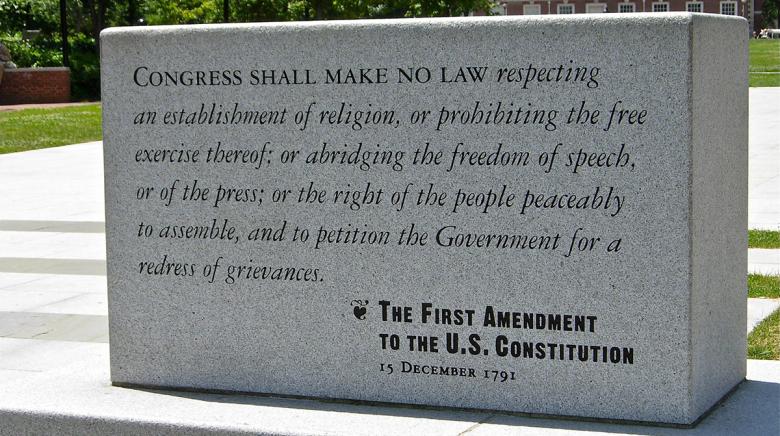
Congress shall make no law respecting an establishment of religion, or prohibiting the free exercise thereof; or abridging the freedom of speech, or of the press; or the right of the people peaceably to assemble, and to petition the Government for a redress of grievances.
- Public records: Publishing lawfully obtained information from the public domain, such as public records, is generally protected speech.
- Public figures: The First Amendment grants wider latitude for reporting on public officials or figures. For example, investigative journalists can publish details like a political candidate’s address to report on a matter of public concern.
- Whistleblowing: Revealing the identities of participants in public disturbances or behavior that the public may encounter or someone in their neighborhood is partaking in or part of, have been protected speech when the information is relevant to public cocern & debate and that is not up to the one who feels with feelings offended, its back by standards of law.
THERE IS NO LAW THAT CAN PREVENT PEACEFUL PUBLIC ASSEMBLY THAT IS NON VIOLENT PEACEFUL AND LAWFUL BEHAVIOR NOT TO DISTURB THE PEACE OR BLOCK THOROUGHFAIR OR WALKWAYS AND NOT ON PRIVATE PROPERTY.
HOWEVER THERE IS THE 1ST AMENDMENT AND THIS IS A NEWSPAPER AND THIS IS MATTERS OF PUBLIC INTEREST & CONCERN AND PUBLIC SAFETY AS ELDERLY NEED THEIR MONEY AND SHOULD NOT HAVE ATTORNEY BACKED BY THE CALIFORNIA BAR DEFEND THEIR THEFT OF ELDERLY MONIES PAID FOR A TRUST NEVER RECIEVED TO THIS VERY DATE!
SO ENJOY OUR FREEDOMS BABY! The USA is one of a kind and deserves resepect!
Definition of “Doxing.” Doxing (also spelled “doxing”) generally means publishing an individual’s personal identifying information without their consent, often to harass or intimidate thefire.org. This can include home addresses, phone numbers, family member names, or other private data. Although doxing is widely criticized, U.S. law recognizes a strong presumption that truthful speech on matters of public concern is protected by the First Amendment. The First Amendment to the U.S. Constitution provides: “Congress shall make no law … abridging the freedom of speech, or of the press; or the right of the people peaceably to assemble” law.cornell.edu. Likewise, the California Constitution expressly states that “A law may not restrain or abridge liberty of speech or press” law.justia.com. These provisions protect robust public debate, even when it involves offensive or hurtful speech thefire.orglaw.justia.com.
Free Speech and Public Concern. The Supreme Court has repeatedly held that publishing truthful information on public matters enjoys the highest protection. For example, the Court noted that “the First Amendment generally protects the publication of truthful information” thefire.org, reflecting the principle that “state action to punish the publication of truthful information seldom can satisfy constitutional standards” thefire.org. In Smith v. Daily Mail Publishing Co. (1979), the Court struck down a state law that barred naming juvenile offenders, emphasizing that newspapers and other speakers cannot be punished for publishing lawfully obtained facts (the so-called “Daily Mail principle”) thefire.org. Likewise, Bartnicki v. Vopper (2001) held that the First Amendment protects a publisher who retransmits truthful information obtained unlawfully by a third party, so long as the publisher itself did not participate in any wrongdoing thefire.org. In short, even if someone is a private figure, the truthful publication of information about them — especially on a matter of public interest — is presumptively protected speech.
Scope of Protected Speech. U.S. law also broadly protects speech that many find offensive. The flag‑burning decision Texas v. Johnson (1989) confirmed that protecting controversial or disturbing speech is a “bedrock principle” of the First Amendment thefire.org. Similarly, Snyder v. Phelps (2011) upheld Westboro Baptist Church’s right to picket military funerals with hateful signs, explaining that “we have chosen to protect even hurtful speech on public issues” because punishing it would stifle public debate thefire.org. And New York Times Co. v. Sullivan (1964) famously declared a “profound national commitment” to uninhibited debate on public issues, tolerating even “vehement, caustic, and sometimes unpleasantly sharp attacks on government and public officials” thefire.org. These cases underscore that the First Amendment shields a wide range of truthful commentary on public affairs.
Exceptions: Limits on Speech. Not all speech is protected. Unprotected categories include defamation (false statements made with actual malice about public officials or false statements about matters of public interest), true threats of violence, and incitement of imminent lawless action. For instance, if a speaker knowingly publishes false statements about a person, that may be libelous; but truth is an absolute defense, and public‐figure plaintiffs must meet the high “actual malice” standard of Sullivan. Likewise, if a speaker’s actions constitute a true threat (e.g. Virginia v. Black), or if the speech is intended and likely to produce imminent violence (Brandenburg v. Ohio, 1969), then it falls outside First Amendment protection. Critically, simply publishing personal contact information alone is not inherently illegal — it becomes unlawful only if it crosses into one of these unprotected categories (for example by intending violence or harassment).
Ion Popa left seven messages containing racist insults on the answering machine of the head federal prosecutor in D.C. — Eric Holder, who eventually became attorney general. He was convicted of telephone harassment, which banned all anonymous calls made “with intent to annoy, abuse, threaten, or harass.”
- We also have the True Threats Test – Virginia v. Black is most comprehensive Supreme Court definition
- We also have the Miller v. California – 3 Prong Obscenity Test (Miller Test) – 1st Amendment 1st
- We also have the Watts v. United States – True Threat Test – 1st Amendment
- We also have the Clear and Present Danger Test
- We also have the Gravity of the Evil Test
- We also have the Miller v. California – 3 Prong Obscenity Test (Miller Test) – 1st Amendment 1st
- Miller v. US, 230 F 486 at 489 The claim and exercise of a Constitutional right cannot be converted into a crime.
- Norton v. Shelby County, 118 US 178 (1886) An unconstitutional “law ” is not a law; it confers no rights, imposes no duties, and affords no protection.
- Chief Justice John Marshall Marbury v. Madison, 5 US (1Cranch) 137, 174, 176 (1803) All laws which are repugnant to the Constitution are null and void. Marbury v. Madison, 5 U.S. (1 Cranch) 137 (1803), was a landmark U.S. Supreme Court case that established the principle of judicial review in the United States, meaning that American courts have the power to strike down laws and statutes that they find to violate the Constitution of the United States
- State v. Sutton, 63 Min 147, 65 NW 262, 30 LRA630, AM ST 459 When any court violates the clean and unambiguous language of the Constitution, a fraud is perpetuated, and no one is bound to obey it.
- Norton vs. Shelby County, 118 US 425 p. 442. “An unconstitutional act is not law; it confers no rights; it imposes no duties; affords no protection; it creates no office; it is in legal contemplation, as inoperative as though it had never been passed.”
- Bell v. Hood, 71 F.Supp., 813, 816 (1947) U.S.D.C. — So. Dist. CA. History is clear that the first ten amendments to the Constitution were adopted to secure certain common law rights of the people, against invasion by the Federal Government.”
- SIMMONS v US, supra. “We find it intolerable that one constitutional right should have to be surrendered in order to assert another”
- Sable Communications of California v. Federal Communications Commission (1989)
When Congress acted to restrict this growing industry, Sable Communications filed suit in federal district court seeking an injunction against enforcement of the obscene and indecent portions of Section 223(b). The district court denied the injunction, upheld the obscenity portion, and struck down the indecency section of Section 223(b). - United States Supreme Court Rosenfeld v. New Jersey (1972) it is well understood that the right of free speech is not absolute at all times and under all circumstances. overly broad and violative of the First Amendment” State v. Rosenfeld 62 N.J. 594 (1973) 303 A.2d 889
- Miranda vs Arizona, 384 U.S. 436 p. 491 “Where rights secured by the Constitution are involved, there can be no rule making or legislation which would abrogate them.”
- Cohen v. California (1971) 403 U.S. 15 (1971), The Supreme Court established that the government generally cannot criminalize the display of profane words in public places. The Court rejected a fighting words application to a young man who wore a leather jacket with the words “fuck the draft” on it in a public courthouse.
-
 Held: Absent a more particularized and compelling reason for its actions, the State may not, consistently with the First and Fourteenth Amendments,
 make the simple public display of this single four-letter expletive a criminal offense.
 Pp. 403 U. S. 22-26. Cohen v. California, 403 U.S. 15 (1971)1 Cal. App. 3d 94, 81 Cal. Rptr. 503, reversed.
HARLAN, J., delivered the opinion of the Court, in which DOUGLAS, BRENNAN, STEWART, and MARSHALL, JJ., joined. BLACKMUN, J., filed a dissenting opinion, in which BURGER, C.J., and BLACK, J., joined, and in which WHITE, J., joined in part, post, p. 403 U. S. 27.
- People v. Boomer (Mich. Ct. App.) (2002) “Allowing a prosecution where one utters ‘insulting’ language could possibly subject a vast percentage of the populace to a misdemeanor conviction,”
- A.V v St Paul 1992 Justices ruled as unconstitutional a St. Paul ordinance classifying as hate speechwords “that insult, or provoke violence, ‘on the basis of race, color, creed, religion or gender.’ ”
- Karlan v. City of Cincinnati (1974) Police officers should not be considered “fighting words,” because police officers are trained to exercise a higher degree of constraint than the average citizen.
- Reno v. American Civil Liberties Union (1997)
speech on the Internetis entitled to the same high degree of First Amendment protection extended to the print media as opposed to the reduced level given the broadcast media. - Bible Believers v. Wayne County (6th Cir.) (2015)
The case stands for the principle that the First Amendment protects unpopular speech and that government officials should not sanction a heckler’s veto. - Albert Krantz v. City of Fort Smith
A 1998 decision by the Eighth Circuit Court of Appeals concerning the distribution and posting of flyers and leaflets. In this ruling informed by the First Amendment’s protection of freedom of expression. - Lucas v. Arkansas (1974)416 U.S. 919 (1974)
The single-sentence Supreme Court decision in Lucas v. Arkansas, 416 U.S. 919 (1974), vacated and remanded this case, along with Kelly v. Ohio, Rosen v. California, and Karlan v. City of Cincinnati, to a state court for further consideration in light of the Court’s opinion in Lewis v. City of New Orleans (1974). Court remanded convictions after saying ordinance prohibiting fighting words violated First Amendment - Uzuegbunam v. Preczewski (2021) authorities asked him to stop on the basis that others had complained and that the college prohibited any such speech that “disturbs the peace and/or comfort of person(s).”
- Lewis v. City of New Orleans (1974) The U.S. Supreme Court in 1974 overturned a woman’s conviction for cursing at police. Lewis had overturned a New Orleans ordinance on the basis that it violated the First and Fourteenth Amendments by being overbroad in its attempt to prohibit vulgar and offensive speech and “fighting words,” as recognized in Chaplinsky v. New Hampshire (1942) and Gooding v. Wilson (1972).
- City of Houston v. Hill (1987) In City of Houston v. Hill, 482 U.S. 451 (1987), the Supreme Court found a city ordinance prohibiting verbal abuse of police officers to be unconstitutionally overbroad and a criminalization of protected speech.
- STATE of Nebraska, appellee, v. Darren J. DRAHOTA – Darren Drahota sent a couple of anonymous insulting emails to William Avery, Drahota’s former political science professor, who was running for the Nebraska Legislature at the time. (Avery was eventually elected and served two terms.) Drahota was convicted of disturbing the peace for sending those emails, but the conviction was reversed in 2010 by the Nebraska Supreme Court. (I have a soft spot in my heart for this case, because it was the first First Amendment case I ever argued in court.)
- STATE of Iowa, Appellee, v. William James FRATZKE, Appellant – William Fratzke was convicted of harassment “because he wrote a nasty letter to a state highway patrolman to protest a speeding ticket.” The Iowa Supreme Court (1989) reversed, on First Amendment grounds.
- State of Wisconsin v. Thomas G. Smith – Thomas Smith was convicted of disorderly conduct and “unlawful use of a computerized communication system” for leaving two vulgar, insulting comments on a police department’s Facebook page. A one-judge Wisconsin Court of Appeals decision (2014) reversed. (Note that such insults aren’t unprotected “fighting words” because they aren’t face-to-face and thus aren’t likely to lead to an immediate fight.)
- Commonwealth v. Bigelow – Harvey Bigelow sent two letters to Michael Costello, an elected town council member; both were insulting, and one was vulgar. Bigelow was convicted of criminal harassment, but the Massachusetts high court (2016) reversed: “Because these letters were directed at an elected political official and primarily discuss issues of public concern — Michael’s qualifications for and performance as a selectman — the letters fall within the category of constitutionally protected political speech at the core of the First Amendment.” And this was true even though the letters were sent to him at home. the case law link was above, but you can actually read the newspaper article of his exact doings here
- People v. Powers, (2011) 193 Cal.App.4th 158,166. (“We conclude that the recordings appellant left on the customer service line cannot constitute substantial evidence that appellant violated section 653m, subdivision (a) [California’s annoying phone calls law]. The messages are annoying rants concerning customer service. It is reasonable for someone to be annoyed by appellant’s language. But the vulgarities uttered cannot be described as obscene, especially in the context of a customer service line maintained to take complaints. Except in extreme cases, we doubt that a person whose job it is to receive consumer complaints has a right to privacy against unwanted intrusion.”) THE PEOPLE, v. DAVID THOMAS POWERS determined although they may be a little annoying they were NOT ILLEGAL!
- Ion Popa left seven messages containing racist insults on the answering machine of the head federal prosecutor in D.C. — Eric Holder, who eventually became attorney general. He was convicted of telephone harassment, which banned all anonymous calls made “with intent to annoy, abuse, threaten, or harass.”
- Zamos v. Stroud California Supreme Court, 2004 32 Cal.4th 958, 12 Cal.Rptr.3d 54, 87 P.3d 802 The tort of malicious prosecution includes continuing to prosecute a lawsuit discovered to lack probable cause. (This decision expands the tort, which previously was limited to commencing an action without probable cause.) Evidence to this effect is sufficient to defeat a special motion to strike a complaint for malicious prosecution.\
The legal frame (U.S. + California)
-
First Amendment (U.S.): Government can’t impose civil or criminal liability for speech except in narrow, well-defined categories (e.g., true threats, incitement, obscenity, defamation). Speech on matters of public concern in public forums gets the strongest protection. Congress.govLibrary of Congress Tile
-
California Constitution, art. I, § 2(a): “Every person may freely speak, write and publish … A law may not restrain or abridge liberty of speech or press.” California courts treat this clause as at least as protective as the federal First Amendment. JustiaCalifornia State University
California “harassment” and stalking statutes don’t reach protected speech
-
Civil harassment (CCP § 527.6): “Course of conduct” requires 2+ acts and “Constitutionally protected activity is not included”; “harassment” must seriously alarm/annoy and “serve no legitimate purpose.” If the acts are protected speech, they cannot support an order. (The statute says this in black-and-white.)
-
Stalking (Penal Code § 646.9): Also defines “course of conduct” and “credible threat” and again says constitutionally protected activity is not included.
What is “clear First Amendment-safe” literature?
Protected (examples)
-
Opinions, criticism, and advocacy on matters of public concern (even harsh or offensive), said in public forums (streets/sidewalks/online) without targeting private homes or making threats. Snyder v. Phelps protected vile funeral-picket signs because they addressed public issues in a public place. Library of Congress Tile
-
Speech without intent to threaten: The Supreme Court held you can’t criminalize speech as a “true threat” unless the speaker at least recklessly disregarded its threatening nature. This raised the bar for stalking/harassment prosecutions resting on words alone. (Counterman v. Colorado, 2023). Supreme Court
Not protected (examples)
-
True threats/intimidation (Virginia v. Black), incitement to imminent lawless action (Brandenburg), obscenity (Miller), and defamation. After a final adjudication that statements are defamatory, courts may enjoin repeating them; before trial, broad speech gags are usually an unconstitutional prior restraint. Justia Law+1OyezFindlawJustia
-
Targeted residential picketing, or broad buffer zones around clinics: content-neutral time, place, manner limits can be imposed, but they must be narrowly tailored; sweeping bans get struck down. (Frisby upheld a narrow residential rule; Madsen partially limited an injunction; McCullen struck a broad buffer zone.) Justia Law+1Library of Congress Tile
How “harassment” claims and injunctions collide with speech
-
Courts repeatedly warn against prior restraints and speech-based “harassment” injunctions that are vague or overbroad. Evans v. Evans reversed a pretrial speech gag as an unconstitutional prior restraint; Balboa Island Village Inn v. Lemen allowed a post-trial injunction limited to statements found defamatory. JustiaFindlaw
-
In protest contexts, courts allow narrow restraints aimed at unlawful conduct (trespass, threats, targeted home picketing) while leaving protected advocacy intact. (Huntingdon Life Sciences decisions illustrate drawing that line.) Findlaw
Anti-SLAPP: your fastest path to get a speech-based case tossed
If you’re sued in California over your posts, flyers, or comments, file an anti-SLAPP motion (CCP § 425.16). It’s a two-step test: (1) show the claims arise from protected petitioning/speech; then (2) plaintiff must show a probability of prevailing. If they can’t, the court strikes the claims and awards you fees. California courts instruct that § 425.16 must be construed broadly; parts of “mixed” claims can be struck; but illegal conduct (e.g., extortion) isn’t protected. FindlawJustia+1CourtListener
Somtimes principle of an argument upsets betas and losers that does not mean we have to care!
-
“Protected speech cannot be the ‘course of conduct.’”
“Constitutionally protected activity is not included within the meaning of ‘course of conduct’” in both CCP § 527.6 and Pen. Code § 646.9. If petitioner’s evidence is your nonthreatening posts/flyers about a public issue, it cannot satisfy the statute. Ask the court to deny/dissolve any TRO and deny an order after hearing on that basis. FindlawLegInfo -
“No threats, no imminence, no crime.”
Under Counterman, the State must prove at least recklessness as to a statement’s threatening nature for “true threats.” Mere repeated criticism isn’t enough. Supreme Court -
“Prior restraint is disfavored.”
Pretrial orders banning speech are presumptively invalid. If the other side seeks an injunction restricting your speech before any finding of falsity or illegality, cite Evans (invalid prior restraint) and distinguish Balboa Island (post-trial, falsity adjudicated). JustiaFindlaw -
“Public-issue advocacy is specially protected.”
Like Snyder v. Phelps, speech on public issues said in a public forum is shielded from tort liability, even if highly offensive. Library of Congress Tile -
“Time, place, manner” limits are narrow.
If your opponent argues “harassment” based on where you spoke, courts allow only narrow content-neutral limits (e.g., targeted residential picketing, clinic access) and strike broad zones. Justia Law+1 -
Use Anti-SLAPP if they filed a civil complaint.
Move under § 425.16, attach your posts/flyers, and argue prong one (protected activity). Then force them to prove actual merit (e.g., falsity and actual malice if they claim defamation on a public issue). Cite Equilon (broad construction) and Baral (strike protected parts). Justia+1
I. CORE RULE: PROTECTED SPEECH ≠ “COURSE OF CONDUCT”
Section 527.6 defines “harassment” as a “course of conduct” that seriously alarms/annoys and serves no legitimate purpose, but it expressly states: “Constitutionally protected activity is not included within the meaning of ‘course of conduct.’” (CCP § 527.6(b)(1).) The same carve-out appears in the stalking statute. (Pen. Code § 646.9(k).) If the petition relies on Zullo’s non-threatening flyers/posts about public issues, the petition fails as a matter of law.
II. NO “TRUE THREATS,” NO INJUNCTION
A speech-based restraining order requires more than repeated criticism. The First Amendment prohibits punishment of speech unless it is a true threat or otherwise unprotected; after Counterman, the speaker must have at least recklessly disregarded the threatening nature of the communication. (600 U.S. at 73–82.) Nothing in petitioner’s declarations meets that standard.
III. PRIOR RESTRAINT: PRETRIAL SPEECH GAGS ARE INVALID
Broad bans on speech before any adjudication of falsity or illegality are unconstitutional prior restraints. (Evans, 162 Cal.App.4th at 1169–1173.) Only narrow, post-trial injunctive relief limited to statements adjudicated false may issue. (Balboa Island, 40 Cal.4th at 1156–1161.)
IV. EVIDENTIARY OBJECTIONS
Hearsay (Evid. Code § 1200) / Secondary-Evidence Rule (Evid. Code § 1521): If the content of a writing (including digital posts; Evid. Code § 250) is offered for its truth, petitioner must lay the foundation or present the original/credible secondary evidence; partial, illegible images lacking context should be excluded or given no weight.
V. OPTIONAL NARROW RELIEF (ONLY IF THE COURT FINDS MISCONDUCT)
If the Court believes some conduct (not speech) crossed a line (e.g., trespass, targeted residential picketing), any order must be content-neutral and narrowly tailored time/place/manner relief. (Frisby v. Schultz (1988) 487 U.S. 474; McCullen v. Coakley (2014) 573 U.S. 464.) A broad ban on speaking, posting, or distributing literature would be unconstitutional.
Quick cite list (tables/points)
-
Anti-SLAPP scope & mechanics: Equilon Enterprises v. Consumer Cause, Inc. (2002) 29 Cal.4th 53; Navellier v. Sletten (2002) 29 Cal.4th 82; Baral v. Schnitt (2016) 1 Cal.5th 376; FilmOn.com (2019) 7 Cal.5th 133; Bonni (2021) 11 Cal.5th 995.
-
Fees: CCP § 425.16(c)(1); Ketchum v. Moses (2001) 24 Cal.4th 1122.
-
First Amendment protection: Snyder v. Phelps (2011) 562 U.S. 443; Counterman v. Colorado (2023) 600 U.S. 66; Milkovich (1990) 497 U.S. 1; Hepps (1986) 475 U.S. 767; New York Times v. Sullivan (1964) 376 U.S. 254.
-
Prior restraint: Evans v. Evans (2008) 162 Cal.App.4th 1157; Balboa Island (2007) 40 Cal.4th 1141.
-
Harassment carve-out: CCP § 527.6(b)(1); Pen. Code § 646.9(k).
-
Aiding/Conspiracy limits: Applied Equipment (1994) 7 Cal.4th 503.
-
Authentication: Evid. Code §§ 1401, 403, 250, 1521; People v. Valdez (2011) 201 Cal.App.4th 1429; People v. Goldsmith (2014) 59 Cal.4th 258.
-
Statute: Penal Code §653m(a)–(e) (text incl. good-faith and return-call provisions). California.Public.Law
-
Constitutionality & scope: People v. Hernandez, 231 Cal.App.3d 1376 (1991) (upholding (a) & (b), emphasizing narrow focus on intentional harassment). Justia
-
Return-call pleading: People v. Lampasona, 71 Cal.App.3d 884 (1977) (old gap later addressed by §653m(d)). Justia
-
First Amendment “true threats”: Watts v. United States, 394 U.S. 705 (1969); Virginia v. Black, 538 U.S. 343 (2003). Justia Law+1
-
Public-concern/petitioning: Snyder v. Phelps, 562 U.S. 443 (2011); NAACP v. Claiborne Hardware, 458 U.S. 886 (1982). Justia Law+1
-
Demurrer standard: Penal Code §1004; see order explaining face-of-pleading rule. closeupsblog.com
OUR INTENT SO ITS VERY CLEAR
- THERE IS NO THREAT OF VIOLENCE OR HARM
- THERE IS ONLY INTENT OF PEACE AND CONEYING OUR MESSAGE
- TO USE THE 1ST AMENDMENT IN EVERY FACET, PEACEFULLY ASSEMBLY AND ADDRESS GRIEVANCES TO POST IN OUR NEWSPAPER
- TO ADDRESS BEHAVIORS OR MATTERS OF PUBLIC INTEREST AND CONCERN;
- THESE MATTERS INVOLVE PUBLIC FIGURES AND/ PUBLIC OFFICIALS INCLUDING BUT NOT LIMITED TO GOVERMENT EMPLOYEES
- TO USE WEBPAGE (LEAFLETS) WITH THE INTENT TO PEACEFULY ASSEMBLE WITHOUT PHYSICAL ALTERCATION AND WITHOUT TRESSPASSING ONTO ANY PERSON’S PROPERTY
- THERE IS NO THREAT TO PERSON, THERE IS NOT THREAT TO INJURY, THERE IS NO INCITEMENT.
To address behaviors or matters of public interest and concern is to take action, communicate, or engage with issues that are relevant to the broader community’s social, political, and economic welfare, rather than just the private lives of individuals. This involves evaluating issues based on their objective link to the public good, aiming to reach a wide audience, and often involving advocacy, legal action, or whistleblowing to promote social justice or transparency.
DISHONESTY, FAILING FIDICIARY DUTIES, LYING, STEALING OR ANY BEHAVIORS THAT GO AGAINST PUBLIC TRUST OR PENAL CODE OR OTHER PUBLIC NOTICES LIKE THOSE WHO HELP OR HARBOR THESE TYPE PEOPLE AS WELL AS THE PUBLIC SHOULD KNOW WHO HELPS THOSE BREAK THE LAW, COMMIT DECIET, ETC… ETC…
Key Precedents and Principles: Important case law reinforces that truthful public‐interest speech is protected:
-
Smith v. Daily Mail Publishing Co. (1979): Held that criminalizing publication of a juvenile offender’s name violated the First Amendment, reaffirming that truthfully reporting information (even if sensitive) is usually constitutionally safeguarded thefire.org.
-
Bartnicki v. Vopper (2001): Upheld the right to publish truthful information obtained by a third party, even if that party’s original acquisition was illegal – so long as the publisher is innocent of the illegal act thefire.org.
-
Texas v. Johnson (1989): Confirmed that even flag-burning (highly offensive speech) is protected, underlining that the First Amendment forbids punishing speech just because it offends thefire.org.
-
Snyder v. Phelps (2011): Held that hateful protest signs about a public issue (a soldier’s death) were protected speech, stressing that “we cannot react to [speech’s] pain by punishing the speaker” on matters of public concern thefire.org.
-
New York Times Co. v. Sullivan (1964): Established that public discourse must remain “uninhibited, robust, and wide-open,” tolerating even harsh attacks on public officials as long as falsehood and malice are not shown thefire.org.
Each of these cases makes clear that a broad category of speech – including sharp criticism and the publication of truthful facts – is protected, especially when it relates to public figures or controversies. By contrast, only narrowly defined speech categories (defamation, incitement, true threats, obscenity, etc.) can be punished without violating the First Amendment thefire.orgthefire.org.
Application to a Public-Interest Campaign. Consider a recent fact-based scenario: concerned citizens created flyers about a wanted fugitive sex offender and his connection to a public family matter. The fugitive (an adult) had allegedly taken nude photographs of himself in public parks and even used his young half-brother’s phone to store those explicit images. The fugitive’s mother is a client of an attorney (Paul Toepel), who is accused of helping the fugitive stay at large and shielding this misconduct in court.
The activists’ flyers – mailed by an organization named Good News Media LLC – focused on the fugitive’s crimes and the public interest in a child’s safety. The flyer directed readers to a newspaper-style website. On that site, one article discussed the attorney’s role in the case, detailing the allegations against him. Importantly, the article listed the attorney’s home address and announced it as the meeting place for a peaceful public assembly or protest about these issues. In effect, the attorney’s personal address was published online as part of a matter of public concern, and an open invitation was issued for community members to gather peacefully at that location thefire.orgthefire.org.
Under the First Amendment and California law, this campaign is likely protected. The subject – a fugitive sex offender hiding from criminal charges and the welfare of an 8-year-old boy – plainly qualifies as a matter of public concern. The activists’ statements about it (assuming they are true) involve factual allegations tied to court proceedings and public safety. Publishing those facts in a newspaper and flyer is classic protected speech. Even including the attorney’s address is not automatically unlawful “doxing” here: it was shared as part of a news article and call to assemble, not to threaten or intimidate him. California’s anti-doxing statute (§653.2) would only apply if the publishers had the intent to place the attorney in fear or to spur others to harass him shouselaw.com. Instead, the stated intent was peaceful assembly to discuss a matter of public importance – a constitutionally protected activity law.cornell.eduthefire.org.
Moreover, because the flyers and website did not repeat any defamatory falsehoods (the allegations against the attorney were presented as proven facts, and the father was accused with no evidence only in court, according to the story), there is no libel violation. Truthful statements (even critical ones) cannot be punished thefire.orgthefire.org. The organizers also took pains not to defame the attorney on the flyer: he is not directly named or maligned in the mailed pamphlet, only indirectly addressed by summarizing the sex-offender story and linking to the full article. This careful approach further insulates them from legal risk. As the Supreme Court has emphasized, the remedy for disagreeable but true speech is more speech and debate, not suppression thefire.orgthefire.org.
Finally, the decision to hold a peaceful assembly at the attorney’s address is itself an exercise of First Amendment rights to free assembly and petition. California law (and the First Amendment) explicitly protect the right “peaceably to assemble, and to petition the Government for a redress of grievances”law.cornell.edulaw.justia.com. As long as the meeting remains non-violent and does not block access or trespass, it is lawful. Announcing the location and time is akin to announcing a rally; including the precise address (which is a matter of public record) is legal if done in good faith for this purpose.
Conclusion. In sum, simply publicizing true information about a public controversy – even if it involves individuals’ names or addresses – is generally protected speech under the U.S. and California Constitutions law.cornell.edulaw.justia.com. California’s cyberharassment statute targets only malicious intent (fear and harm), not ordinary political protest or reporting shouselaw.comthefire.org. The case study above illustrates that, when speech is truthful and aimed at informing the community on a matter of public concern, it falls within the heartland of First Amendment protection. Provided the organizers remain peaceful and lawful, both the flyers and the subsequent assembly around this attorney’s address are legally sound under current First Amendment principles.
Sources: U.S. Const. amend. I law.cornell.edu; Cal. Const. art. I, §2 law.justia.com; Smith v. Daily Mail, 443 U.S. 97 (1979); New York Times Co. v. Sullivan, 376 U.S. 254 (1964) thefire.org; Bartnicki v. Vopper, 532 U.S. 514 (2001) thefire.org; Snyder v. Phelps, 562 U.S. 443 (2011) thefire.org; Texas v. Johnson, 491 U.S. 397 (1989) thefire.org; Cal. Pen. Code §653.2 shouselaw.com.
The right to “peacefully assemble” is a fundamental right, primarily under the First Amendment of the U.S. Constitution. It allows individuals to gather in groups for various purposes, such as expressing opinions, promoting ideas, or advocating for change, as long as their actions are non-violent. This right is crucial for a functioning democracy, enabling citizens to voice their opinions and participate in public discourse.
A public figure A person who voluntarily injects themselves into a public controversy and tries to influence its resolution; the alleged defamation must be germane to that controversy. (Gertz; Waldbaum v. Fairchild).
Civil Harassment
In general, civil harassment is abuse, threats of abuse, stalking, sexual assault, or serious harassment by someone you have not dated and do NOT have a close family relationship with, like a neighbor, a roommate, or a friend (that you have never dated). It is also civil harassment if the abuse is from a family member that is not included in the list under domestic violence. So, for example, if the abuse is from an uncle or aunt, a niece or nephew, or a cousin, it is considered civil harassment and NOT domestic violence.
The civil harassment laws say “harassment” is:
- Unlawful violence, like assault or battery or stalking, OR
- A credible threat of violence, AND
- The violence or threats seriously scare, annoy, or harass someone and there is no valid reason for it.
“Credible threat of violence” means intentionally saying something or acting in a way that would make a reasonable person afraid for his or her safety or the safety of his or her family. A “credible threat of violence” includes following or stalking someone or making harassing calls or sending harassing messages (by phone, mail, or e-mail) over a period of time (even if it is a short time).
Read about the law in Code of Civil Procedure section 527.6 .
Ion Popa left seven messages containing racist insults on the answering machine of the head federal prosecutor in D.C. — Eric Holder, who eventually became attorney general. He was convicted of telephone harassment, which banned all calls made “with intent to annoy, abuse, threaten, or harass.”
- We also have the True Threats Test – Virginia v. Black is most comprehensive Supreme Court definition
- We also have the Miller v. California – 3 Prong Obscenity Test (Miller Test) – 1st Amendment 1st
- We also have the Watts v. United States – True Threat Test – 1st Amendment
- We also have the Clear and Present Danger Test
- We also have the Gravity of the Evil Test
- We also have the Miller v. California – 3 Prong Obscenity Test (Miller Test) – 1st Amendment 1st
- Miller v. US, 230 F 486 at 489 The claim and exercise of a Constitutional right cannot be converted into a crime.
- Norton v. Shelby County, 118 US 178 (1886) An unconstitutional “law ” is not a law; it confers no rights, imposes no duties, and affords no protection.
- Chief Justice John Marshall Marbury v. Madison, 5 US (1Cranch) 137, 174, 176 (1803) All laws which are repugnant to the Constitution are null and void. Marbury v. Madison, 5 U.S. (1 Cranch) 137 (1803), was a landmark U.S. Supreme Court case that established the principle of judicial review in the United States, meaning that American courts have the power to strike down laws and statutes that they find to violate the Constitution of the United States
- State v. Sutton, 63 Min 147, 65 NW 262, 30 LRA630, AM ST 459 When any court violates the clean and unambiguous language of the Constitution, a fraud is perpetuated, and no one is bound to obey it.
- Norton vs. Shelby County, 118 US 425 p. 442. “An unconstitutional act is not law; it confers no rights; it imposes no duties; affords no protection; it creates no office; it is in legal contemplation, as inoperative as though it had never been passed.”
- Bell v. Hood, 71 F.Supp., 813, 816 (1947) U.S.D.C. — So. Dist. CA. History is clear that the first ten amendments to the Constitution were adopted to secure certain common law rights of the people, against invasion by the Federal Government.”
- SIMMONS v US, supra. “We find it intolerable that one constitutional right should have to be surrendered in order to assert another”
- Sable Communications of California v. Federal Communications Commission (1989)
When Congress acted to restrict this growing industry, Sable Communications filed suit in federal district court seeking an injunction against enforcement of the obscene and indecent portions of Section 223(b). The district court denied the injunction, upheld the obscenity portion, and struck down the indecency section of Section 223(b). - United States Supreme Court Rosenfeld v. New Jersey (1972) it is well understood that the right of free speech is not absolute at all times and under all circumstances. overly broad and violative of the First Amendment” State v. Rosenfeld 62 N.J. 594 (1973) 303 A.2d 889
- Miranda vs Arizona, 384 U.S. 436 p. 491 “Where rights secured by the Constitution are involved, there can be no rule making or legislation which would abrogate them.”
- Cohen v. California (1971) 403 U.S. 15 (1971), The Supreme Court established that the government generally cannot criminalize the display of profane words in public places. The Court rejected a fighting words application to a young man who wore a leather jacket with the words “fuck the draft” on it in a public courthouse.
-
 Held: Absent a more particularized and compelling reason for its actions, the State may not, consistently with the First and Fourteenth Amendments,
 make the simple public display of this single four-letter expletive a criminal offense.
 Pp. 403 U. S. 22-26. Cohen v. California, 403 U.S. 15 (1971)1 Cal. App. 3d 94, 81 Cal. Rptr. 503, reversed.
HARLAN, J., delivered the opinion of the Court, in which DOUGLAS, BRENNAN, STEWART, and MARSHALL, JJ., joined. BLACKMUN, J., filed a dissenting opinion, in which BURGER, C.J., and BLACK, J., joined, and in which WHITE, J., joined in part, post, p. 403 U. S. 27.
- People v. Boomer (Mich. Ct. App.) (2002) “Allowing a prosecution where one utters ‘insulting’ language could possibly subject a vast percentage of the populace to a misdemeanor conviction,”
- A.V v St Paul 1992 Justices ruled as unconstitutional a St. Paul ordinance classifying as hate speechwords “that insult, or provoke violence, ‘on the basis of race, color, creed, religion or gender.’ ”
- Karlan v. City of Cincinnati (1974) Police officers should not be considered “fighting words,” because police officers are trained to exercise a higher degree of constraint than the average citizen.
- Reno v. American Civil Liberties Union (1997)
speech on the Internetis entitled to the same high degree of First Amendment protection extended to the print media as opposed to the reduced level given the broadcast media. - Bible Believers v. Wayne County (6th Cir.) (2015)
The case stands for the principle that the First Amendment protects unpopular speech and that government officials should not sanction a heckler’s veto. - Albert Krantz v. City of Fort Smith
A 1998 decision by the Eighth Circuit Court of Appeals concerning the distribution and posting of flyers and leaflets. In this ruling informed by the First Amendment’s protection of freedom of expression. - Lucas v. Arkansas (1974)416 U.S. 919 (1974)
The single-sentence Supreme Court decision in Lucas v. Arkansas, 416 U.S. 919 (1974), vacated and remanded this case, along with Kelly v. Ohio, Rosen v. California, and Karlan v. City of Cincinnati, to a state court for further consideration in light of the Court’s opinion in Lewis v. City of New Orleans (1974). Court remanded convictions after saying ordinance prohibiting fighting words violated First Amendment - Uzuegbunam v. Preczewski (2021) authorities asked him to stop on the basis that others had complained and that the college prohibited any such speech that “disturbs the peace and/or comfort of person(s).”
- Lewis v. City of New Orleans (1974) The U.S. Supreme Court in 1974 overturned a woman’s conviction for cursing at police. Lewis had overturned a New Orleans ordinance on the basis that it violated the First and Fourteenth Amendments by being overbroad in its attempt to prohibit vulgar and offensive speech and “fighting words,” as recognized in Chaplinsky v. New Hampshire (1942) and Gooding v. Wilson (1972).
- City of Houston v. Hill (1987) In City of Houston v. Hill, 482 U.S. 451 (1987), the Supreme Court found a city ordinance prohibiting verbal abuse of police officers to be unconstitutionally overbroad and a criminalization of protected speech.
- STATE of Nebraska, appellee, v. Darren J. DRAHOTA – Darren Drahota sent a couple of anonymous insulting emails to William Avery, Drahota’s former political science professor, who was running for the Nebraska Legislature at the time. (Avery was eventually elected and served two terms.) Drahota was convicted of disturbing the peace for sending those emails, but the conviction was reversed in 2010 by the Nebraska Supreme Court. (I have a soft spot in my heart for this case, because it was the first First Amendment case I ever argued in court.)
- STATE of Iowa, Appellee, v. William James FRATZKE, Appellant – William Fratzke was convicted of harassment “because he wrote a nasty letter to a state highway patrolman to protest a speeding ticket.” The Iowa Supreme Court (1989) reversed, on First Amendment grounds.
- State of Wisconsin v. Thomas G. Smith – Thomas Smith was convicted of disorderly conduct and “unlawful use of a computerized communication system” for leaving two vulgar, insulting comments on a police department’s Facebook page. A one-judge Wisconsin Court of Appeals decision (2014) reversed. (Note that such insults aren’t unprotected “fighting words” because they aren’t face-to-face and thus aren’t likely to lead to an immediate fight.)
- Commonwealth v. Bigelow – Harvey Bigelow sent two letters to Michael Costello, an elected town council member; both were insulting, and one was vulgar. Bigelow was convicted of criminal harassment, but the Massachusetts high court (2016) reversed: “Because these letters were directed at an elected political official and primarily discuss issues of public concern — Michael’s qualifications for and performance as a selectman — the letters fall within the category of constitutionally protected political speech at the core of the First Amendment.” And this was true even though the letters were sent to him at home. the case law link was above, but you can actually read the newspaper article of his exact doings here
- People v. Powers, (2011) 193 Cal.App.4th 158,166. (“We conclude that the recordings appellant left on the customer service line cannot constitute substantial evidence that appellant violated section 653m, subdivision (a) [California’s annoying phone calls law]. The messages are annoying rants concerning customer service. It is reasonable for someone to be annoyed by appellant’s language. But the vulgarities uttered cannot be described as obscene, especially in the context of a customer service line maintained to take complaints. Except in extreme cases, we doubt that a person whose job it is to receive consumer complaints has a right to privacy against unwanted intrusion.”) THE PEOPLE, v. DAVID THOMAS POWERS determined although they may be a little annoying they were NOT ILLEGAL!
- Ion Popa left seven messages containing racist insults on the answering machine of the head federal prosecutor in D.C. — Eric Holder, who eventually became attorney general. He was convicted of telephone harassment, which banned all anonymous calls made “with intent to annoy, abuse, threaten, or harass.”
Zamos v. Stroud
California Supreme Court, 2004
32 Cal.4th 958, 12 Cal.Rptr.3d 54, 87 P.3d 802
The tort of malicious prosecution includes continuing to prosecute a lawsuit discovered to lack probable cause. (This decision expands the tort, which previously was limited to commencing an action without probable cause.) Evidence to this effect is sufficient to defeat a special motion to strike a complaint for malicious prosecution.
The legal frame (U.S. + California)
-
First Amendment (U.S.): Government can’t impose civil or criminal liability for speech except in narrow, well-defined categories (e.g., true threats, incitement, obscenity, defamation). Speech on matters of public concern in public forums gets the strongest protection. Congress.govLibrary of Congress Tile
-
California Constitution, art. I, § 2(a): “Every person may freely speak, write and publish … A law may not restrain or abridge liberty of speech or press.” California courts treat this clause as at least as protective as the federal First Amendment. JustiaCalifornia State University
California “harassment” and stalking statutes don’t reach protected speech
-
Civil harassment (CCP § 527.6): “Course of conduct” requires 2+ acts and “Constitutionally protected activity is not included”; “harassment” must seriously alarm/annoy and “serve no legitimate purpose.” If the acts are protected speech, they cannot support an order. (The statute says this in black-and-white.)
-
Stalking (Penal Code § 646.9): Also defines “course of conduct” and “credible threat” and again says constitutionally protected activity is not included.
What is “clear First Amendment-safe” literature?
Protected (examples)
-
Opinions, criticism, and advocacy on matters of public concern (even harsh or offensive), said in public forums (streets/sidewalks/online) without targeting private homes or making threats. Snyder v. Phelps protected vile funeral-picket signs because they addressed public issues in a public place. Library of Congress Tile
-
Speech without intent to threaten: The Supreme Court held you can’t criminalize speech as a “true threat” unless the speaker at least recklessly disregarded its threatening nature. This raised the bar for stalking/harassment prosecutions resting on words alone. (Counterman v. Colorado, 2023). Supreme Court
Not protected (examples)
-
True threats/intimidation (Virginia v. Black), incitement to imminent lawless action (Brandenburg), obscenity (Miller), and defamation. After a final adjudication that statements are defamatory, courts may enjoin repeating them; before trial, broad speech gags are usually an unconstitutional prior restraint. Justia Law+1OyezFindlawJustia
-
Targeted residential picketing, or broad buffer zones around clinics: content-neutral time, place, manner limits can be imposed, but they must be narrowly tailored; sweeping bans get struck down. (Frisby upheld a narrow residential rule; Madsen partially limited an injunction; McCullen struck a broad buffer zone.) Justia Law+1Library of Congress Tile
How “harassment” claims and injunctions collide with speech
-
Courts repeatedly warn against prior restraints and speech-based “harassment” injunctions that are vague or overbroad. Evans v. Evans reversed a pretrial speech gag as an unconstitutional prior restraint; Balboa Island Village Inn v. Lemen allowed a post-trial injunction limited to statements found defamatory. JustiaFindlaw
-
In protest contexts, courts allow narrow restraints aimed at unlawful conduct (trespass, threats, targeted home picketing) while leaving protected advocacy intact. (Huntingdon Life Sciences decisions illustrate drawing that line.) Findlaw
Anti-SLAPP: your fastest path to get a speech-based case tossed
If you’re sued in California over your posts, flyers, or comments, file an anti-SLAPP motion (CCP § 425.16). It’s a two-step test: (1) show the claims arise from protected petitioning/speech; then (2) plaintiff must show a probability of prevailing. If they can’t, the court strikes the claims and awards you fees. California courts instruct that § 425.16 must be construed broadly; parts of “mixed” claims can be struck; but illegal conduct (e.g., extortion) isn’t protected. FindlawJustia+1CourtListener
Somtimes principle of an argument upsets betas and losers that does not mean we have to care!
-
“Protected speech cannot be the ‘course of conduct.’”
“Constitutionally protected activity is not included within the meaning of ‘course of conduct’” in both CCP § 527.6 and Pen. Code § 646.9. If petitioner’s evidence is your nonthreatening posts/flyers about a public issue, it cannot satisfy the statute. Ask the court to deny/dissolve any TRO and deny an order after hearing on that basis. FindlawLegInfo -
“No threats, no imminence, no crime.”
Under Counterman, the State must prove at least recklessness as to a statement’s threatening nature for “true threats.” Mere repeated criticism isn’t enough. Supreme Court -
“Prior restraint is disfavored.”
Pretrial orders banning speech are presumptively invalid. If the other side seeks an injunction restricting your speech before any finding of falsity or illegality, cite Evans (invalid prior restraint) and distinguish Balboa Island (post-trial, falsity adjudicated). JustiaFindlaw -
“Public-issue advocacy is specially protected.”
Like Snyder v. Phelps, speech on public issues said in a public forum is shielded from tort liability, even if highly offensive. Library of Congress Tile -
“Time, place, manner” limits are narrow.
If your opponent argues “harassment” based on where you spoke, courts allow only narrow content-neutral limits (e.g., targeted residential picketing, clinic access) and strike broad zones. Justia Law+1 -
Use Anti-SLAPP if they filed a civil complaint.
Move under § 425.16, attach your posts/flyers, and argue prong one (protected activity). Then force them to prove actual merit (e.g., falsity and actual malice if they claim defamation on a public issue). Cite Equilon (broad construction) and Baral (strike protected parts). Justia+1
anti-SLAPP
California law provides for early dismissal of such suits “brought primarily to chill the valid exercise of the constitutional rights of freedom of speech” and mandates that § 425.16 “shall be construed broadly.”
California courts have held that “public interest” under the anti-SLAPP statute includes not only government matters and official proceedings, but also “conduct that could directly affect a large number of people beyond the direct participants” and “any issue in which the public is interested.” Nygård, Inc. v. Uusi-Kerttula, 159 Cal.App.4th 1027, 1042 (2008).
public commentary is protected under CCP § 425.16(e) and the 1st amendment of the US Constitution.
Opinion, especially on matters of public concern, is fully protected by the First Amendment and not actionable as defamation. See Milkovich v. Lorain Journal Co., 497 U.S. 1, 20 (1990) (statements not provably false or that reasonably cannot be interpreted as stating actual facts are safeguarded by the First Amendment); Vogel v. Felice, 127 Cal.App.4th 1006, 1015 (2005) (categorically ranking someone among a list of “Top Ten Dumb Asses” held non-actionable as hyperbolic opinion, and noting that even “‘epithets’ which by themselves may sound derogatory, such as ‘idiot’ or ‘traitor,’ can be mere hyperbole or vituperation” and not provable facts).
Under the First Amendment, public figures who sue for defamation must prove by clear and convincing evidence that the defendant made the alleged false statement with “actual malice” – that is, with knowledge of its falsity or reckless disregard for the truth. (New York Times Co. v. Sullivan, 376 U.S. 254, 279–80 (1964); Curtis Publ’g Co. v. Butts, 388 U.S. 130 (1967) (extending Sullivan standard to public figures)).
See Reader’s Digest Ass’n v. Superior Court, 37 Cal.3d 244, 252–53 (1984) (if plaintiff is a public figure, summary judgment or dismissal is mandated unless the plaintiff can produce evidence that a jury could find actual malice by clear and convincing proof, as “summary judgment is a favored remedy in defamation cases” to avoid chilling speech.
Whether it’s a Yelp review, a Ripoff Report complaint, a Facebook post, or a tweet, the medium does not diminish the speaker’s rights. Chaker v. Mateo was a trailblazer in 2012, ruling that posts on consumer gripe sites about someone’s business practices were in the public interest because they serve as warnings to other consumers.
Yelp Inc. v. Hassell Law Group (2018) 247 Cal.App.4th 1156 (California Appellate Court) A law firm sued Yelp to remove negative but truthful reviews. Holding: Anti-SLAPP protected Yelp.
Glassdoor, Inc. v. Superior Court (2017) 9 Cal.App.5th 623 An employer sought to unmask anonymous employees who posted critical but truthful reviews.
Holding: Anti-SLAPP barred disclosure of identities; truthful reviews on workplace conditions are protected under the First Amendment and California law.
Paglia & Associates Construction v. Hamilton – Public Internet Posts & Public Criticisms – Bad Reviews
Jackson v. Mayweather, 10 Cal.App.5th 1240 (Cal. Ct. App. 2017)
Makaeff v. Trump University, LLC, 715 F.3d 254 (9th Cir. 2013)
Sarver v. Chartier, 813 F.3d 891 (9th Cir. 2016)
Herring Networks, Inc. v. Maddow, 445 F.Supp.3d 1042 (S.D. Cal. 2020), aff’d, 8 F.4th 1148 (9th Cir. 2021)
Snyder v. Phelps, 562 U.S. 443 (2011)
Grenier v. Taylor, 234 Cal.App.4th 471 (Cal. Ct. App. 2015)
New York Times Co. v. Sullivan, 376 U.S. 254 (1964)
Hustler Magazine v. Falwell, 485 U.S. 46 (1988)
As a public figure, A PLAINTIFF must prove by clear and convincing evidence that DEFENDANTt made the alleged false statement with “actual malice” – that is, with knowledge of its falsity or reckless disregard for the truth. (New York Times Co. v. Sullivan, 376 U.S. 254, 279–80 (1964); Curtis Publ’g Co. v. Butts, 388 U.S. 130 (1967). No such evidence exists, nor has Plaintiff plausibly alleged actual malice.
Bartnicki v. Vopper: “state action to punish the publication of truthful information seldom can satisfy constitutional standards.” More specifically, “the First Amendment protects the right to publish highly personal information of private individuals, such as the names of rape victims and juveniles involved in legal proceedings, when they relate to matters of public concern.
Emotional Distress Claim is Constitutionally Barred. Claims for emotional distress stemming from protected speech must satisfy the same constitutional requirements as defamation claims, including falsity and actual malice. Emotional Distress Claim is Constitutionally Barred. Claims for emotional distress stemming from constitutionally protected speech must meet stringent standards, including proof of falsity and actual malice, which Plaintiff cannot demonstrate see (Hustler Magazine v. Falwell, 485 U.S. 46). (“public figure cannot recover for IIED without showing New York Times actual malice”); Flynn v. Higham, 149 Cal.App.3d 677, 682 (1983) (where defamation claim is barred, IIED claim based on the same publication is also barred, otherwise a plaintiff could do indirectly “what he could not do directly,” which would “render meaningless any defense of truth or privilege” Therefore, Plaintiff cannot meet this burden.
In Snyder v. Phelps, 562 U.S. 443 (2011), the Supreme Court held that the First Amendment prohibits holding speakers liable for IIED (or similar torts) for speech on a matter of public concern made in a public place, even if the speech is offensive or upsetting
Yeager v. Bowlin (9th Cir. 2012) 693 F.3d 1076 Emotional distress claims over truthful reporting of criminal history. Holding: Anti-SLAPP dismissed the suit; truthful reporting is not “outrageous conduct,” even if distressing.
Use of Publicly Available Images is Protected. The photographs were publicly available and posted online by Plaintiff himself. Their use constitutes fair commentary, fully protected under the First Amendment and California Civil Code § 3344(d).
Moreno v. Hanford Sentinel, Inc. (Cal. Ct. App. 2009). Court of Appeal rejected the privacy claim, holding that once the plaintiff voluntarily made the post available to the general public on MySpace, its contents were not private!
California courts have protected creators who depict real individuals in films or media when commenting on matters of public interest: “the First Amendment safeguards the storytellers and artists who take the raw materials of life — including the stories of real individuals, ordinary or extraordinary — and transform them into art. (De Havilland v. FX Networks, LLC, 21 Cal.App.5th 845, 861 (2018)). While Mr. Zullo’s publications are not fictionalized art, they are commentary using “raw materials”
Perfect 10, Inc. v. Amazon.com, Inc. (9th Cir. 2007) 508 F.3d 1146 Use of publicly posted images (thumbnails) by Google. Holding: Transformative use of public content (e.g., search engines) is fair use under copyright law. Applied to aggregation of social media content.
HiQ Labs, Inc. v. LinkedIn Corp. (9th Cir. 2019) 938 F.3d 985 Scraping public LinkedIn profiles for data analytics. Holding: Publicly available social media data is not protected by privacy laws; its use is permissible under the Computer Fraud and Abuse Act (CFAA).
Garcia v. Google, Inc. (9th Cir. 2014) 786 F.3d 733 Use of a publicly posted performance in a video. Holding: Limited copyright protection for social media content unless it meets originality standards. Creators can use public content if it’s transformative.
Similarly, in Guglielmi v. Spelling-Goldberg Prods., 25 Cal.3d 860 (1979), the California Supreme Court (in Justice Bird’s concurring opinion, which has since been taken as the court’s rationale) stated that “fictional treatments” of real people (there, a film about Rudolph Valentino) or in this case Plaintiff Paul Toepel, are constitutionally protected, because suppressing such expression would inhibit the creation of valuable works about actual events and figures.
A false light claim, like defamation, requires a false implication and, for a public figure, actual malice (Time, Inc. v. Hill, 385 U.S. 374 (1967)).
Transformative Use Test: The California Supreme Court in Comedy III Productions, Inc. v. Saderup (2001) established that a work which contains “significant transformative elements”—i.e. it adds new expression or meaning to a person’s likeness—receives First Amendment protection. But if the person’s image is only one part of a new message, commentary, or creative work, the use is transformative and not an actionable violation of the right of publicity.
Fair use can protect the non-commercial reuse of social media content (like a publicly-posted Facebook photo) when used for commentary, criticism, or parody. Fair use is a federal copyright doctrine (17 U.S.C. § 107)
Sedlik v. Drachenberg (C.D. Cal. 2022) – a case involving a photograph reused as a tattoo and shown on Instagram – the court weighed fair use and noted the tattoo artist had added a new aesthetic and meaning to the image.
Cross v. Facebook, Inc. (Cal. Ct. App. 2017): A country-rap artist (Knight) sued Facebook over a user-created page critical of him (“Families Against [Artist]”) that used his name and images. Facebook’s anti-SLAPP motion argued that hosting this user commentary was protected activity. In Summit Bank v. Rogers (Cal. Ct. App. 2012), a bank sued an online commenter who posted rants on Craigslist. The appellate court struck the suit under anti-SLAPP.
Lenz v. Universal Music Corp. (9th Cir. 2015) 801 F.3d 1126 Use of a YouTube video (including public content) for commentary. Holding: Fair use protects transformative creations (e.g., parody, criticism) using public material.
CrossFit, Inc. v. National Strength and Conditioning Ass’n (S.D. Cal. 2018) 2018 WL 5622281 Use of public social media posts in a critical documentary. Holding: Anti-SLAPP protected the filmmakers; truthful compilation of public posts for commentary is protected speech.
- No Violation of Penal Code or Statutory Provisions. Plaintiff’s allegations of statutory violations (Penal Code §§ 632, 637.2, and §502, California Business & Professions Code §17525, and 15 U.S.C. §1125) lack merit and supporting evidence. Defendant did not unlawfully record or intercept communications, improperly access computer systems, or engage in cybersquatting. Plaintiff cannot establish the necessary elements of these claims.
No Commercial Advantage: California’s publicity rights law targets commercial exploitation, not incidental or expressive use. In Cross v. Facebook, Inc.
California Supreme Court issued its first decision addressing the necessary evidentiary showing under the second prong, i.e., whether a plaintiff had established a probability of prevailing on the claim. See Sweetwater Union High School Dist. v. Gilbane Building Co. (2019) 6 Cal.5th 931, 940.
The plaintiff must proffer admissible evidence to establish a prima facie case and show that the claim is “legally sufficient and supported by a sufficient prima facie showing of facts to sustain a favorable judgment.” Navellier v. Sletten, 29 Cal.4th 82, 88–89 (2002). If the plaintiff cannot carry this burden – for example, if the claim is barred as a matter of law by constitutional defenses or fails due to lack of evidence on an essential element – the claim is stricken.
California courts have held that “public interest” under the anti-SLAPP statute includes not only government matters and official proceedings, but also “conduct that could directly affect a large number of people beyond the direct participants” and “any issue in which the public is interested.” Nygård, Inc. v. Uusi-Kerttula, 159 Cal.App.4th 1027, 1042 (2008).
Public Figures and Public Interest in Defamation and Privacy Law
Public Figures (General-purpose and Limited-purpose). Under the First Amendment, individuals fall into different categories. A general-purpose public figure is one who “has assumed roles of especial prominence in the affairs of society,” or otherwise enjoys “pervasive fame or notoriety” such that he is public in all contexts. More commonly, a limited-purpose public figure is one who “voluntarily injects himself or is drawn into a particular public controversy” and thus becomes a public figure only with respect to that issue law.justia.com. As the Supreme Court explained in Gertz v. Robert Welch, Inc., “absent clear evidence of general fame or notoriety in the community and pervasive involvement in ordering the affairs of society,” a person is not a public figure “for all aspects of his life”; rather, the question is “determined by reference to [his] participation in the particular controversy giving rise to the defamation” supreme.justia.comlaw.justia.com. California law follows the same test. In Vegod Corp. v. ABC, the California Supreme Court, quoting Gertz, reaffirmed that some individuals (e.g. celebrities or high‑ranking officials) are public figures in all contexts, but more often a person becomes a public figure only by voluntarily thrusting himself into a public issue law.justia.comlaw.justia.com. Likewise, in Hutchinson v. Proxmire (1979), the U.S. Supreme Court reiterated that public figures are those who either (1) occupy positions of such power and influence that they are public figures for all purposes, or (2) have “thrust themselves to the forefront of particular public controversies” to influence outcomes law.cornell.edu. Thus, simply being newsworthy or tangentially involved in an issue does not make one a public figure; there must be either widespread fame or voluntary invocation of the public spotlight.
Matters of Public Interest/Concern. The term “public interest” or “public concern” applies not to persons but to topics. Courts look at whether the speech at issue relates to an issue “of public or general interest.” Generally, information about crime, politics, public health, or safety on public property (e.g., a helicopter rescue on a public highway) qualifies as a matter of public concern law.justia.com. Under First Amendment jurisprudence, speech on matters of public concern is given the highest protection. In the privacy context, the press has a privilege to publish newsworthy facts even when they touch on private lives, because the public has a “legitimate interest” in such events law.justia.com. In Shulman v. Group W Productions (Cal. 1998), for example, the California Supreme Court emphasized that information about an emergency rescue was newsworthy, and thus publication of the facts (though private in nature) was protected by the First Amendment law.justia.comlaw.justia.com. As the U.S. Supreme Court held in Cox Broadcasting Corp. v. Cohn, even a state law cannot punish a reporter for publishing truthful information (the identity of a rape victim) that was obtained from public court records supreme.justia.com. Similarly, in Bartnicki v. Vopper, the Court recognized that a private telephone conversation about public-school labor negotiations was a “matter of public concern,” and accordingly the First Amendment shielded its disclosure even though the tape had been intercepted illegally by a third party supreme.justia.com.
In short, speech on matters of public concern is presumptively protected. Courts often hold that in defamation cases involving public concern, the plaintiff must bear additional burdens (see below). In privacy cases, the newsworthiness of the subject generally trumps privacy claims. The California Supreme Court has noted that the First Amendment “greatly circumscribes” the right of even a private person to recover damages for the publication of private facts when those facts involve public or legitimate newsworthy eventslaw.justia.com.
Defamation Law and the Actual Malice Standard
Under New York Times Co. v. Sullivan (1964), the Supreme Court set the rule for defamation involving public officials or figures. Sullivan held that the First Amendment forbids a public official from recovering damages for defamatory falsehood relating to official conduct unless he proves the statement was made with “actual malice” – i.e. knowledge of falsity or reckless disregard for the truth law.cornell.edu. That is, public officials (and by extension public figures) cannot recover for defamation unless the speaker acted with conscious falsity or a high degree of awareness that the statement was probably false law.cornell.edu. As the Court explained, this stringent standard is necessary so that critics will not be deterred from “free and open debate” even if they make some factual errors law.cornell.edu.
In Curtis Publishing Co. v. Butts (1967), the Court extended Sullivan’s actual‑malice rule to public figures in addition to public officials law.justia.com. The Court did not provide a single formula for public figures, but clarified that persons who thrust themselves into public controversies (or otherwise achieve wide renown) must likewise prove the speaker’s knowledge or reckless disregard of falsity. As Vegod (CA) summarized, Butts “held that public figures – like public officials – must prove actual malice to recover for defamation” law.justia.com.
By contrast, for private individuals the Court has allowed states some leeway. In Gertz v. Robert Welch, Inc. (1974), the Court refused to extend Sullivan’s standard to a lawyer who was a private person. Instead, it held that states may impose liability for defamation of private individuals (subject to at least negligence), so long as they do not impose strict liability supreme.justia.comsupreme.justia.com. The Court emphasized that private individuals are more vulnerable and deserve more protection; hence, it allowed recovery without proof of actual malice, provided the defendant was at least negligent about the truth supreme.justia.com. Gertz did insist, however, that a plaintiff who is a private figure suing a media defendant must prove the falsity of the statement to recover damages on matters of public interest, and that punitive damages still require a showing of actual malice supreme.justia.comlaw.cornell.edu.
The interplay between “public concern” and defamation burdens was further refined in Dun & Bradstreet v. Greenmoss Builders (1985) and Philadelphia Newspapers v. Hepps (1986). Hepps held that when a defamation claim involves speech on a matter of public concern, the private plaintiff must prove the statement’s falsity as part of his case, overriding the common-law presumption of falsitylaw.cornell.edu. And Dun & Bradstreet emphasized that Gertz’s restrictions on presumed and punitive damages apply only where the speech involves a public interest; in that case, selling credit reports was deemed not a matter of public concern, so the First Amendment did not compel the Gertz rulelaw.cornell.edu.
Actual Malice Defined. The Supreme Court has made clear that “actual malice” under Sullivan is a constitutional term of art. It means publishing with knowledge of falsity or “reckless disregard for the truth,” which is a high standard – much more than ordinary negligence law.cornell.edulaw.justia.com. Reckless disregard requires more than an ordinary failure to investigate; it requires a “high degree of awareness of probable falsity”law.cornell.edu (see St. Amant v. Thompson, 390 U.S. 727, 731 (1968)). The Court has rejected efforts to lower the standard in subsequent cases.
In California, defamation law parallels the federal framework in practice. For libel or slander actions by public figures, the plaintiff must show actual malice. Notably, California’s Civil Code §45a codifies this: it requires that a plaintiff prove “clear and convincing” evidence of actual malice in order to recover punitive damages against a media defendant. The Vegod decision (CA) explicitly adopted the Gertz definitions of public figure, and held that California grants no broader privilege to media than federal law law.justia.comlaw.justia.com.
Privacy and the Public Interest Defense
Privacy torts (such as intrusion upon seclusion or publication of private facts) intersect with public interest when the defendant claims the material was newsworthy. The First Amendment constrains liability for publishing truthful information about private individuals on matters of public interest. In Cox Broadcasting v. Cohn, the Supreme Court struck down a Georgia law that punished a TV station for printing a rape victim’s name (obtained from public trial records), holding it unconstitutional to bar the press from reporting information in the public record supreme.justia.com. Similarly, Florida Star v. B.J.F. (1989) barred a civil suit against a newspaper that inadvertently published a victim’s name from a police report. These cases establish that where the subject matter is of public concern, privacy claims based on publication of true, lawfully obtained information generally fail.
In California, Shulman v. Group W Productions (1998) illustrates the balance between privacy and public interest. The court recognized a “fundamental legal problem” in drawing the line between “private” and “public and general interest” law.justia.com. In that case a helicopter rescue was videotaped and broadcast without consent. The California Supreme Court held that the rescue events were newsworthy and of legitimate public interest law.justia.com. Accordingly, the broadcast of those facts (public disclosure of private facts) was protected by the First Amendment, and summary judgment for the media was proper on the publication claim. However, the court also held that the intrusion itself – the act of filming the victims without consent – was not justified by newsworthiness and could be actionable law.justia.com. Thus, California recognizes that newsworthiness can defeat a privacy (publication) claim but does not automatically immunize invasive newsgathering methods. As the Shulman court noted, Cox Broadcasting and Florida Star together “greatly circumscribe” a private figure’s privacy rights in publication of private facts law.justia.com.
Additionally, courts have developed a “newsworthiness privilege” in privacy law. Under this doctrine, media defendants have a conditional privilege to publish true information of public interest. For example, California’s Civil Code § 1708.8 (the privacy law) does not explicitly create a constitutional defense, but California jurisprudence treats newsworthy material differently. If a lawful recording or observation captures matters of public concern, courts have declined to impose liability (e.g. People v. Buckley, 6 Cal.4th 289 (1993), immunizing reporters who overhear police radio dispatches; Bartnicki, 532 U.S. at 522-25). As a leading treatise put it, “[t]he news media’s right to investigate and relate facts about the events and individuals of our time” may override an individual’s privacy interest when those facts are of legitimate public concern law.justia.com.
Criminal and Civil Enforcement
Criminal Defamation. Criminal defamation laws (libel/slander as crimes) have largely been curtailed by constitutional law. In Garrison v. Louisiana (1964), decided the same day as Sullivan, the Supreme Court invalidated a state criminal libel statute because it lacked an actual-malice requirement law.cornell.edu. Shortly thereafter, Ashton v. Kentucky (1966) struck down a vague criminal libel common-law definition. These decisions mean that speech which might give rise to criminal defamation must also satisfy First Amendment safeguards. In practice, criminal defamation prosecutions are rare, and courts have read Sullivan’s standards into any review of such statutes.
Civil Enforcement and Privileges. Civilly, defendants to defamation or privacy suits often invoke privileges grounded in public interest. The First Amendment itself is treated as a privilege for speech on public matters; if the plaintiff is a public figure, the Sullivan standard is essentially a constitutional privilege. In addition, many states have enacted statutory privileges (e.g. fair-report privilege) and notice statutes requiring corrections. California law specifically provides an absolute privilege for publication of judicial proceedings and certain official actions, and a qualified privilege for reporting “public proceedings” under Civil Code § 47. These reflect the same policy: transparency in matters of public concern. For example, the California Supreme Court has held that a newspaper’s publication of the details of a police investigation was privileged so long as the report was accurate and related to a public proceeding.
Furthermore, in California the anti-SLAPP statute (Code Civ. Proc. §425.16) provides a procedural shield for statements made “in connection with an issue of public interest.” Thus, if speech is on a public-issue (broadly defined), a defamation suit can be struck unless the plaintiff shows a probability of prevailing. In Seelig v. Infinity Broadcasting (Cal. Ct. App. 2002), for instance, the court held that a radio program’s mocking of a reality TV contestant was “in connection with an issue of public interest” (the show and the contestant’s conduct), and the insults were not actionable under anti-SLAPP law.justia.com.
Other Privacy and Speech Crimes. California and federal law also intersect on newsgathering crimes. Penal laws against eavesdropping or wiretapping (e.g. California Penal Code § 632) impose criminal sanctions on unauthorized recording of communications. But again, the newsworthiness of the communication can affect enforcement. In Bartnicki, the Supreme Court held that even though the interception was illegal, a third-party who lawfully obtained the tape was immune when the content was of public concern supreme.justia.com. Likewise, in People v. Buckley (1993), California’s high court refused to convict reporters who overheard police radio transmissions of private conversations, noting that imposing liability on the press would unduly infringe on the free flow of information about public safety.
California Law: Convergence and Divergence
California’s courts have largely adopted the federal approach but have also asserted independent state-law protections. On defamation, California Civil Code §§44–46 track the Sullivan/Gertz framework; notably, §45a requires actual malice for punitive damages against media. California has recognized that Gertz’s distinction between public and private figures is constitutionally grounded, and it uses that analysis for both libel and slander actions law.justia.comlaw.justia.com. Thus, a California state court will not allow punitive damages for defaming a private person unless actual malice is shown (per Civil Code § 45a and Gertz).
On privacy, California historically gave strong protection to privacy under its state constitution, but modern decisions like Shulman align more with federal free-speech values: truth and newsworthiness are powerful defenses. The California Constitution’s Speech Clause (Art. I, §2(a)) has been interpreted coextensively with the First Amendment in this area.
One notable California development is the explicit legislative anti-SLAPP framework, which requires early dismissal of suits that chill public participation. California courts have read “public interest” expansively under this statute, protecting even satirical commentary on entertainment events as matters of public debate law.justia.com. This is broader than any federal analogue. On the other hand, California civil law still allows private plaintiffs somewhat more recovery in some contexts. For example, California law (unlike federal) does not impose the Gertz requirement of proving falsity on private plaintiffs in all cases; although federal courts require falsehood be proven in public-concern cases law.cornell.edu, California law has not wholly abrogated the common-law presumption of falsity for private plaintiffs (though defendants can often force plaintiff to prove truth under California’s jury instructions and policy of free debate).
In sum, California defamation and privacy law generally track the federal standards for public figures and public issues, but California’s Constitution, statutes, and cases provide additional procedural mechanisms (like anti-SLAPP) and have carved out specific rules (e.g. punitive-damage thresholds) that strengthen First Amendment protections. Outside the speech context, California also recognizes intrusion upon seclusion as a privacy tort; unlike publication claims, intrusion claims often have no First Amendment privilege, as shown in Shulman. Thus, while California’s approach aligns with Sullivan/Gertz on the key question of public status and malice, it sometimes extends protections for free expression beyond federal law and sometimes imposes state-law duties (e.g. invasion of privacy claims) that must be analyzed under First Amendment constraints.
Constitutional Principles
The bedrock principle is that “erroneous statement is inevitable in free debate,” and constitutional doctrine must tolerate some defamation to ensure robust public discourse law.cornell.edu. The First Amendment firmly places political and public-issue speech at the core of protected expression. Criticism of public officials and figures – even harsh or personally damaging criticism – is part of the “uninhibited, robust, and wide-open” debate that the Amendment was designed to protect law.cornell.edu. Commenting on a person’s fitness for public office, or matters touching on public welfare, is virtually always protected speech; courts have rejected distinctions between public and private attributes when those attributes bear on fitness or honesty in office law.cornell.edu. Indeed, in Hustler Magazine v. Falwell (1988), the Court underscored that public figures cannot claim injury to emotional privacy from a parody or satire unless they satisfy the actual-malice standard: “the First and Fourteenth Amendments prohibit public figures… from recovering damages… without showing… that the publication contains a false statement of fact… made with actual malice”supreme.justia.com. This reflects the high premium given to debate on matters of public concern, even when that debate includes crude or offensive commentary.
In all these contexts, the key inquiry is whether the person or subject is sufficiently public and the speech sufficiently of public interest to warrant heightened protection. When it is, defamation and privacy claims face the actual malice hurdle and other constitutional limits (no liability without fault, proof of falsity, etc.). When it is not (private person and purely private matter), the state has more leeway. But in either case, courts must balance any reputational or privacy interest against the constitutional value of free expression. The Supreme Court and California courts have repeatedly emphasized that speech relating to public issues and public figures lies at the core of the First Amendment’s protection law.cornell.edulaw.justia.com.
Sources:
Key U.S. Supreme Court cases include New York Times Co. v. Sullivan, 376 U.S. 254 (1964);Curtis Publishing Co. v. Butts, 388 U.S. 130 (1967); Gertz v. Robert Welch, Inc., 418 U.S. 323 (1974); Philadelphia Newspapers, Inc. v. Hepps, 475 U.S. 767 (1986); Dun & Bradstreet, Inc. v. Greenmoss Builders, 472 U.S. 749 (1985); Cox Broadcasting Corp. v. Cohn, 420 U.S. 469 (1975); Bartnicki v. Vopper, 532 U.S. 514 (2001); and Hustler Magazine, Inc. v. Falwell, 485 U.S. 46 (1988). Cal. Const. art. I, §2 law.justia.com; Smith v. Daily Mail, 443 U.S. 97 (1979); New York Times Co. v. Sullivan, 376 U.S. 254 (1964) thefire.org; Bartnicki v. Vopper, 532 U.S. 514 (2001) thefire.org; Snyder v. Phelps, 562 U.S. 443 (2011) thefire.org; Texas v. Johnson, 491 U.S. 397 (1989)
California Supreme Court authorities include Vegod Corp. v. ABC, 25 Cal.3d 763 (1979); Shulman v. Group W Productions, Inc., 18 Cal.4th 200 (1998); and related anti-SLAPP jurisprudence such as Seelig v. Infinity Broadcasting Corp., 97 Cal.App.4th 798 (2002).
These cases define and illustrate the standards discussed above. All principles are grounded in the First Amendment’s free-speech protections as applied through the Fourteenth Amendment.
in Smith v. Daily Mail Publishing Co. (1979), the Court held that “state action to punish the publication of truthful information seldom can satisfy constitutional standards.” This so-called “Daily Mail principle” ensures the press, or others who post truthful information, cannot face punishment for publishing the names of rape victims and juvenile offenders, as well as other sensitive information obtained lawfully. “Lawfully obtained” means the publisher obtained the information from, for example, a public record or material in the public domain, rather than intercepting the material illegally.
The First Amendment also protects publication of truthful information received from a human source. As the Supreme Court explained in Bartnicki v. Vopper (2001), it doesn’t matter if the source obtained the material unlawfully, as long as the publisher did not participate in the illegal action and merely received the information from the source.
First Amendment protects much offensive, obnoxious, and even repugnant speech. Justice William Brennan famously referred to this as “the bedrock principle” of the first freedom in the flag-burning case Texas v. Johnson (1989). Current Chief Justice John Roberts expressed this principle poignantly in Snyder v. Phelps (2011), stating that even the inflammatory rhetoric of the Westboro Baptist Church — known for picketing military funerals with signs that read “God hates fags” and “Thank God for dead soldiers” — was protected:
Speech is powerful. It can stir people to action, move them to tears of both joy and sorrow, and — as it did here — inflict great pain. On the facts before us, we cannot react to that pain by punishing the speaker. As a Nation we have chosen a different course — to protect even hurtful speech on public issues to ensure that we do not stifle public debate.
First Amendment principles, a concept from the celebrated libel law decision New York Times Co. v. Sullivan (1964): Namely, the “profound national commitment to the principle that debate on public issues should be uninhibited, robust, and wide-open, and that it may well include vehement, caustic, and sometimes unpleasantly sharp attacks on government and public officials.”
“Thinking Outside the Dox: The First Amendment and the Right to Disclose Personal Information” that “[h]arassment and threat laws already exist to penalize people who cross the line from disclosing information to actually acting on the information” and engaging in unprotected conduct such as stalking.
If the poster falls into one of the other existing narrow categories of unprotected speech, it is also not protected. For example, if a poster utters a true threat then he beomces a doxxer and thus is not protected by the First Amendment. Likewise, if a poster or bloogger incites imminent lawless action — intentionally provoking others to engage in immediate unlawful action — then he beomces a doxxer and thus is not protected by the First Amendment. True Threat Test Watts v. United States – True Threat Test – 1st Amendment
I. CORE RULE: PROTECTED SPEECH ≠ “COURSE OF CONDUCT”
Section 527.6 defines “harassment” as a “course of conduct” that seriously alarms/annoys and serves no legitimate purpose, but it expressly states: “Constitutionally protected activity is not included within the meaning of ‘course of conduct.’” (CCP § 527.6(b)(1).) The same carve-out appears in the stalking statute. (Pen. Code § 646.9(k).) If the petition relies on Zullo’s non-threatening flyers/posts about public issues, the petition fails as a matter of law.
II. NO “TRUE THREATS,” NO INJUNCTION
A speech-based restraining order requires more than repeated criticism. The First Amendment prohibits punishment of speech unless it is a true threat or otherwise unprotected; after Counterman, the speaker must have at least recklessly disregarded the threatening nature of the communication. (600 U.S. at 73–82.) Nothing in petitioner’s declarations meets that standard.
III. PRIOR RESTRAINT: PRETRIAL SPEECH GAGS ARE INVALID
Broad bans on speech before any adjudication of falsity or illegality are unconstitutional prior restraints. (Evans, 162 Cal.App.4th at 1169–1173.) Only narrow, post-trial injunctive relief limited to statements adjudicated false may issue. (Balboa Island, 40 Cal.4th at 1156–1161.)
IV. EVIDENTIARY OBJECTIONS
Hearsay (Evid. Code § 1200) / Secondary-Evidence Rule (Evid. Code § 1521): If the content of a writing (including digital posts; Evid. Code § 250) is offered for its truth, petitioner must lay the foundation or present the original/credible secondary evidence; partial, illegible images lacking context should be excluded or given no weight.
V. OPTIONAL NARROW RELIEF (ONLY IF THE COURT FINDS MISCONDUCT)
If the Court believes some conduct (not speech) crossed a line (e.g., trespass, targeted residential picketing), any order must be content-neutral and narrowly tailored time/place/manner relief. (Frisby v. Schultz (1988) 487 U.S. 474; McCullen v. Coakley (2014) 573 U.S. 464.) A broad ban on speaking, posting, or distributing literature would be unconstitutional.
Quick cite list (tables/points)
-
Anti-SLAPP scope & mechanics: Equilon Enterprises v. Consumer Cause, Inc. (2002) 29 Cal.4th 53; Navellier v. Sletten (2002) 29 Cal.4th 82; Baral v. Schnitt (2016) 1 Cal.5th 376; FilmOn.com (2019) 7 Cal.5th 133; Bonni (2021) 11 Cal.5th 995.
-
Fees: CCP § 425.16(c)(1); Ketchum v. Moses (2001) 24 Cal.4th 1122.
-
First Amendment protection: Snyder v. Phelps (2011) 562 U.S. 443; Counterman v. Colorado (2023) 600 U.S. 66; Milkovich (1990) 497 U.S. 1; Hepps (1986) 475 U.S. 767; New York Times v. Sullivan (1964) 376 U.S. 254.
-
Prior restraint: Evans v. Evans (2008) 162 Cal.App.4th 1157; Balboa Island (2007) 40 Cal.4th 1141.
-
Harassment carve-out: CCP § 527.6(b)(1); Pen. Code § 646.9(k).
-
Aiding/Conspiracy limits: Applied Equipment (1994) 7 Cal.4th 503.
-
Authentication: Evid. Code §§ 1401, 403, 250, 1521; People v. Valdez (2011) 201 Cal.App.4th 1429; People v. Goldsmith (2014) 59 Cal.4th 258.
-
Statute: Penal Code §653m(a)–(e) (text incl. good-faith and return-call provisions). California.Public.Law
-
Constitutionality & scope: People v. Hernandez, 231 Cal.App.3d 1376 (1991) (upholding (a) & (b), emphasizing narrow focus on intentional harassment). Justia
-
Return-call pleading: People v. Lampasona, 71 Cal.App.3d 884 (1977) (old gap later addressed by §653m(d)). Justia
-
First Amendment “true threats”: Watts v. United States, 394 U.S. 705 (1969); Virginia v. Black, 538 U.S. 343 (2003). Justia Law+1
-
Public-concern/petitioning: Snyder v. Phelps, 562 U.S. 443 (2011); NAACP v. Claiborne Hardware, 458 U.S. 886 (1982). Justia Law+1
-
Demurrer standard: Penal Code §1004; see order explaining face-of-pleading rule. closeupsblog.com
ITS IS OUR FIRM OPINION that We believe
Counterman v. Colorado – Supreme Court sets higher bar for prosecuting threats under First Amendment
True Threats – Virginia v. Black is most comprehensive Supreme Court definition – 1st Amendment
Freedom of the Press – Flyers, Newspaper, Leaflets, Peaceful Assembly – 1st Amendment
Code of Civil Procedure – Section 425.16 California’s Anti-SLAPP Law
The Eagle and The Crow – The Ignorant Crow vs The Ascending Eagle
Lawyers are not that special, a high IQ is not needed a mere 100-130 can become this shithole career, they come in at average IQ of 100 all the way to 130 Moderately gifted and that would be a top tier lawyer., but the most successful people on the planet HAVE NO DEGREE FROM A COLLEGE, yet high IQs with fast learning minds. The high aptitude of an inttellect wwith an IQ score of 168, like the authors is considered exceptionally high and falls within the “exceptionally gifted”
- An IQ of 168 places an individual in the top 0.03% of the population, according to Wikipedia.
- It signifies intelligence greater than 99.9% of humanity, notes Quora.