
Spaghetti all’Assassina – Killer Spaghetti – The “Killer” Method
(Spicy Charred Pasta)
The “Killer” Method
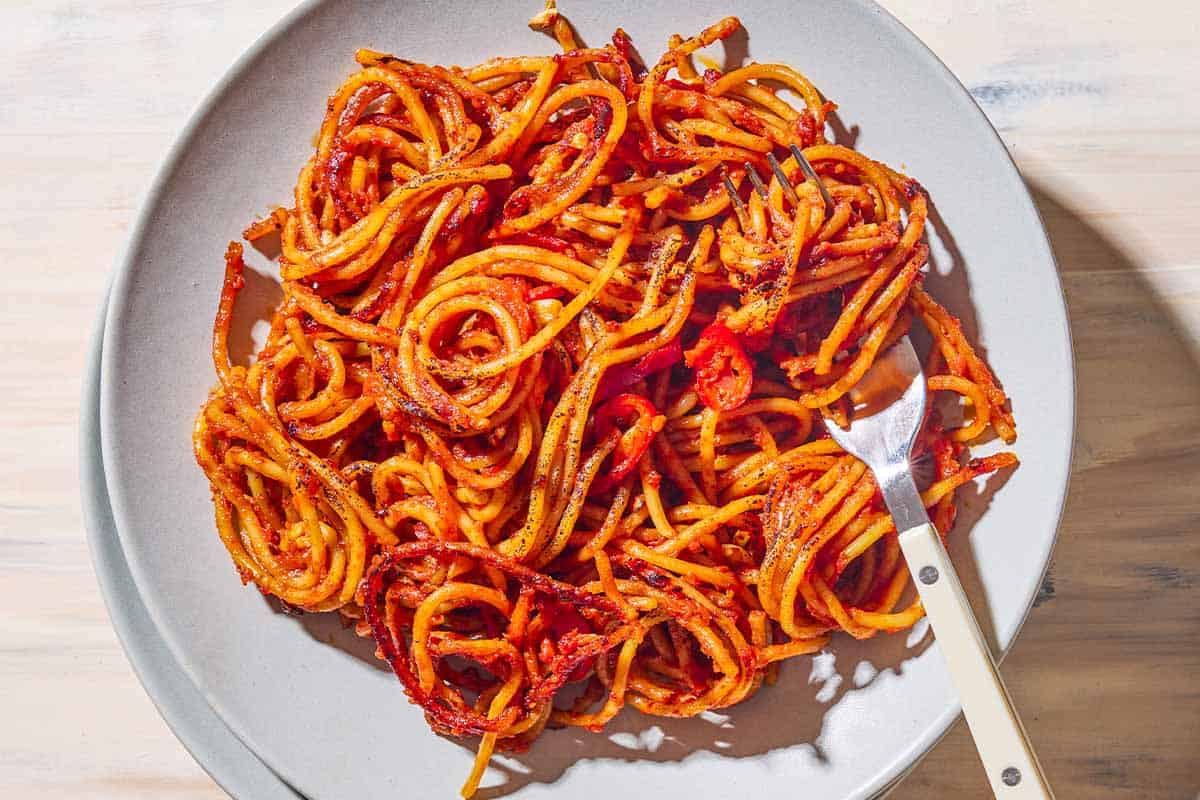
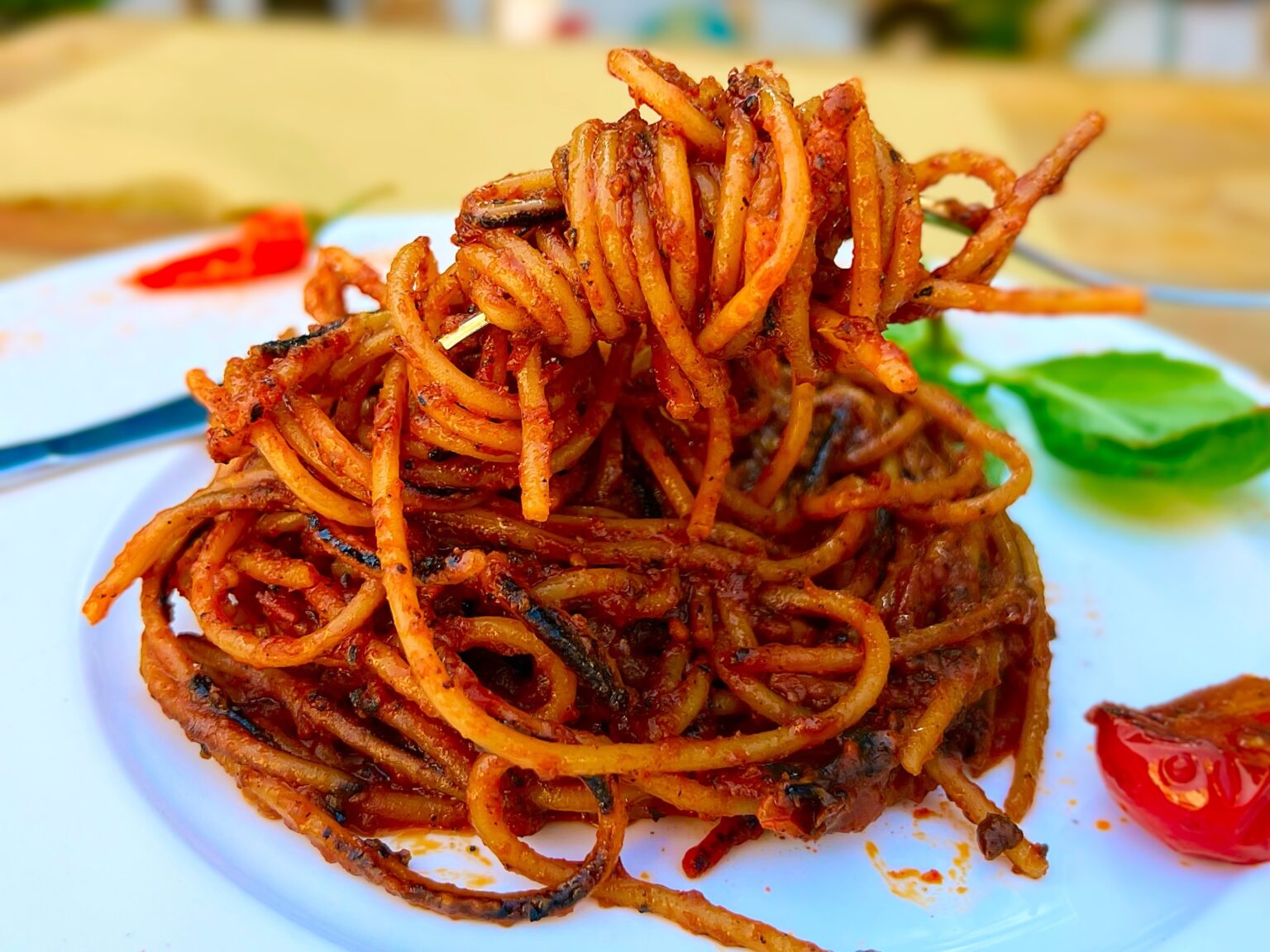
Spaghetti all’Assassina, or “Assassin’s Spaghetti” shows that sometimes it pays to break the rules! This Southern Italian favorite cooks the spaghetti right in a spicy tomato sauce until it’s crispy, singed, and totally irresistible.
The scorched legend of spaghetti all’assassina
In 1967 Enzo Francavilla, an ambitious chef from Foggia in Puglia, bought over the business of Al Sorso Preferito a small family run trattoria in Bari. Just days after opening he was approached by two Neapolitan diners requesting something spicy and hearty. Thinking on his feet, Francavilla seared dry spaghetti in an iron pan with oil, garlic, chilli, and tomato sauce—cooking it risotto-style and letting it char deliberately. The resulting dish was rich, spicy, and crispy in parts, unlike any pasta the diners had encountered before.
The verdict? “Delicious,” they said. But one, tongue tingling, added with a grin: “You’re a murderer.” And with that, the name spaghetti all’assassina—“killer spaghetti”—was born.
From that moment, the dish became a local sensation. In 1972, Francavilla moved the restaurant to Via de Nicolò, naming it Osteria La Marianna al Sorso Preferito in memory of his late wife. Queues formed nightly for one of just two house specialities: orecchiette mantecate and the now-legendary assassin’s spaghetti.
Nicholas Antonacci, a Bari-based maître-sommelier and chef by trade who in 1981, at just sixteen years old, was promoted to demi chef at Il Sorso Preferito, offers a slightly different version of events. He recounts how an angry spaghetti all’arrabbiata slowly evolved into a killer spaghetti all’assassina.
Initially serving chilled meats and cheeses, Antonacci explains how chef and owner Enzo Francavilla gradually introduced hot dishes in response to popular demand, including a fiery spaghetti all’arrabbiata. With time, the well-used iron pans used to cook the arrabbiata sauce began to yield a charred, caramelised crust adding new depth to the dish. “This is a killer!”, declared one diner—and spaghetti all’assassina was born.
By the late 1970s, the restaurant passed into new hands: maître d’s Giuseppe Saracino and Mimì De Cosmo, alongside chef Gaetano “Nanuccio” Lonigro. The trio would go on to acquire another of the city’s landmark restaurants, Marc’Aurelio, later bringing in Pierino Lonigro—Nanuccio’s brother and a skilled chef in his own right. It was during this period spaghetti all’assassina made the leap from off-menu curiosity to a fully fledged first course.
Antonacci notes that many chefs who passed through Il Sorso Preferito and its sister restaurant Marc’Aurelio took fragments of the assassina story with them—recipes adapted, origins forgotten, and in some cases, credit claimed.
Today, Il Sorso Preferito remains in the ownership of Pierino Lonigro who, with his nephew Vincenzo in the kitchen, is still serving up the dish.
Assassina | the risottatura “error”
I burnt the garlic in an iron pan with oil and chilli—not just browned, but burnt—and then removed it.
Into the boiling oil, I poured raw, hand-crushed peeled tomatoes, causing a flare-up. That flare-up was the ‘joy of the kitchen,’ which I immediately covered with a lid. The resulting smoke remained inside, imparting a smoky flavour to the spaghetti, as if they were burnt, but they were actually roasted.
Meanwhile, I brought water and salt to the boil and cooked the spaghetti—actually vermicelli—until just before al dente, when they began to bend. I drained them well and added them to the pan with the tomato to absorb the flavours. I stirred continuously, adding more raw, crushed tomatoes if they became too dry, and continued cooking until the pasta was done and the tomato had thickened. I tasted them to check the cooking, flavour, and salt, then gave them a superficial toasting. I finished by adding a little oil to give them a sheen, and my recipe was complete.
Assassin’s Spaghetti proves that sometimes letting things burn is the best way to develop the flavor. They wouldn’t be quite the same without that brave first person who let them burn!
While charring pasta may sound strange, it makes the sauce deliciously caramelized and gives the noodles a satisfying crunch. Don’t worry: It’s not the crunch of undercooked pasta. Rather, it’s the crunch of something that’s fully cooked until tender but with an intriguing bite.
Spaghetti all’Assassina Ingredients and Substitutions
- Tomato paste: Mixed with water and then spooned over the pasta as it cooks.
- Olive oil: Use a high quality extra virgin variety (more info below).
- Chili Peppers: Look for spicy red chili peppers, like Calabrian, red Fresno, or red Serrano. You can also substitute with chili flakes or sliced dried red peppers.
- Garlic adds its signature sweet and savory depth.
- Tomato sauce: Use any homemade tomato sauce you like, or substitute with a quality low-sodium store-bought option if you’re short on time.
- Salt and black pepper enhance the flavor.
- Noodles: I like standard spaghetti here, but you could also experiment with bucatini. I would imagine angel hair would burn too easily, but it’s not something I’ve tried.
- Burrata is a fresh and sweet Italian cheese that’s similar to mozzarella but even creamier and more tender. It’s optional, but adds a delicious decadence to the dish.
Ingredient Spotlight
You need a good amount of oil to properly fry the pasta or the sauce will evaporate too quickly and the pasta will burn before it gets a chance to cook through. The oil also contributes greatly to the flavor of the finished dish, so make sure you’re using an extra virgin variety with a pleasant taste.
An oil that’s overly bitter (or worse, rancid) will impart an off putting flavor that will only get more intense as it chars the pasta. Use any high quality extra virgin variety you have on-hand–one that’s tasty and smooth enough to enjoy on its own as a dip for bread.
How to Make Spaghetti all’Assassina
I think it goes without saying that you don’t have to be a professional chef to make Assassin’s Spaghetti. You’re trying to burn it after all! But it does take a little faith to avoid fussing with it too much. Here are the steps:
- Make a tomato broth. Bring the water to a boil in a medium saucepan set over high heat, then stir in the tomato paste and season generously with salt. Turn off the heat, leaving the pan on the burner.
- Prepare the tomato sauce. Set a wide, deep skillet (large enough to lay the spaghetti in it without breaking) over medium-high heat. Add 3/4 cup extra virgin olive oil. When the oil begins to shimmer, add the chili peppers and garlic. Cook, stirring regularly until fragrant, no more than 30 seconds. Add the 16 ounces of tomato sauce to the skillet (not the tomato broth you made earlier, we’ll use that in a minute). Bring the sauce to a simmer, about 5 minutes. Season with a pinch of salt and pepper.
- slighly burn the spaghetti. Place the (uncooked) spaghetti in the skillet with the hot chili and oil and garlic
- Coat the spaghetti. Add the tomato sauce. Use a large spoon to spread the spaghetti in one layer, pushing down and spooning the sauce over the top so the noodles are well-coated. Turn the heat to high and let it sit until the pasta has absorbed some of the sauce, about 3 minutes
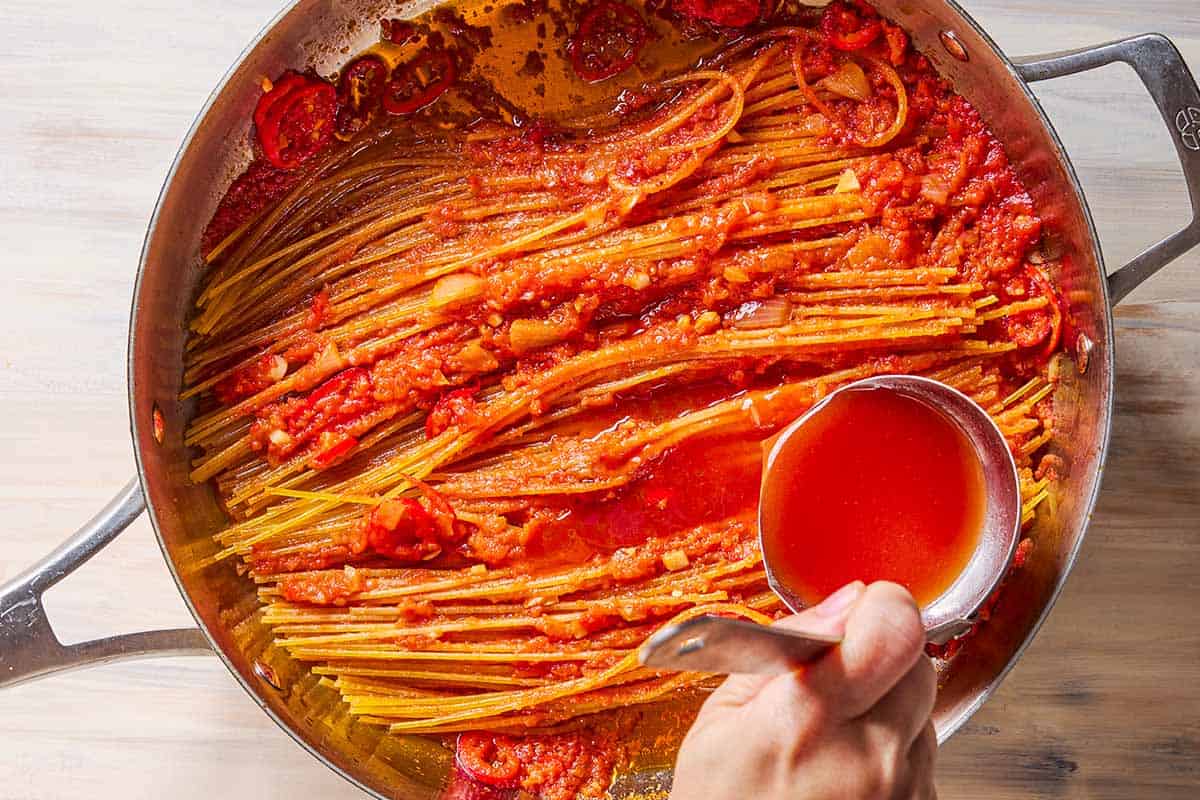
- Cook the spaghetti. When the pan starts to look dry, add a ladleful of the warmed tomato broth. Do not move or toss the pasta, as it is meant to absorb the tomato broth and char some of the noodles at the bottom. Once the majority of the broth has been absorbed, add another ladle or two of the tomato broth over the pasta. Reduce the heat to medium-high. Continue to ladle the tomato broth over the pasta, letting it absorb the broth before each new addition.
- Flip. When you’ve used about half the broth, use tongs to turn the spaghetti over. You should see dark, almost burnt-looking crispy pieces. Continue ladling in the broth and allowing the spaghetti to absorb and char until you’ve used all of the broth.
- Finish and serve. Remove from heat and transfer to pasta bowls. Serve immediately, with a spoonful of burrata on top if you’d like.
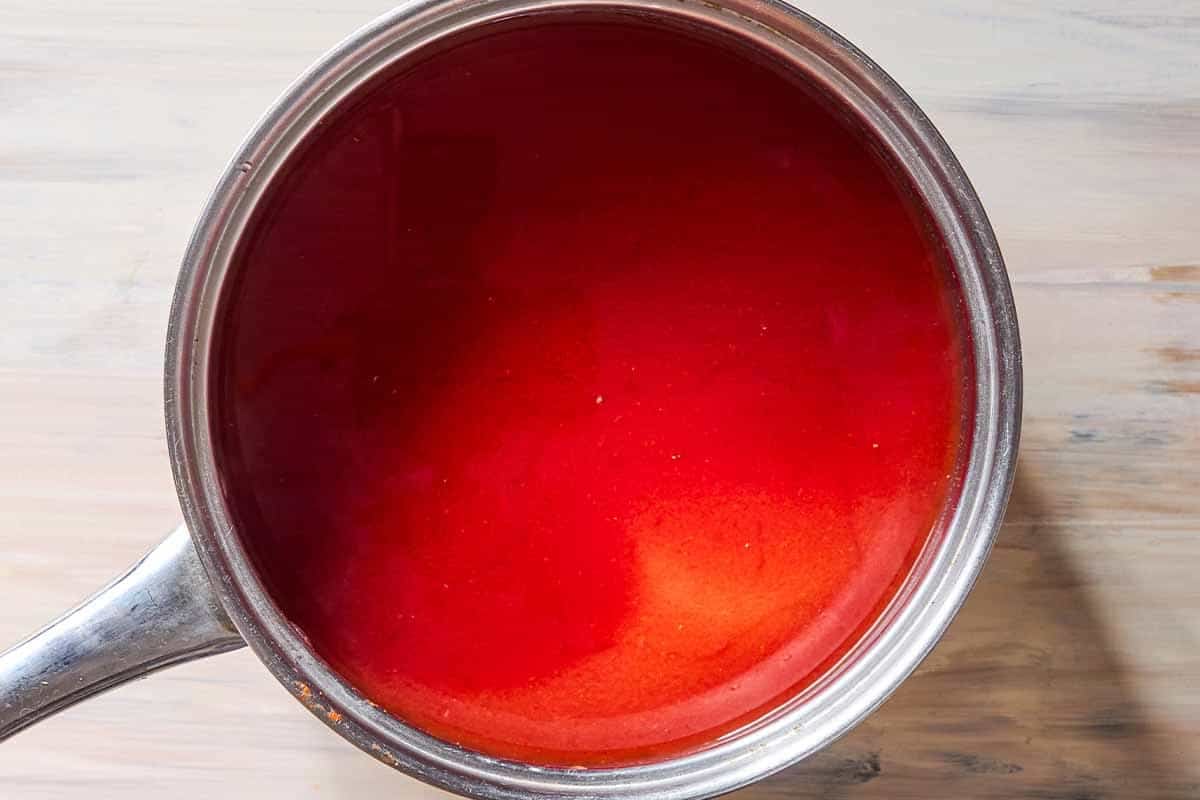
Make a tomato broth. Bring 4 cups of water to a boil in a medium saucepan set over high heat, then stir in 1/4 cup tomato paste and season generously with salt. Turn off the heat, leaving the pan on the burner.
Prepare the tomato sauce. Set a wide, deep skillet (large enough to lay the spaghetti in it without breaking) over medium-high heat. Add 3/4 cup extra virgin olive oil. When the oil begins to shimmer, add 2 sliced chili peppers and 2 minced garlic cloves. Cook, stirring regularly until fragrant, no more than 30 seconds. Add 16 ounces of tomato sauce to the skillet (not the tomato broth you made earlier, we’ll use that in a minute). Bring the sauce to a simmer, about 5 minutes. Season with a pinch of salt and pepper.
Slighly burn the spaghetti. Place the (uncooked) spaghetti in the skillet with the hot chili and oil and garlic
Coat the spaghetti. Place 12 ounces (uncooked) spaghetti in the skillet with the hot chili and tomato sauce. Use a large spoon to spread the spaghetti in one layer, pushing down and spooning the sauce over the top so the noodles are well-coated. Turn the heat to high and let it sit until the pasta has absorbed some of the sauce, about 3 minutes.
Cook the spaghetti. When the pan starts to look dry, add a ladleful of the warmed tomato broth. Do not move or toss the pasta, as it is meant to absorb the tomato broth and char some of the noodles at the bottom. Once the majority of the broth has been absorbed, add another ladle or two of the tomato broth over the pasta. Reduce the heat to medium-high. Continue to ladle the tomato broth over the pasta, letting it absorb the broth before each new addition.
Flip. When you’ve used about half the broth, use tongs to turn the spaghetti over. You should see dark, almost burnt-looking crispy pieces. Continue ladling in the broth and allowing the spaghetti to absorb and char until you’ve used all of the broth.
Finish and serve. Remove from heat and transfer to pasta bowls. Serve immediately, with a spoonful of burrata on top if you’d like.