


What is the Longest Living Terrarium?
A terrarium is a self-sustaining miniature ecosystem, capturing a slice of nature within glass. With the right conditions, terrariums can last for years, creating a thriving environment for plants to grow with minimal maintenance. But just how long can a terrarium live? Some have been known to survive for decades, even over a century, without intervention. The longest-living terrarium on record has been growing strong for more than 60 years, proving that with the right balance of water, light, and airflow, a terrarium can thrive indefinitely.
In 1960, David Latimer planted a tiny garden inside of a large glass bottle and sealed it shut. He opened the bottle 12 years later in 1972 to add some water and then sealed it for good. The self contained ecosystem has flourished for nearly 60 years.
For those who are wondering how this is even possible: the garden is a perfectly balanced and self-sufficient ecosystem. The bacteria in the compost eats the dead plants and breaks down the oxygen that is released by the plants, turning it into carbon dioxide, which is needed for photosynthesis. The bottle is essentially a microcosm of earth.
the plant used in this long experiement is tradescantia
The World’s Oldest Terrarium
The longest-living closed terrarium was planted by David Latimer in 1960. He sealed the glass container in 1972, and since then, it has remained almost completely untouched. Despite being watered only twice in over 50 years, the terrarium has continued to thrive. The plants inside recycle nutrients through a self-sustaining water and air cycle, proving how resilient a closed ecosystem can be.
The Glass Container and Initial Setup
Latimer used a 10-gallon glass carboy, a large, globular glass jug originally intended for storing liquids. On Easter Sunday in 1960, he carefully placed composted soil at the base of the carboy, along with a small amount of water. To plant the cuttings inside, he used a piece of wire to lower them through the narrow opening. The jar was sealed with a greased cork stopper, ensuring an airtight environment. Twelve years later, in 1972, Latimer decided to open the bottle just once to add a bit more water. Since then, the terrarium has remained sealed, functioning entirely as a self-sustaining ecosystem without any outside interference.
The Self-Sustaining Ecosystem
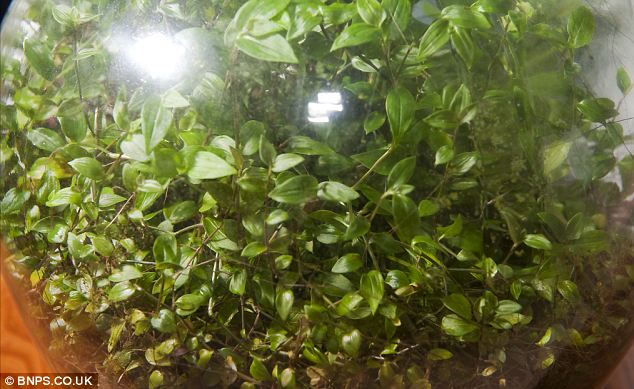
Inside the carboy, the spiderwort plant (Tradescantia) has thrived by cycling water, nutrients, and air. The plant’s leaves release moisture through transpiration, which condenses on the inside walls of the glass and falls back into the soil creating a miniature water cycle. The fallen leaves decompose naturally, providing essential nutrients for continued growth.
Despite being completely sealed, the ecosystem continues to regulate itself. During the day, the spiderwort undergoes photosynthesis, producing oxygen, while at night, it consumes oxygen and releases carbon dioxide. The balance of gases, along with decomposing organic matter, has allowed the terrarium to sustain itself for over 60 years.
David Latimer’s Perspective
Latimer originally created the terrarium as an experiment, inspired by the bottle garden craze of the 1960s. He never expected it to last for decades but was fascinated by its self-sustaining nature. The terrarium has been kept in the same spot in his home, about six feet from a window, where it receives only indirect sunlight. Occasionally, he rotates the bottle to ensure even light exposure, but otherwise, it requires no care. Over the years, the terrarium has drawn interest from scientists and gardening enthusiasts alike. It has been cited as an example of how plants could sustain themselves in closed environments, similar to the concept of self-sustaining life support systems in space exploration.
Latimer’s Own Reflections and Statements
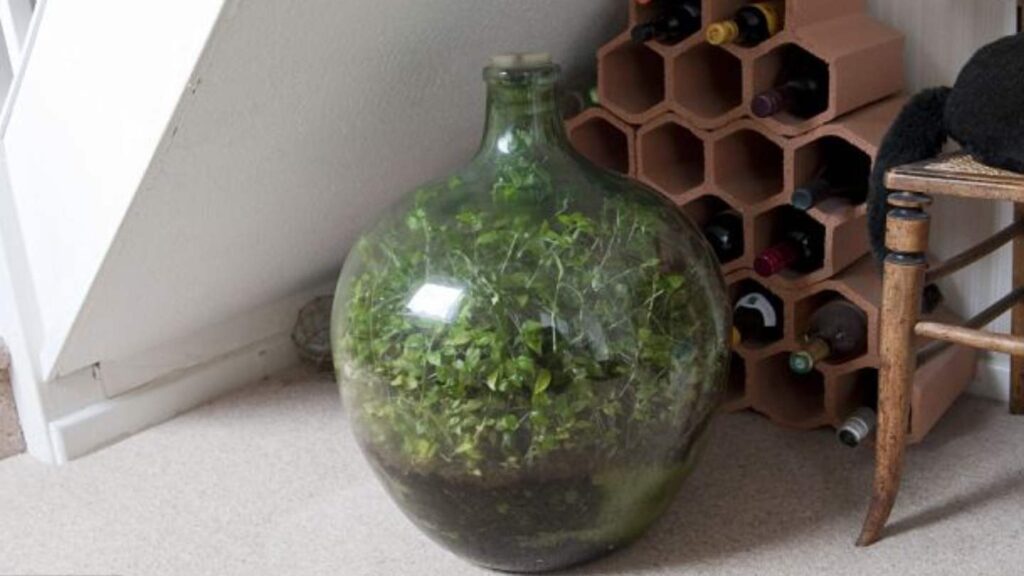
David Latimer has shared his personal impressions of the terrarium in various interviews, especially after the story caught public attention around 2013. For many years, the bottle garden quietly sat in his home (in the hallway under the stairs) without fanfare. Latimer eventually sent a photograph of the flourishing sealed garden to the BBC Radio program “Gardener’s Question Time” in the early 2010s, asking the panel of experts if his bottle garden was of any scientific or horticultural interest. This sparked media interest in his experiment – soon reporters and scientists were inquiring about the 50-year-old terrarium. The story was covered in major outlets like The Daily Mail and The Times, and Latimer, then about 80 years old, gave interviews describing the history of his unique houseplant.
It’s true that Latimer created a self-sustaining ecosystem inside a sealed bottle in 1960 that survived for more than half a century.
In speaking about his sealed terrarium, Latimer has emphasized how effortless its care really is. He has called it “the definition of low-maintenance,” noting that he’s “never pruned it” and essentially does nothing beyond occasional turning of the bottle. The plant seems to have self-regulated its growth once it filled the space, so there’s little for a gardener to do. In fact, Latimer humbly admitted that the bottled garden is “incredibly dull and doesn’t really do anything” on a day-to-day basis there are no dramatic changes to observe in a given week or month. However, he remains deeply proud and fascinated by its long-term survival. Latimer has expressed excitement to see “just how long it will last,” keeping the experiment going for as long as possible.
Now in his old age, he has even joked about the terrarium outliving him. He hopes to pass on this living bottle garden to his children in the future – and if his family isn’t interested in keeping it, Latimer has said he would like to donate the terrarium to the Royal Horticultural Society so that it can continue to be cared for and studied by others. Through his interviews and statements, David Latimer comes across as a pleasantly surprised caretaker: he started the project out of simple curiosity, and decades later he is as amazed as anyone that his sealed bottle terrarium is still green and thriving. It stands as a testament to nature’s resilience and the elegance of closed ecosystems, all born from one man’s idle experiment back in 1960.
Latimer, a retired electrical engineer from Surrey, England, created his bottle garden in 1960.
“At the time the chemical industry had changed to transporting things in plastic bottles so there were a lot of glass ones on the market,” Latimer told the Daily Mail in 2013. “Bottle gardens were a bit of a craze and I wanted to see what happened if you bunged the thing up.”
The concept was simple: He planted a spiderwort plant (tradescantia) inside a 10-gallon glass carboy and sealed it off from the outside world with a cork. He watered the plant once in 1972, and since then, the ecosystem has been entirely self-sustaining, requiring no further intervention.
The garden’s longevity testified to the principles of a closed ecological system. Inside the sealed bottle, the spiderwort plant undergoes photosynthesis — the process by which plants convert light energy into chemical energy to produce food and release oxygen — which sustains its own growth and the survival of microorganisms within the ecosystem. The water cycle is also self-contained, with moisture released by the plant condensing and returning to the soil. This self-sustaining cycle continued for more than 50 years.
“It’s 6ft from a window so gets a bit of sunlight. It grows towards the light so it gets turned round every so often so it grows evenly,” Latimer told the Daily Mail. “Otherwise, it’s the definition of low-maintenance. I’ve never pruned it, it just seems to have grown to the limits of the bottle.”
Latimer’s sealed bottle garden has sparked discussions about the potential applications of closed ecological systems in various fields, including space exploration and environmental conservation.
NASA’s research has shown that plants not only produce oxygen through photosynthesis but also help regulate carbon dioxide levels with their so-called air-scrubbing qualities, provide fresh food and even purify water, making long-duration space missions more sustainable and self-sufficient.
The Weather Channel’s story in 2016 was the last public update on the garden that Snopes could find; its status in 2024 was unclear. The Daily Mail reported that Latimer hoped to leave his bottle garden to his children, and if they didn’t want it he planned to donate it to the U.K.’s Royal Horticultural Society.
How Does a Terrarium Live for Decades?
The longevity of a terrarium depends on several key factors. When carefully designed, a terrarium can function like a miniature rainforest, where moisture, air, and nutrients continuously cycle through the system. Here’s how:
1. The Water Cycle A closed terrarium creates its own rain cycle. Water evaporates, condenses on the glass, and then drips back down to nourish the plants. This process prevents the need for frequent watering and ensures a steady supply of moisture.
2. Photosynthesis and Oxygen Exchange Plants in a sealed terrarium generate oxygen during the day through photosynthesis. At night, they release carbon dioxide. This natural cycle allows the terrarium to regulate itself without outside interference.
3. Decomposers Keep the Ecosystem Clean Fallen leaves and organic matter break down naturally, thanks to beneficial bacteria and microorganisms. These act as decomposers, recycling nutrients back into the soil, just as they would in a real forest.
4. Balanced Light and Temperature Terrariums need indirect light to keep the plants healthy without overheating the system. Excess heat or direct sunlight can cause condensation to build up too quickly, potentially leading to mould or plant stress.
Can Your Terrarium Live Forever?
In theory, a well-maintained terrarium could last indefinitely. If the balance of light, water, and nutrients remains stable, the ecosystem will continue cycling without the need for human intervention. However, external factors like overwatering, insufficient light, or an imbalance in plant life can shorten its lifespan.
To give your terrarium the best chance at longevity:
Choose hardy plants that thrive in humid environments, such as moss, ferns, and fittonia. Avoid overwatering – a single watering when setting up the terrarium is often enough for months or even years. Provide indirect light to encourage healthy photosynthesis. Monitor for mould and remove any decaying plant matter to maintain a healthy balance.
The longest-living terrariums prove that a well-balanced, closed ecosystem can last for decades with little to no care. Whether you’re starting your first terrarium or looking to improve your current one, focusing on the right conditions can help it thrive for years to come.
Thinking about making your own long-lasting terrarium? Explore our shop for DIY terrarium kits, beautiful glass containers, and everything you need to create a self-sustaining world of your own. source