


Good Shepherd Media · Santa Clarita, California · Editorial
Opinion & Analysis
Santa Clarita Is Using Your Tax Dollars to Silence a Reporter
When a city government files a restraining order against a journalist for making phone calls to City Hall, something has gone very wrong in a place that calls itself a democracy.
June 2026

The City of Santa Clarita recently took an extraordinary step: it filed a civil harassment restraining order against a local publisher — a journalist — for the act of calling City Hall to seek comment from the mayor on a matter of public concern. Let that sink in. A government entity, funded by you, the taxpayer, is using the civil courts to silence a member of the press.
This is not a hypothetical threat to press freedom. It is happening right now, in this community, under Case No. 26CHRO00913 at the Chatsworth Courthouse. The petitioners are the City of Santa Clarita and two named city officials. The target is a registered journalist operating a legitimate local news publication. The alleged offense? Approximately fifteen phone calls over ten days — not threats, not violence, not harassment in any meaningful sense of the word — but calls to a government office seeking access to elected and appointed officials.
“Calling your government is not harassment. Reporting on your government is not a crime. But suing a journalist for doing both is a profound abuse of power.”

What the City Did — and What It Cost You
Filing a restraining order is not a free act. City attorneys do not work for nothing. Every hour spent preparing petitions, appearing in court, and litigating this matter is billed to the public. Santa Clarita residents — who pay among the highest property tax rates in Los Angeles County — are footing the bill to suppress the very journalism that exists to hold their government accountable.
And what exactly did this journalist do to merit such a response? He called City Hall. He identified himself as a publisher. He sought comment on a matter of public concern. He announced his intent to report on a planned public assembly — a constitutionally protected activity — and took care to note explicitly that any gathering should not target private residences. That last detail is critical: far from inciting disorder, this journalist acted to prevent it.
The city’s response to this responsible journalism was not a press release, not a returned call, not a public statement. It was a lawsuit. It was a Temporary Restraining Order. It was an automatic firearms prohibition imposed under Penal Code § 29825 — a collateral consequence that strips a law-abiding citizen of a fundamental right without a trial, without a conviction, and without any finding of actual danger.
What the Restraining Order Actually Does
- ► Prohibits a journalist from contacting city officials — the very people he is constitutionally entitled to petition
- ► Triggers an automatic firearms prohibition under PC § 29825, even though no violence was alleged
- ► Chills newsgathering by any reporter who fears similar retaliation for persistent inquiry
- ► Diverts public funds from city services into litigation against a member of the press
- ► Creates a false public impression of domestic conflict where none exists
“A greedy incompetant mayor office and city council , a corrupt police officer, a trash company and a developer whose interests appear closely aligned with those in City Hall. The public deserves transparency, accountability, and government decisions made for the benefit of residents—not for the benefit of insiders.”

The First Amendment Is Not a Technicality
Courts have long recognized that petitioning the government for redress of grievances is not merely a right — it is the foundational act of democratic self-governance. The Supreme Court has held repeatedly that speech directed at public officials on matters of public concern occupies the highest rung of constitutional protection. Even speech that annoys, offends, or inconveniences those in power cannot be suppressed simply because the powerful find it uncomfortable.
California’s own legislature recognized the danger of powerful entities weaponizing litigation against speakers and reporters. It enacted the anti-SLAPP statute — Code of Civil Procedure § 425.16 — precisely to stop this kind of abuse. SLAPP stands for Strategic Lawsuit Against Public Participation. The law exists because governments and corporations have a long history of filing lawsuits not to win, but to exhaust, intimidate, and silence those who dare to speak. When the defendant in such a case prevails, the law mandates that the plaintiff — here, the city — pay the defendant’s attorneys’ fees.
An anti-SLAPP motion has been filed in this case. The city will have to explain, in open court, why phone calls to City Hall by a journalist constitute legally cognizable harassment rather than constitutionally protected newsgathering. That is a question Santa Clarita residents deserve to hear answered on the record.
“A government that sues journalists is a government that fears scrutiny. And a government that fears scrutiny has something to hide.”
The Chilling Effect Is the Point
Make no mistake: even if this city ultimately loses in court, the filing of this action has already accomplished something. Other local journalists, bloggers, and citizens watching this case now know what awaits anyone who calls City Hall too many times, asks too many questions, or publishes something officials prefer to suppress. That knowledge changes behavior. It makes people hesitant. It makes reporters pull punches. That hesitation — that self-censorship — is the chilling effect the First Amendment exists to prevent.
Local government accountability journalism is already endangered. Newsrooms have collapsed across Southern California. The reporters who once filled city council chambers, read through budgets, and pressed officials for answers are gone. What remains, in communities like Santa Clarita, are a handful of independent publishers operating on shoestring budgets, filing records requests, attending meetings, and making phone calls — doing the unglamorous work of democratic accountability. When a city files a restraining order against one of those publishers, it is not merely attacking an individual. It is attacking the institution of local press itself.
What Santa Clarita Residents Should Demand
The residents of Santa Clarita deserve answers. They deserve to know why city attorneys authorized this action. They deserve a full accounting of how much public money has been spent litigating against a local journalist. They deserve to know whether city officials were personally involved in the decision to file, and what communications preceded that decision.
They also deserve a city government that understands the difference between harassment and journalism — between a threat and a phone call — and that responds to press inquiries with transparency, not lawsuits.
Until those answers are given, and until this action is withdrawn or defeated in court, Santa Clarita’s city government stands credibly accused of weaponizing public resources against the free press, chilling constitutionally protected speech, and betraying the trust of the taxpayers it was elected to serve.
That is a story that will continue to be told — no restraining order notwithstanding.
City of Santa Clarita Uses Public Funds to Sue Its Own Local Journalist
 |
Mayor Laurene Weste |
 |
Mayor Pro Tem Patsy Ayala |
 |
Councilmember Jason Gibbs |
 |
Councilwoman Marsha McLean |
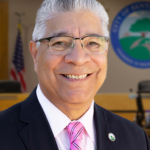 |
Councilmember Bill Miranda |
📅 Upcoming Public Hearing
Anti-SLAPP Special Motion to Strike
Case No. 26CHRO00913 · Los Angeles Superior Court, Chatsworth Courthouse
July 2, 2026 · This is a public proceeding. All residents are welcome to attend.
The city must show cause in open court why its action does not constitute a SLAPP — a Strategic Lawsuit Against Public
Participation — targeting constitutionally protected press activity.
© 2026 Good News Media LLC · Good Shepherd Media · goodshepherdmedia.net · All rights reserved.