

The substance primarily associated with solvent abuse in the UK today is butane gas. Over half of all solvent abuse deaths involve the inhalation of butane.
What products contain butane gas?
Many household products contain butane. For example, cigarette lighter refills contain butane. Butane and propane are also used as the propellant in aerosols such as deodorants, hairsprays and so on.
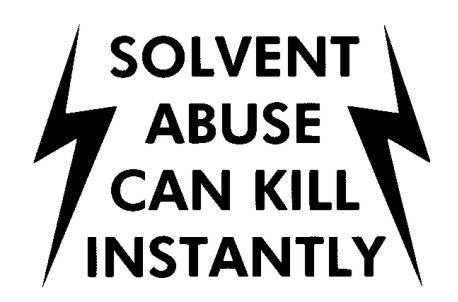
Many aerosols in the UK carry the Solvent Abuse Can Kill Instantly (SACKI) warning on the back.
What are the effects of inhaling butane?
Butane is a depressant and users report a range of highs, including euphoria and hallucinations. The effect is short-lived. Chronic users will often continue inhaling to prolong the effect.
Is it addictive?
Butane can lead to a psychological addiction but it is not physically addictive.
What are the health risks of inhaling butane?
Over half of all deaths associated with solvent abuse are due to butane.
- Butane is highly flammable so there is a high risk of burns or explosions, particularly for smokers.
- Some butane users report suffering from slurred speech and slower reactions while they are using, but find that these symptoms do not continue once they stop. Other people feel that butane abuse has contributed to longer-term physical or mental health issues.
- Death from choking, suffocation, asphyxiation or a form of heart failure known as ‘sudden sniffing death syndrome’ (SSDS).
There is no ‘safe’ way to inhale butane gas that avoids the risk of SSDS.
Harm reduction
Any inhalation may lead to death
It doesn’t matter how often someone has used solvents; there is always the risk of death. There is no such thing as a ‘safe’ way to do it that will take away the risk of death from heart failure.
Re-Solv strives to support people toward eliminating harm from gas and solvent use, which can only be achieved through abstinence from use. However we understand that for some people this may take time, and the following practice may reduce some risks:
- Don’t do it alone (have someone with you who can call an ambulance).
- Avoid spraying directly into the mouth.
- Never cover your face with a mask or plastic bag (covering your face with a mask or bag will increase the risk of suffocation).
- Don’t smoke or light cigarettes – these gases are highly flammable.
- Don’t mix with alcohol, any other drugs or prescribed medicines.
Don’t argue with, chase or excite someone who is high on gases/solvents. Raising their adrenaline levels may increase their risk of death.
See the Drugwise website for further information about the principle of Harm Reduction. Drugwise (external link)
There is more information on our page Symptoms and Risks of Solvent Abuse.
Other gases
- Propane is associated with the same health implications and serious risk of death as butane.
- Nitrous oxide – see our nitrous oxide page here. Nitrous oxide
- Helium does not cause intoxication.
What is Butane Gas?
Butane is a highly flammable, colourless, odourless gas. Butane is a hydrocarbon, found in household and industrial products and is potentially intoxicating if deliberately inhaled.
How it’s misused
Butane is commonly misused by being inhaled directly through the mouth either from cigarette lighter refills, canisters or aerosol sprays.
Butane and the body
Butane is a central nervous system depressant which slows down the activity of the brain, affecting physical
and mental responses. When butane is inhaled the fumes are absorbed rapidly through the lungs into the
bloodstream. The chemicals are soluble in body fat and pass rapidly to the brain and organs, so they take
effect quickly. Although the initial high will last only a few minutes, the effects can continue for up to
40 minutes. Users may maintain the high by continuing to inhale the fumes.
Short-term effects
It is difficult to calculate the dosage of butane being consumed by users so effects can vary between
individuals. The immediate effects that users describe as desirable are a ‘drunk-like intoxication’ and a
‘euphoria’ or a ‘sense of well-being’.
Immediate side effects that may occur include:
- Aggression
- Sedation
- Possible loss of consciousness
- Loss of short term memory
- Slurred speech,
- Loss of coordination
- Confusion
- Convulsions & fits
- Hallucinations
- Blackouts
Long-term effects that may occur include:
- Chronic headache
- Sinusitis
- Ataxia (lack of muscle coordination)
- Dizziness
- Shortness of breath
- Nosebleeds
- Chronic or frequent cough
- Depression
- Anxiety
- Tinnitus (noise in ears or head)
Dependence
Dependence is usually psychological rather than physical. However physical withdrawal has been reported among some users. Tolerance to butane can develop quickly meaning that more of the substance is required to get the same effect. Chronic users may become addicted to butane and experience withdrawal symptoms or a hangover effect if they don’t use regularly. Withdrawal symptoms can continue for a number of days
when use ceases.
Withdrawal symptoms include:
- Headache
- Anxiety
- Nausea
- Vomiting
- Fatigue
- Tremor
- Sleep disturbances
- Depression
- Delirium/ illusions
- Mild abdominal pain
- Sweating
- Muscular cramps
- Irritability
- Loss of appetite
- Slurred speech
Dangers
Deliberate inhalation of butane can instantly kill and there is no way to avoid this.
Sudden Sniffing Death Syndrome
Sudden Sniffing Death Syndrome (SSDS) is a cardiac condition where the person experiences ‘cardiac arrhythmia’ where the heart starts beating irregularly. Most deaths attributed to butane use are caused by SSDS. If the person gets excited, startled or participates in any sudden physical activity after inhaling butane, the heart can fail to pump blood.
People who deliberately inhale butane are also at risk of death due to:
- Choking on their own vomit
- Suffocating
- The back of their throat swelling, putting them at risk of choking
- Fatal accidents and explosions if exposed to flames
Butane can also cause long-term health implications such as:
- Chemical burns on the skin
- Kidney damage
- Liver damage
- Brain damage
- Seizures
- Tremors
- Visual impairment (may become permanent)
Treatment
Butane users should receive the same support as individuals using stimulants. Motivational Interviewing, Solution Focused Brief Therapy and Cognitive Behavioural Therapy are effective for this group. Psychosocial supports should be provided by key workers or counsellors. Butane users generally function well in stimulant support groups.
Harm reduction information
It’s is safest not to inhale butane, but if you are going to use it, please consider the following:
- Do not use near busy roads or other hazardous environments
- Do not use butane alone, in isolated locations or in conned spaces
- Do not use plastic bags of masks to inhale butane
- Keep the can upright and do not tilt the can
- Do not use near a naked flame or lit cigarette
- Do not mix with alcohol, prescription medications or illegal drugs
- Do not sleep with a canister cropped against your nose or a blanket over your head
- Secure a piece of gauze on top of the nozzle to ensure that if the can is titled the liquefied gas would hit the fabric and not the back of the throat
What should you do in an emergency if someone is unconscious?
- Keep calm
- Ensure the area immediately around the person is clear of unsafe objects, including volatile substances
- Call an ambulance yourself or get someone else to
- Check if the person is breathing, and check if they respond to gentle shaking or loud talking
- If the person is breathing, put them in the recovery position and lift their chin to ensure their airway remains clear
- If the person is not breathing, begin CPR if you know how
- Don’t crowd the person or excite them
- Try to find out what the person has used so you can tell the medics
Recreational inhalation of butane and propane in adolescents: Two forensic cases of accidental death
Highlights
-
The recreational use of inhalants is a fairly widespread habit among adolescents.
-
Two cases of accidental death after sniffing of a mixture of propane and butane are presented.
-
The role of propane and butane in causing death was demonstrated with toxicological analyses.
-
The importance of correct sampling procedures and surveys was highlighted.
Abstract
Introduction
Section snippets
Case 1
Materials and methods
Results
Discussion
References (40)
- et al. Inhalant use among incarcerated adolescents in the United States: prevalence, characteristics, and correlates of use Drug Alcohol Depend. (2008)
- et al. Inhalant use initiation among U.S. adolescents: evidence from the National Survey of Parents and Youth using discrete-time survival analysis Addict. Behav. (2011)
- et al. Quantitative determination of n-butane metabolites in three cases of butane sniffing death Forensic Sci. Int. (2015)
- et al. A fatal case of n-butane poisoning after inhaling anti-perspiration aerosol deodorant Leg. Med. (Tokyo) (2002)
- et al. Death during deliberate propane inhalation Forensic Sci. Int. (1998)
- et al. Three cases of sudden death due to butane or propane gas inhalation: analysis of tissues for gas components Forensic Sci. Int. (2004)
- et al. Fatal outcome despite bilateral decompressive craniectomy for refractory intracranial pressure increase in butane intoxication Clin. Neurol. Neurosurg. (2012)
- et al. Inhalant use among antisocial youth: prevalence and correlates Addict. Behav. (1999)
- et al. A fatal case considered to be due to cardiac arrhythmia associated with butane inhalation Leg. Med. (Tokyo) (2002)
- et al. Successful resuscitation from recurrent ventricular fibrillation secondary to butane inhalation Br. J. Anaesth. (2000)
- et al. Ventricular fibrillation following butane gas inhalation Resuscitation (1998)
- et al. Liquefied petroleum gas (LPG) poisoning: report of two cases and review of the literature Forensic Sci. Int. (1996)
- et al. Controlling deaths from volatile substance abuse in under 18s: the effects of legislation BMJ (1992)
- et al. Phenomenology of intoxication with toluene-based adhesives and butane gas Br. J. Psychiatry (1987)
- et al. Epidemiology of inhalant use Curr. Opin. Psychiatry (2008)
- et al. Inhalant use and risky behavior correlates in a sample of rural middle school students Subst. Abus. (2006)
- et al. Sudden death after isobutane sniffing: a report of two forensic cases Int. J. Legal Med.(2006)
- Sudden death due to butane inhalation Am. J. Forensic Med. Pathol. (1997)
- et al. Accidental death due to inhalation of butane J. Anal. Toxicol. (1997)
- et al. Autoerotic accident by inhalation of propane–butane gas mixture Am. J. Forensic Med. Pathol. (2005)
Cited by (22)
- Sudden death due to butane abuse – An overview 2024, Journal of Forensic and Legal Medicine Characteristics and circumstances of volatile solvent misuse-related death in Australia, 2000–2021
- 2023, Clinical Toxicology A two-decade review of butane toxicity as a substance of abuse 2022, Basic and Clinical Pharmacology and Toxicology
- Comprehensive comparison of industrial cannabinoid extraction techniques: Evaluation of the most relevant patents and studies at pilot scale 2022, Frontiers in Natural Products
- Two deaths due to explosion of cylinders of liquid petroleum gas 2021, Egyptian Journal of Forensic Sciences
- Electronic cigarettes and alternative methods of vaping 2021, Annals of the American Thoracic Society