

Investigation · Government Accountability
A Leak, a Demand Letter, and a Cease-and-Desist: How West Hollywood Answered a Property Owner’s Safety Complaint
A Santa Monica Boulevard property owner says water began pouring through a shared wall only after the City permitted and inspected a bar’s renovation next door. When he demanded an inspection, the City sent him a cease-and-desist.
By Good Shepherd Media West Hollywood, Calif.
At a commercial building on Santa Monica Boulevard, water is intruding through the party wall it shares with the adjacent bar space, most recently home to the mezcal bar Las Perlas WeHo and the food operation Walking Spanish LA. The property owner says the leaks started only after the City of West Hollywood permitted and inspected a renovation on the other side of that wall. When he asked the City to inspect and abate the hazard, the City’s written reply was not an inspection appointment. It was a cease-and-desist.
The Leak and the Damage
According to the property owner’s representative, Philip Zullo of Urban Development, water is entering the Santa Monica property from the adjacent bar side and tracking along structural and electrical elements of the building. Zullo says the conditions are documented in photographs and four videos. Those materials have not been independently reviewed by Good Shepherd Media, and the descriptions in this article of what they show are attributed to Zullo.
The stakes are not cosmetic. Restoration and construction-defect specialists consistently describe water intrusion through concealed wall cavities as a driver of three cascading hazards: structural rot as moisture degrades framing and finishes; mold growth in damp, enclosed spaces; and electrical danger, because water that reaches wiring, junction boxes, or panels can cause short circuits, shock, and fire. Water that reaches a building’s wiring, breaker panels, or outlets creates an immediate fire and shock risk, and corrosion on wires can cause intermittent failures that are difficult to diagnose without opening the walls. That is precisely the category of damage Zullo says is unfolding at the Santa Monica property.
A Timeline Tied to a City-Permitted Renovation
The chronology is central to the property owner’s claim. Las Perlas opened its West Hollywood outpost on July 30, 2021, taking over the former Barbette restaurant space — an expansion of the brand’s Downtown Los Angeles mezcal bar, which first opened in March 2010, according to WEHO Times. The bar closed its West Hollywood location on May 31, 2026. In announcing the closure, the operators said “with heavy hearts” that “rising costs have made it increasingly challenging” to operate, with the final day of service at the Santa Monica Boulevard location on Sunday, May 31, WEHO Times reported.
Zullo states that the water intrusion began only after Las Perlas obtained City of West Hollywood permits and carried out renovations that included work on the shared wall — renovations that, he says, were inspected and signed off by City of West Hollywood inspectors. No such leaks existed, he states, before that City-permitted, City-inspected work.
Zullo identifies three probable sources he says were observed at the adjacent bar:
- An ice-machine drain located at the shared-wall leak point that appears to lack a code-compliant indirect-waste connection with an air gap.
- A broken corrugated-plastic roof drainage channel — a “doubled” roof channel in which the upper channel is broken and dumps water onto a lower ledge at an old roof-wall adjoinment.
- A plugged drain/sump with a broken pump.
Individual City building-permit records for the 2021 buildout at the adjacent bar are not retrievable through the City’s public tools. The City’s InfoMap portal displays only open or active permits, and its open-data site publishes only aggregate permit dashboards, not address-level histories. The City directs anyone seeking permit history to file a formal Public Records Act request; its Building and Safety permitting page states that public-record requests for plan duplication and permit history must be formally submitted through the City Clerk’s office. What is publicly visible at the address is a business record: the City’s business-license dataset lists “LAS PERLAS WH, LLC” at the Santa Monica Boulevard address under the “Public Eating with Alcohol” license category. The permit-and-inspection file Zullo is seeking sits behind that records-request process — which is one reason his demand letter included a Public Records Act request for it.
“No such leaks existed before the City-permitted, City-inspected renovation,” the property owner’s account asserts — the claim that turns a plumbing problem into a question of government accountability.
The Code and the Legal Framework
California law addresses these conditions directly. Health & Safety Code section 17920.3 defines a “substandard building” to include defective plumbing; “dampness of habitable rooms”; and “faulty weather protection,” which the statute expressly says includes “deteriorated or ineffective waterproofing of exterior walls, roofs, foundations, or floors.” Under the statute, the presence of even a single qualifying condition, if severe enough, can render a building substandard.
Historically that framework was aimed at residential housing. That changed with Senate Bill 1465 (Archuleta), signed by Governor Gavin Newsom on September 22, 2024 and effective January 1, 2025. The enacted amendment rewrote section 17920.3 to apply to “any building or portion thereof, regardless of zoning designation or approved uses of the building,” extending the substandard-building framework to commercial and mixed-use structures. According to the California Building Officials association, SB 1465 was sponsored by the California Association of Code Enforcement Officers and crafted in the wake of the Ghost Ship fire to give agencies clearer authority over unsafe non-residential buildings.
What happens after a substandard finding is not discretionary in the way many residents assume. Section 17980(c)(1) provides that once an enforcement agency “has inspected or caused to be inspected a building and has determined that the building is a substandard building,” the agency “shall commence proceedings to abate the violation by repair, rehabilitation, vacation, or demolition.” The pivotal word is shall — and the trigger is an inspection.
On the specific plumbing question Zullo raises, the standard is unusually concrete. The California Retail Food Code, at Health & Safety Code section 114193(a), requires that “all steam tables, ice machines and bins… and other similar equipment that discharge liquid waste shall be drained by means of indirect waste pipes, and all wastes drained by them shall discharge through an airgap into a floor sink or other approved type of receptor.” The California Plumbing Code’s indirect-waste chapter (Chapter 8) carries the same principle: indirect waste from such fixtures must discharge through an air gap or air break into an approved receptor, a design that prevents contamination and backups. An ice-machine drain plumbed without that air gap — the condition Zullo describes at the leak point — is, on its face, the kind of installation these codes are written to prohibit.
The duties, however, run in both directions, and honesty requires stating the counterweight. Government Code section 815.6 provides that where a public entity is under a mandatory duty “designed to protect against the risk of a particular kind of injury,” it “is liable for an injury of that kind proximately caused by its failure to discharge the duty” unless it exercised reasonable diligence. But Government Code section 818.6 grants public entities broad immunity for failing to inspect, or for making an “inadequate or negligent” inspection of property. California courts have read that inspection immunity expansively: in Cochran v. Herzog Engraving Co. (1984), the courts held section 818.6 protects not only failures to detect technical code violations but any negligence directly connected to the inspection process itself, and in Haggis v. City of Los Angeles (2000), the California Supreme Court applied the immunity to bar a property owner’s suit even where the city was alleged to have issued permits in violation of its own rules and failed to record a required substandard-condition certificate. In plain terms: the statutes appear to compel action once an inspection produces a substandard finding, but the same body of law makes it difficult to hold a city liable in damages for how — or whether — it inspects. That tension is the legal heart of this dispute.
The Demand Letter — and the City’s Cease-and-Desist
On the documentary record described by the property owner, the demand letter was dated on or about July 21 and submitted August 11, 2026 to the City’s Building & Safety and Code Enforcement divisions, addressed to inspectors identified as Murray Armstrong, Benjamin Galan, and Eric Barela. The letter asked the City to inspect the property and abate the condition. It cited Health & Safety Code sections 17920.3 (as amended by SB 1465) and 17980; the West Hollywood Municipal Code chapters governing public nuisances and the building and plumbing codes; the California Plumbing Code’s air-gap requirements for ice machines; and it included a California Public Records Act request for the Las Perlas renovation permit and inspection file.
Under the Public Records Act, the clock on that request is defined by statute. Government Code section 7922.535(a) provides that each agency, upon a request for a copy of records, shall within 10 days from receipt of the request determine whether the request seeks copies of disclosable public records in the agency’s possession, and shall promptly notify the requester of that determination and the reasons for it. In “unusual circumstances” that determination window may be extended by up to 14 days. The deadline is for a determination, not necessarily for producing the records.
According to the property owner’s account and the document itself, the City’s response, dated August 14, 2026, was a “Notice to Cease and Desist” signed by Assistant City Manager Steve Campbell. The notice alleged harassing conduct by the property owner toward City staff, directed him to route all future communication through Campbell, and stated that the City would respond separately to the demand letter. Good Shepherd Media is reporting the existence and general nature of that notice; it is not reproducing its characterizations as fact. Zullo disputes the City’s characterizations of his conduct.
The public offices involved are matters of record. Steve Campbell is the City’s Assistant City Manager, a role the City describes as providing leadership, executive direction, and oversight of City operations and services. The City’s Building Official is Benjamin (Ben) Galan, whose title in the City staff directory is “Building & Safety Manager / Building Official”; the City’s Building and Safety page states that its Building Official is Ben Galan. The Building & Safety Division is housed at West Hollywood City Hall, 8300 Santa Monica Blvd., West Hollywood, CA 90069. The named inspectors and officials are discussed here solely in their official capacities as public servants acting on the public’s business.
The City’s Position
The City of West Hollywood’s August 14 cease-and-desist notice states that the City will respond separately to the property owner’s demand letter. This article will be updated to reflect any substantive response the City provides regarding the water-intrusion complaint and its handling.
The Documentary Record
The property owner’s account is supported, he says, by photographs and four videos depicting the ice-machine drain at the shared-wall leak point, the broken roof drainage channel, and the plugged drain and broken pump, along with the resulting water intrusion inside the Santa Monica property.
[Embed photo and video evidence here. Captions should attribute the conditions shown to the property owner’s documentation and note the date each item was recorded.]
Who Was Notified — and When
The materials documenting the conditions at the Santa Monica property did not go to a single clerk. According to the property owner, the PDF complaint and its supporting evidence reached, over the course of the dispute, every office in the City’s chain of command with authority to order or compel an inspection. Those officials, each contacted in their official capacity, are:
- Murray Armstrong, Senior Building Inspector — marmstrong@weho.org
- Eric Barela, Senior Code Enforcement Officer — ebarela@weho.org
- Benjamin Galan, Building & Safety Manager / Building Official — bgalan@weho.org
- Jackie Rocco, City Manager — jrocco@weho.org
- Steve Campbell, Assistant City Manager — scampbell@weho.org
- Melissa Crowder, City Clerk — mcrowder@weho.org
- Lauren Langer, City Attorney (Best Best & Krieger) — lauren.langer@bbklaw.com
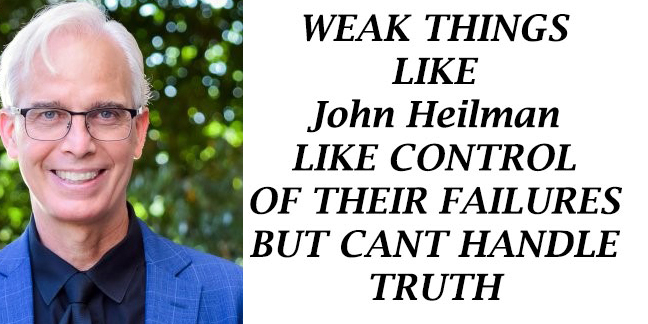
- John Heilman, City Councilmember — jheilman@weho.org
- The West Hollywood City Council — council@weho.org
Taken together, the distribution spans the building inspectors, the Building Official, the City Manager and Assistant City Manager, the City Clerk, the City Attorney, and the full City Council — the entire chain of officials empowered to act.
Each holds office at
Their ADDRESS FOR PEACEFUL ASSEMBLY is
West Hollywood City Hall, 8300 Santa Monica Blvd., West Hollywood, CA 90069.
That breadth is legally significant. In California, a public entity’s liability in tort is governed by statute. Government Code section 818.6 gives cities broad immunity for how, or whether, they inspect property, and the courts have applied it expansively. But immunity is not the whole statute book. Government Code section 815.6 creates a distinct statutory tort: where a public entity is under a mandatory duty “designed to protect against the risk of a particular kind of injury,” it “is liable for an injury of that kind proximately caused by its failure to discharge the duty” unless it can show it exercised reasonable diligence. Health & Safety Code section 17980(c)(1) supplies exactly such a mandatory command: once an agency “has inspected or caused to be inspected a building and has determined that the building is a substandard building,” it “shall commence proceedings to abate.”
A claim under section 815.6 turns on three elements: a mandatory duty, a duty designed to protect against the kind of injury suffered, and a breach that proximately causes that injury. The hinge, across all three, is knowledge. Documented notice to the officials empowered to act is what separates a discretionary judgment call — immunized — from a mandatory duty left undischarged, which is not. Notice carries a second consequence as well: a hazard a public entity has been formally told about is the classic predicate for a continuing condition, one on which the limitations clock resets with each new instance of harm rather than expiring.
On the property owner’s account, that notice was delivered — not once, and not to one office, but across the chain of command. As of publication, the record reflects no inspection of the property.
The Unanswered Public-Interest Questions
Strip away the personalities and a straightforward civic question remains. A property owner brought a documented building-safety complaint about a water-intrusion condition affecting structural and electrical elements of a commercial building. State law defines exactly such conditions as substandard, and, on the property owner’s telling, the City permitted and inspected the very renovation that preceded the damage. The statutory response to a substandard finding is to inspect and then abate. The response the property owner received was a directive to stop communicating.
The right to raise these questions is itself protected. The First Amendment safeguards the right of property owners and journalists to petition their government and to report on and criticize how it conducts the public’s business. The U.S. Supreme Court held in City of Houston v. Hill (1987) that the First Amendment “protects a significant amount of verbal criticism and challenge directed at” government officials, and the Ninth Circuit held in Obsidian Finance Group v. Cox (2014) that First Amendment protections for reporting on matters of public concern do not turn on whether the speaker is a credentialed, institutional journalist. Scrutiny of how a city handles a safety complaint is squarely within that protected zone.
Two questions now sit with the City of West Hollywood. First: why did a documented safety complaint, framed in the specific language of the state housing and food-safety codes, draw a cease-and-desist rather than an inspection? Second, and more consequential for the city’s residents and business owners: is this how West Hollywood routinely responds when a property owner presses a code-enforcement complaint against a City-permitted project — or is the Santa Monica property an outlier? The answer matters well beyond one leaking wall.
Editor’s note: Statements attributed to Zullo, to Urban Development, or to “the demand letter” reflect the property owner’s account and documentary materials that Good Shepherd Media has not independently verified, and are reported as claims. Statutory text, case law, and public records concerning City offices and officials are drawn from primary and government sources. Named public officials are referenced solely in their official capacities. This article does not endorse contacting any official at any private location, and no residential address of any individual is published.
© Good Shepherd Media. goodshepherdmedia.net