

Science & Engineering · Health · Family · Child Welfare
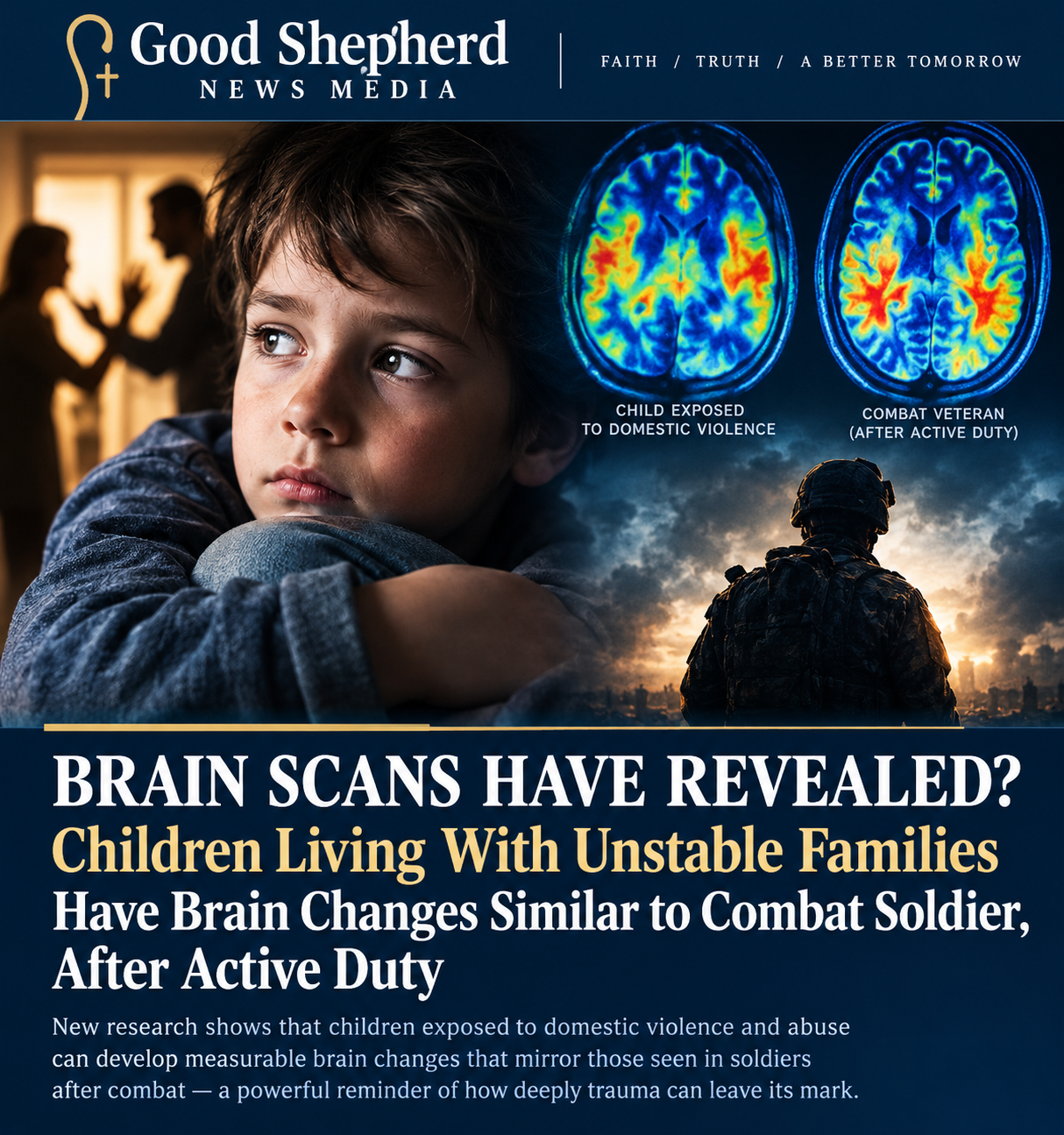
Brain Scans Reveal Children Exposed to Family Violence Have Combat-Like Threat Responses
A landmark scientific study found that children exposed to physical abuse and domestic violence can develop heightened neurological responses to perceived threats—similar to patterns previously observed in soldiers exposed to combat. The findings raise serious questions about what happens to a child’s developing brain when home becomes a place of fear instead of safety.
By Philip senior journalist | Good Shepherd News Media
The place where a child should feel safest may become the place where the brain learns to expect danger.
For most children, home is supposed to be a refuge. It is where they learn trust, develop relationships, discover the world, and build the emotional foundation that will follow them into adulthood.
But what happens when home becomes a place of constant arguing, intimidation, physical violence, threats, or fear?
Scientists have discovered something deeply troubling: children exposed to family violence can develop measurable differences in how their brains respond to threatening situations.
And the neurological pattern researchers observed bears a striking resemblance to one previously identified in soldiers exposed to combat.
This is not simply a question of whether a child is upset, frightened, or emotionally affected by what happens around them. Researchers found measurable differences in brain activity using functional magnetic resonance imaging (fMRI).
The implications reach far beyond childhood behavior. They raise important questions about the long-term consequences of growing up in an environment where a child never knows when the next confrontation might occur.
The Scientific Discovery: What Brain Scans Actually Revealed
On December 6, 2011, researchers published a study in the scientific journal Current Biology titled:
The Study
“Heightened Neural Reactivity to Threat in Child Victims of Family Violence.”
The research was conducted by scientists associated with University College London (UCL) and the Anna Freud Centre.
The researchers included Eamon J. McCrory, Stéphane A. De Brito, Catherine L. Sebastian, Andrea Mechelli, Geoffrey Bird, Phillip A. Kelly, and Essi Viding.
Their research examined how children exposed to family violence processed emotional signals, particularly signs of anger.
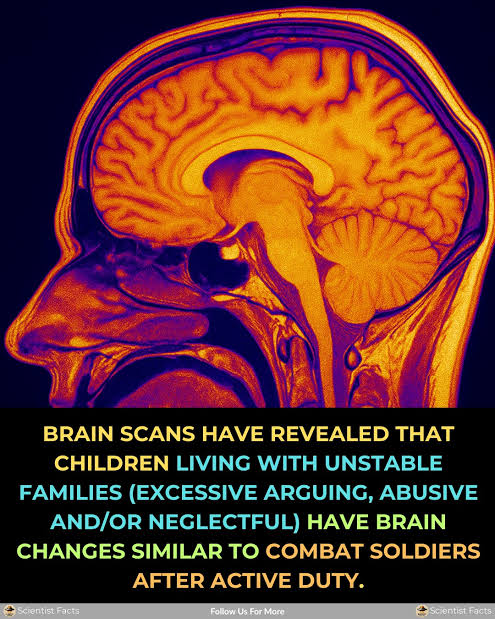
Using functional MRI brain imaging, the scientists identified increased activity in two important brain regions:
The Amygdala
A brain structure involved in processing emotional information, detecting potential threats, and coordinating responses to danger.
The Anterior Insula
A region involved in processing emotional and bodily signals, including experiences associated with threat and distress.
The researchers observed increased activity in these regions when children exposed to family violence viewed angry faces.
Interestingly, the same heightened response was not observed when the children viewed sad faces.
This distinction matters. The findings suggested that the children’s brains were responding particularly strongly to signals associated with potential danger.
In other words, their brains appeared especially sensitive to signs of anger.
The lead researcher, Dr. Eamon McCrory, stressed that all of the children studied were healthy and none was suffering from a mental health problem. The changes appeared before any diagnosis—which is exactly why the team believes they may be an early warning sign. In McCrory’s words, such changes may be helpful to a child in the short term but may raise the risk of problems later.
Why Scientists Compared These Children to Combat Soldiers
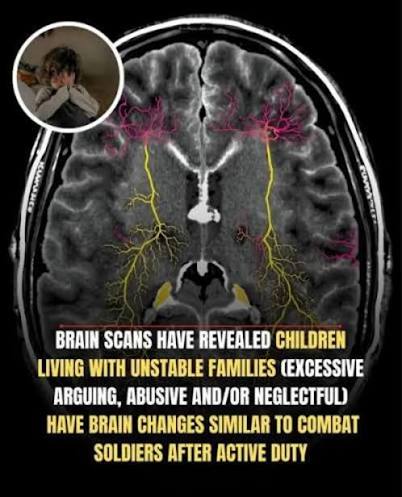
One of the most significant aspects of this research was its comparison with earlier brain-imaging studies involving soldiers exposed to combat.
Previous research had identified increased activity in the amygdala and anterior insula among soldiers who had experienced combat.
The UCL researchers found a similar pattern of heightened activity in children exposed to family violence.
The comparison is striking because the circumstances are so different.
A soldier may experience gunfire, explosions, enemy attacks, and the constant possibility of death while deployed.
A child may experience threats, physical abuse, violence between parents, or an unpredictable home environment.
Yet the brain’s response to signals of potential danger can show similar patterns.
Important Scientific Distinction
Researchers were comparing patterns of neurological activity identified in separate studies. They were not claiming that the children’s brains were identical to those of combat veterans, nor that every child exposed to family conflict develops the same neurological response.
Nevertheless, the findings provide powerful evidence that violence within a family can affect a child’s developing threat-detection system.
What Later Research Has Added
The 2011 study was not the end of the story. The same UCL team later published a follow-up study in the British Journal of Psychiatry comparing 18 maltreated children with 23 children who had not been maltreated. They again found stronger activity in the right amygdala in the maltreated group—this time in response to faces shown too briefly for the children to consciously notice.
A Second Finding
In that follow-up, the level of amygdala activity was linked to how early the abuse began. The younger the child was when the maltreatment started, the stronger the response tended to be for several types of abuse.
A later scientific review by McCrory and colleagues looked across many brain-imaging studies of maltreated children and teenagers. It concluded that these brain differences can appear even without any obvious psychiatric disorder, resemble patterns seen in people who do have such disorders, and can help predict later symptoms. The researchers describe this as a “latent vulnerability”—a hidden risk that can be identified and addressed before a child becomes ill.
When the Brain Learns to Expect Danger
Imagine a child who regularly hears screaming, watches adults threaten one another, witnesses physical confrontations, or lives with the uncertainty of never knowing what will happen next.
For that child, an angry facial expression may not simply be an expression.
It may signal that something dangerous is about to happen.
A raised voice may trigger anxiety. A slammed door may create fear. An argument in another room may cause a child to become immediately alert.
The child may begin watching the expressions, movements, and moods of adults because recognizing danger becomes important to feeling safe.
This is sometimes described as hypervigilance: a heightened state of awareness of possible threats.
The scientific findings suggest that this heightened sensitivity may have a neurological component.
In the short term, being especially alert to danger may help a child recognize threatening situations.
But what happens when that same sensitivity follows the child into classrooms, friendships, relationships, and adulthood?
That is where the long-term implications become particularly concerning.
The Consequences May Follow Children Beyond Their Home
The researchers warned that heightened neural reactivity may represent an adaptation to sustained environmental danger.
However, they also cautioned that this response could become an underlying neurological risk factor associated with later psychological difficulties.
This is an important distinction.
A response that helps a child recognize danger in an unsafe environment may become problematic when that child enters an environment where danger is no longer present.
Consider how this could affect everyday life:
Not Inevitable
These are possible consequences of childhood adversity, not inevitable outcomes for every child. Children respond differently, and supportive relationships and appropriate intervention can make a meaningful difference.
Toxic Stress: How Fear Gets Under the Skin
The Center on the Developing Child at Harvard University uses the term “toxic stress” for stress that is excessive or prolonged. When a child’s stress response stays switched on at high levels for long periods, with no caring adult to help calm it, Harvard’s scientists say it can disrupt the healthy development of brain architecture—especially in areas that handle language, attention and decision-making.
The same research carries a message of hope: supportive, responsive relationships with caring adults can help buffer a child’s stress response, and can help prevent or even reverse the damage. One steady, protective adult can change what the stress does to a child.
A Problem Far Bigger Than One Study
The landmark CDC–Kaiser Permanente Adverse Childhood Experiences (ACE) Study surveyed more than 17,000 Southern California adults about abuse, neglect and household dysfunction in their first 18 years. It found that almost two-thirds reported at least one adverse experience, and more than one in five reported three or more.
The ACE research found a graded “dose-response” relationship: as the number of adverse childhood experiences goes up, so does the risk of poor health and well-being later in life. In short, the more a child is exposed, the greater the toll—which is why early protection matters so much.
Not Every Broken Home Is the Same—and the Science Matters
There is an important distinction that should not be lost in the discussion.
This study did not establish that every child living in a divorced household, a financially struggling household, or a household experiencing ordinary disagreements develops these neurological changes.
The research specifically examined children exposed to family violence, including physical abuse and domestic violence.
An unstable household is not automatically an abusive household.
Parents can separate without subjecting their children to violence. Families can experience financial hardship without creating an environment of fear. Adults can disagree without traumatizing their children.
The concern is sustained exposure to threatening and abusive environments.
That distinction is essential because the purpose of this research is not to condemn families experiencing difficulties. It is to recognize the potential consequences when children are repeatedly exposed to violence and fear.
A Child Should Not Have to Live Like a Soldier in a War Zone
Perhaps the most troubling implication of the research is what it tells us about the importance of a child’s home environment.
Children do not have the ability to simply leave an unsafe household and find somewhere else to live. They depend on adults for protection, food, shelter, emotional support, and stability.
They cannot control whether the adults around them argue, threaten, intimidate, or become violent.
Yet their developing brains may be adapting to those circumstances.
Signs Worth Attention
A child who appears withdrawn, unusually alert, anxious, easily startled, or constantly concerned about the moods of adults may be communicating distress that goes far beyond what can be seen on the surface.
Not every behavioral change indicates abuse, and these signs alone cannot establish what is happening in a household. But they deserve attention rather than dismissal.
The responsibility of adults is not merely to provide a roof over a child’s head. It is to create an environment where that child can develop without constantly anticipating the next threat.
What Parents, Families, and Communities Should Take Away
The research offers an important reminder: children are not simply observers of family conflict.
They are developing human beings whose brains are actively responding to their surroundings.
- The emotional climate of a household matters.
- The way adults treat one another matters.
- The presence of intimidation, violence, and repeated threats matters.
And perhaps most importantly, the absence of physical violence does not necessarily mean a child feels emotionally safe.
Children need consistency, protection, reassurance, and adults who understand that their actions can have consequences extending far beyond a single argument.
Early support, safe environments, and stable relationships can help children recover and develop healthier ways of responding to stress.
Hope
The scientific findings should not be interpreted as a life sentence for children who have experienced trauma. The brain continues developing, and early intervention and supportive relationships offer important opportunities for healing.
The Final Question: What Are We Teaching the Next Generation to Expect From Home?
The 2011 research published in Current Biology provides a sobering scientific perspective on childhood exposure to violence.
Researchers found that children who experienced family violence showed increased activity in brain regions involved in detecting and processing threats—a pattern previously observed in soldiers exposed to combat.
The discovery forces us to consider something that is easy to overlook: a child does not need to be physically struck every day to be affected by an environment filled with danger.
Repeated exposure to violence can influence how a child recognizes threats, processes emotions, and experiences the world around them.
A home should be a place where children learn trust, security, and love.
It should never become a place where their developing brains must learn the skills of survival.
If a Child Is in Danger, Help Is Available
Sources & Scientific References
- McCrory, E.J., De Brito, S.A., Sebastian, C.L., Mechelli, A., Bird, G., Kelly, P.A., and Viding, E. (2011). Heightened neural reactivity to threat in child victims of family violence. Current Biology, Volume 21, Issue 23, Pages R947–R948. Published December 6, 2011. DOI: 10.1016/j.cub.2011.10.015.
- University College London (UCL) — Original research publication and abstract: https://discovery.ucl.ac.uk/id/eprint/10214748/
- PubMed — Scientific publication record, PMID 22153160: https://pubmed.ncbi.nlm.nih.gov/22153160/
- University College London — Research announcement, December 5, 2011: https://www.eurekalert.org/news-releases/874001
- Cell Press / ScienceDaily — Child abuse changes the brain, study finds, December 6, 2011: https://www.sciencedaily.com/releases/2011/12/111205140400.htm
- McCrory, E.J., De Brito, S.A., Kelly, P.A., Bird, G., Sebastian, C.L., Mechelli, A., Samuel, S., and Viding, E. Amygdala activation in maltreated children during pre-attentive emotional processing. British Journal of Psychiatry: https://www.cambridge.org/core/product/59490D29EE3D7953553B7433EB3D5C33/core-reader
- McCrory, E.J., Gerin, M.I., and Viding, E. Annual Research Review: Childhood maltreatment, latent vulnerability and the shift to preventative psychiatry—the contribution of functional brain imaging. Journal of Child Psychology and Psychiatry: https://cir.nii.ac.jp/crid/1360857596440633856
- University College London via ScienceDaily — Maltreated children show same pattern of brain activity as combat soldiers, December 5, 2011: https://www.sciencedaily.com/releases/2011/12/111205140406.htm
- Harvard Center on the Developing Child — Toxic Stress: https://developingchild.harvard.edu/science/key-concepts/toxic-stress/
- CDC — About the CDC-Kaiser ACE Study: https://cdc.gov/violenceprevention/aces/about.html
- CDC MMWR, June 30, 2023, Vol. 72, No. 26 — Prevalence of Adverse Childhood Experiences Among U.S. Adults, 2011–2020: https://stacks.cdc.gov/view/cdc/144792/cdc_144792_DS1.pdf
- Childhelp National Child Abuse Hotline and National Domestic Violence Hotline numbers: https://thehotline.org/?p=1468
Editorial Note: This article discusses scientific research and general child-welfare concerns. It does not diagnose any individual child or suggest that all children exposed to family instability experience identical neurological effects.