

Good Shepherd Media • First Amendment & Press Freedom
No Law Means No Law: How the Pentagon Papers Beat the Censors and Lit the Fuse to Watergate
In fifteen days in 1971, two newspapers forced the Supreme Court to decide whether a president could stop the presses. The government lost, and the White House’s campaign to punish the leaker became the machinery that brought down a president.
By Philip, Publisher, Good Shepherd Media
On June 30, 1971, the Supreme Court of the United States ruled 6 to 3 that the Nixon administration could not stop The New York Times and The Washington Post from publishing a secret Pentagon history of the Vietnam War. The government, the Court said, had not carried the heavy burden the Constitution places on anyone who wants to censor the press before it prints. Fifty-five years later, that ruling, New York Times Co. v. United States, 403 U.S. 713, is still the first case lawyers reach for when any government tries to gag a newspaper. What follows is the story of the case, what it did and did not decide, and how an administration’s rage at a leak turned into the burglaries, lies and cover-up we now call Watergate.

The Secret History
In 1967, Secretary of Defense Robert McNamara, increasingly troubled by the war he had helped run, commissioned a classified study of American decision-making in Vietnam since the end of World War II. A Pentagon task force directed by Leslie Gelb produced roughly 7,000 pages in 47 volumes, titled “United States-Vietnam Relations, 1945-1967.” The National Archives catalogs it as the “Report of the Office of the Secretary of Defense Vietnam Task Force.” It was stamped “Top Secret, Sensitive,” and only 15 copies were made.
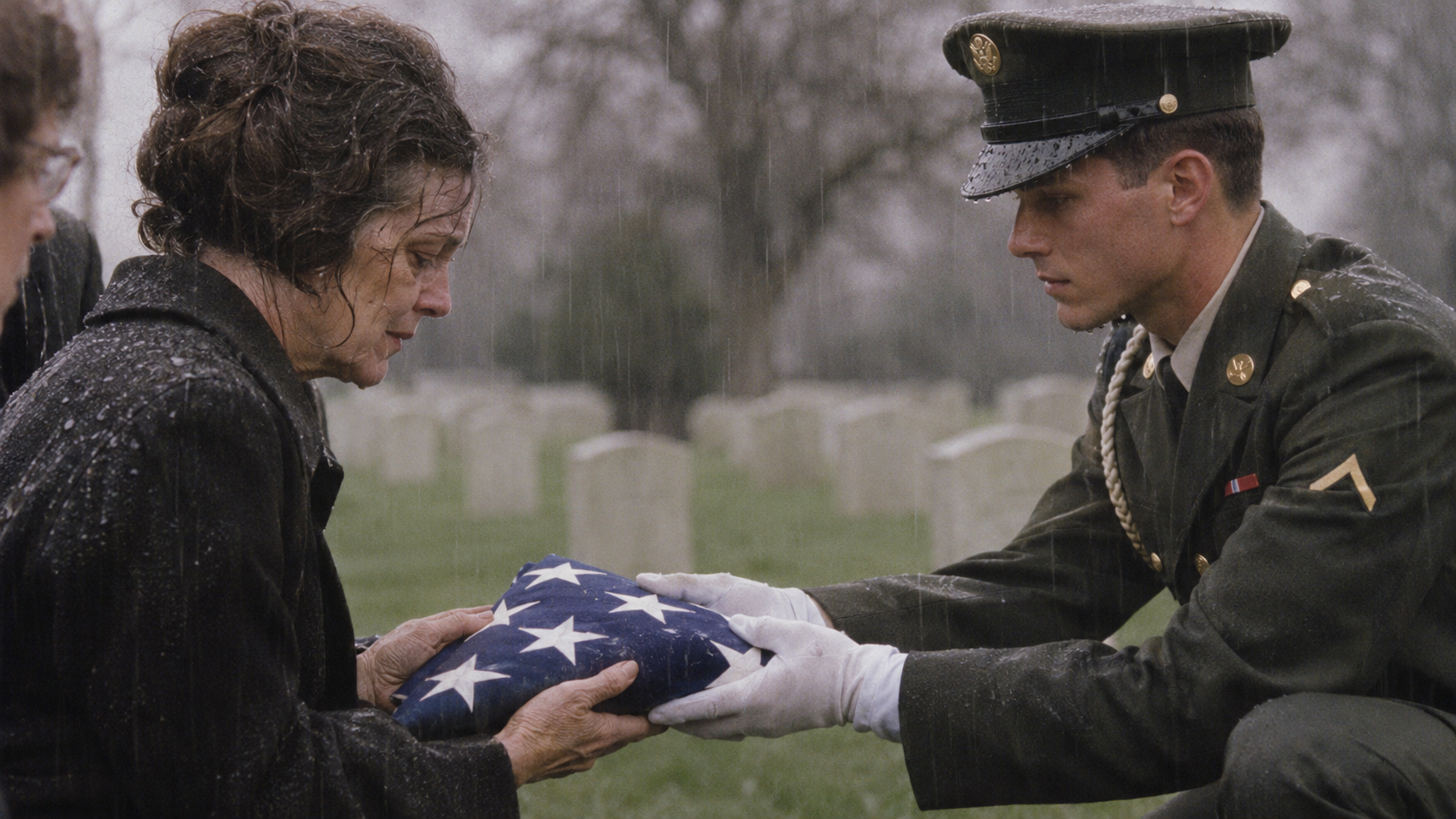
According to the Miller Center at the University of Virginia, the study showed that administrations from Harry Truman’s through Lyndon Johnson’s had willingly deceived the American people about the nation’s involvement in Vietnam. The record ran across four presidencies. The Truman administration funded France’s colonial war against the Viet Minh. The Eisenhower administration worked against the nationwide elections promised by the 1954 Geneva settlement. The Kennedy administration encouraged the 1963 generals’ coup against South Vietnamese President Ngo Dinh Diem, who was killed. The Johnson administration ran covert raids against North Vietnam before the August 1964 Gulf of Tonkin Resolution, had the resolution drafted before the incident that supposedly prompted it, and settled on bombing the North while Johnson campaigned as the candidate of restraint.
The Leak
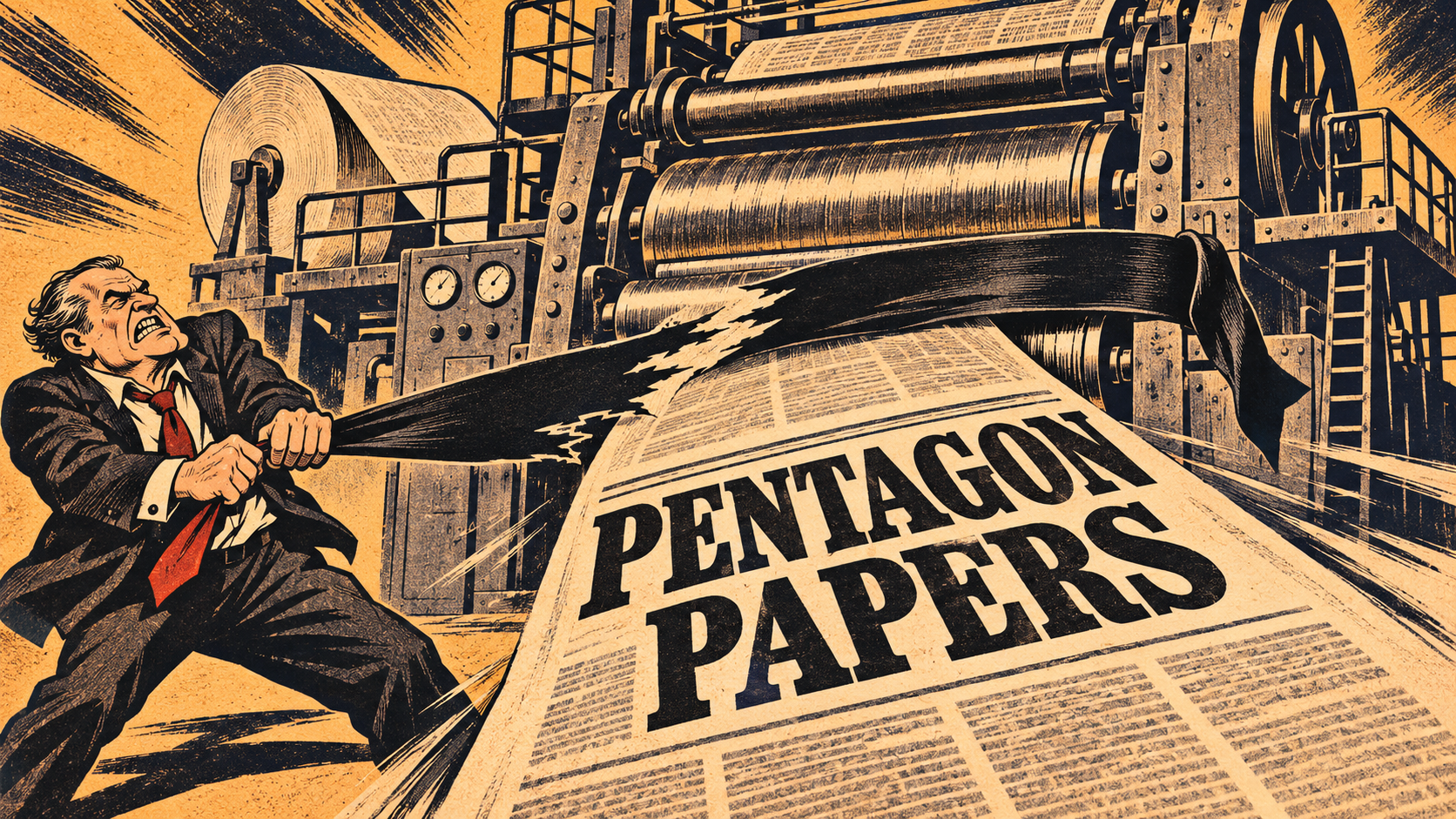
Daniel Ellsberg, a former Marine and RAND Corporation analyst who had helped write the study, came to believe the war rested on systematic deception. Beginning in October 1969, by his own account, and with initial help from former RAND colleague Anthony Russo, he secretly photocopied it. He first tried to get senators, including J. William Fulbright and George McGovern, to put it into the public record. None would. In March 1971, by then at the Massachusetts Institute of Technology, he showed it to New York Times reporter Neil Sheehan.
The Times spent months reviewing the documents in a sequestered team at the New York Hilton. Its longtime outside law firm, Lord, Day & Lord, warned against publication. Publisher Arthur Ochs Sulzberger, pushed by general counsel James Goodale and his editors, went ahead anyway. On Sunday, June 13, 1971, the front page carried Sheehan’s story: “Vietnam Archive: Pentagon Study Traces 3 Decades of Growing U.S. Involvement.”
The Government Goes to Court
President Nixon’s first instinct, the Miller Center’s analysis of his tapes shows, was to enjoy the embarrassment of his Democratic predecessors. Attorney General John Mitchell pushed for action. On June 14 the Justice Department wired the Times demanding it stop, warning of prosecution under the Espionage Act. The Times refused and said it would yield only to a court. When Lord, Day & Lord declined to defend the paper, Goodale turned to Yale law professor Alexander Bickel and a young litigator named Floyd Abrams, who worked through the night.
On June 15, United States District Judge Murray Gurfein, newly appointed by Nixon and hearing his first case, granted a temporary restraining order after the third installment. For the first time in American history, the federal government had persuaded a court to halt a major newspaper’s presses over national security. Four days later, after a closed hearing, Gurfein refused to issue a preliminary injunction, finding the government had shown no concrete harm. He kept the temporary order in place while the government appealed.
While the Times was gagged, Ellsberg passed copies to The Washington Post’s national editor, Ben Bagdikian, who brought back something over 4,000 pages, by executive editor Ben Bradlee’s own count, against the roughly 7,000 the Times held. The Post’s stakes were enormous. As Bradlee later wrote in the Post, the company had just gone public on June 15, 1971, with a $35 million stock offering, and a criminal charge could have unraveled it. Bradlee added that a company convicted of a felony could not hold television licenses, which put roughly another $100 million at stake. On the night of June 17, with editors and lawyers arguing at Bradlee’s house, publisher Katharine Graham took the call and gave the order: “Let’s go. Let’s publish.” The Post’s first story ran June 18.
The Justice Department sued the Post that same day. Judge Gerhard Gesell in Washington refused even a temporary restraining order. The United States Court of Appeals for the District of Columbia Circuit, split 2 to 1, imposed one in the early hours of June 19. Gesell held a full hearing and on June 21 again refused an injunction. On June 23 the two appeals courts split: the District of Columbia Circuit, 7 to 2, sided with the Post, while the Second Circuit in New York, 5 to 3, sent the Times case back for more secret hearings. Meanwhile Ellsberg, by his own later count, had supplied copies to nineteen newspapers. According to the Miller Center timeline, the Boston Globe began publishing and was itself restrained by a federal judge on June 22, the Chicago Sun-Times began the same day, and the St. Louis Post-Dispatch followed on June 25. The Supreme Court agreed to hear both cases on June 25 and heard argument the next day. Solicitor General Erwin Griswold argued for the government; Bickel argued for the Times and William Glendon for the Post.
“Only a free and unrestrained press can effectively expose deception in government.”
— Justice Hugo L. Black, concurring, New York Times Co. v. United States (1971)
What the Court Decided
The Court’s unsigned per curiam opinion is just three paragraphs. Relying on Bantam Books v. Sullivan (1963), Near v. Minnesota (1931) and Organization for a Better Austin v. Keefe (1971), it held that any prior restraint arrives with a “heavy presumption against its constitutional validity,” that the government bears a heavy burden to justify one, and that it had failed to do so. The Court affirmed the District of Columbia Circuit, reversed the Second Circuit and vacated its own stays. The papers resumed printing.
Every justice then wrote separately. Justice Hugo Black, joined by Justice William O. Douglas, called each day of the injunctions a flagrant violation of the First Amendment and wrote that the press exists to serve the governed, not the governors. Douglas added that the Espionage Act, by its own terms, did not authorize stopping publication. Justice William Brennan wrote that only proof that publication would inevitably, directly and immediately cause harm on the order of endangering a troopship at sea could justify even a temporary order. Justice Potter Stewart, joined by Justice Byron White, observed that in national defense and foreign affairs the only real check on presidential power may be an informed public, adding, “For without an informed and free press there cannot be an enlightened people.” Stewart and White believed some of the documents were sensitive but could not say that disclosure would surely cause direct, immediate and irreparable damage. Justice Thurgood Marshall framed the case as a separation-of-powers question: Congress had refused to give the president power to stop publication, and courts should not grant it themselves.
The dissents did not endorse censorship so much as protest the speed. Chief Justice Warren Burger complained that the Times had studied the documents for three months while the courts were given days. Justice John Marshall Harlan argued for greater deference to the executive in foreign affairs, and Justice Harry Blackmun called for a fuller balancing of the press’s rights against the government’s claims of danger.
What the Court Did Not Decide
Readers should be clear-eyed here. The ruling barred prior restraint in this case. It did not say the press may never be restrained, and it did not make publishers immune from prosecution afterward. Justice White, joined by Stewart, wrote openly that he would have no difficulty sustaining criminal convictions for publication on facts that would not justify an injunction. The First Amendment Encyclopedia notes that the fractured majority never said when, if ever, prior restraint might be allowed.
The government did prosecute the source. A Los Angeles grand jury indicted Ellsberg on June 28, 1971, and a December 1971 indictment added conspiracy charges and named Russo. By Ellsberg’s own account, he ultimately faced twelve federal felony counts carrying a possible 115 years in prison. Their trial began in January 1973 before United States District Judge William Matthew Byrne Jr. It collapsed when prosecutors disclosed that White House operatives had burglarized the office of Ellsberg’s psychiatrist, that the Federal Bureau of Investigation had illegally recorded Ellsberg and that the government had lost those wiretap records, and when it emerged that presidential aide John Ehrlichman had dangled the directorship of the Federal Bureau of Investigation before the judge mid-trial. On May 11, 1973, Byrne dismissed all charges, ruling that “the bizarre events have incurably infected the prosecution of this case.” Ellsberg and Russo were freed, but never acquitted. The legal question of whether a leaker can be punished under the Espionage Act was left for another day.
Timeline: From the Pentagon Papers to Resignation
- June 13, 1971 — The New York Times publishes its first Pentagon Papers story.
- June 15, 1971 — Judge Murray Gurfein temporarily restrains the Times.
- June 18, 1971 — The Washington Post begins publishing; Judge Gerhard Gesell refuses to restrain it.
- June 19, 1971 — Gurfein denies an injunction against the Times; an appeals court temporarily halts the Post.
- June 26, 1971 — Supreme Court hears argument.
- June 30, 1971 — Supreme Court rules 6 to 3 for the newspapers.
- July 1971 — White House Special Investigations Unit, the “Plumbers,” is formed.
- September 3, 1971 — Plumbers burglarize the office of Ellsberg’s psychiatrist, Dr. Lewis Fielding.
- June 17, 1972 — Five burglars arrested inside Democratic National Committee headquarters at the Watergate.
- February 7, 1973 — Senate votes 77 to 0 to create the Watergate Committee.
- May 11, 1973 — Judge William Byrne dismisses all charges against Ellsberg and Russo.
- July 16, 1973 — Alexander Butterfield reveals the White House taping system.
- July 24, 1974 — United States v. Nixon: Supreme Court orders the tapes surrendered, 8 to 0.
- July 27–30, 1974 — House Judiciary Committee approves three articles of impeachment.
- August 9, 1974 — Richard Nixon resigns the presidency.
Why Prior Restraint Is the Worst Kind of Censorship
Punishment after publication is bad enough, but at least the public has heard the story and a jury stands between the speaker and the state. A prior restraint kills the story in the dark. Five years after the Pentagon Papers, in Nebraska Press Association v. Stuart (1976), Chief Justice Burger, a dissenter in 1971, wrote for the Court that prior restraints are “the most serious and the least tolerable infringement on First Amendment rights,” citing the Pentagon Papers case along the way. Courts across the country still cite both decisions when judges are asked to gag reporters.
That principle is not just for national newspapers. It protects every small, independent newsroom that reports on a city council, a school board or a sheriff’s department. The rule that a government agency cannot get a judge to stop a story before it runs belongs to a one-person local outlet just as fully as to The New York Times. In our view, that is the case’s most important legacy: the right to publish does not depend on the size of the publisher or the comfort of the officials being covered.
The Road to Watergate
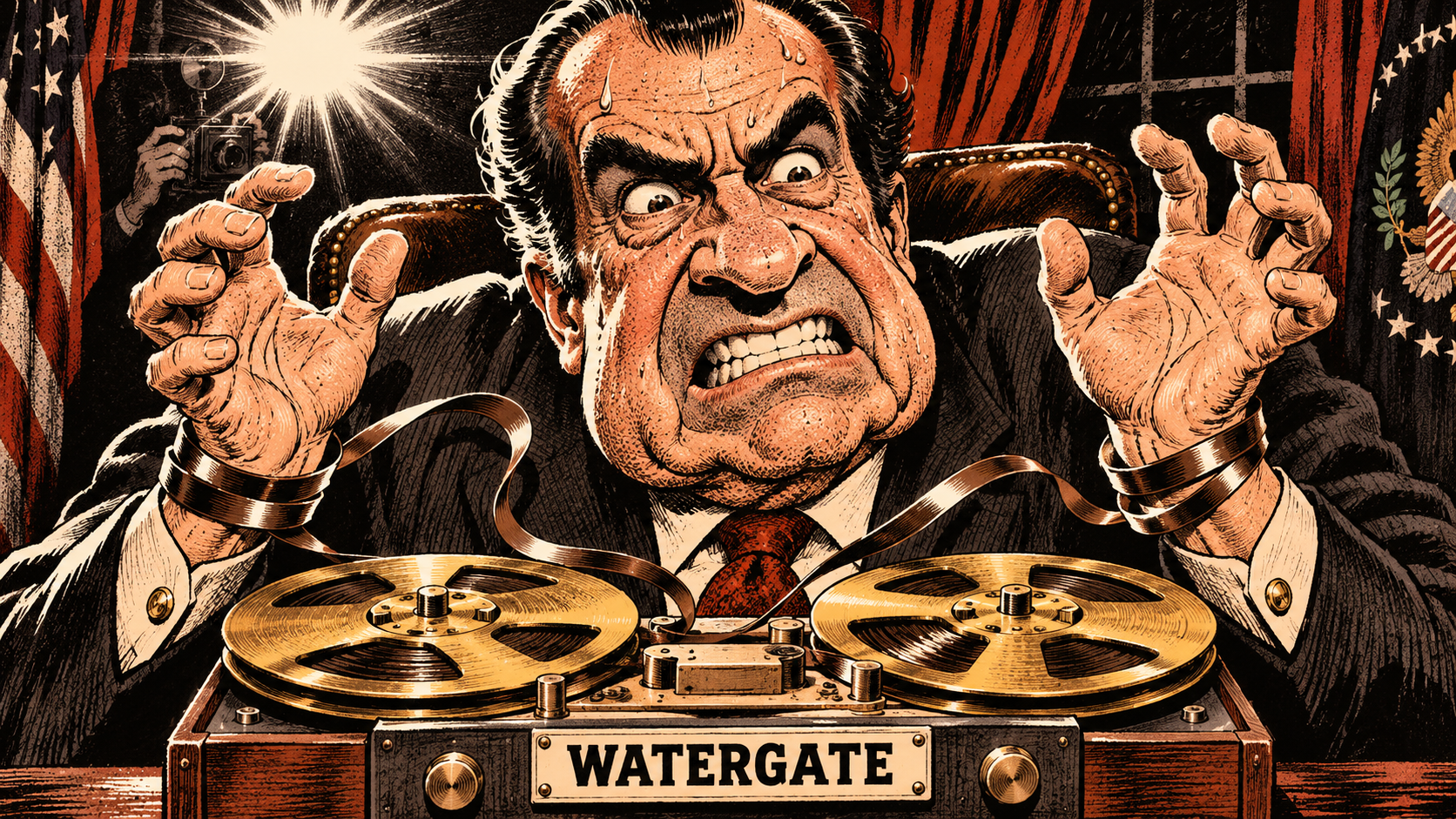
The Supreme Court ended the lawsuit. It did not end Richard Nixon’s war on the leak. His own tapes, preserved and annotated by the Miller Center, show his fury growing by the day. On June 15, 1971, pounding his desk, he told chief of staff H. R. Haldeman, “somebody’s got to go to jail on that.” On June 17 he ordered aides to break into the Brookings Institution to seize Vietnam files he believed were held there. Miller Center scholar Ken Hughes argues that Nixon feared the leak would be followed by exposure of his own secrets, including the secret bombing of Cambodia and his 1968 campaign’s back-channel effort to stall Vietnam peace talks. Dissatisfied with Federal Bureau of Investigation Director J. Edgar Hoover’s investigation, Nixon decided the White House would run its own.
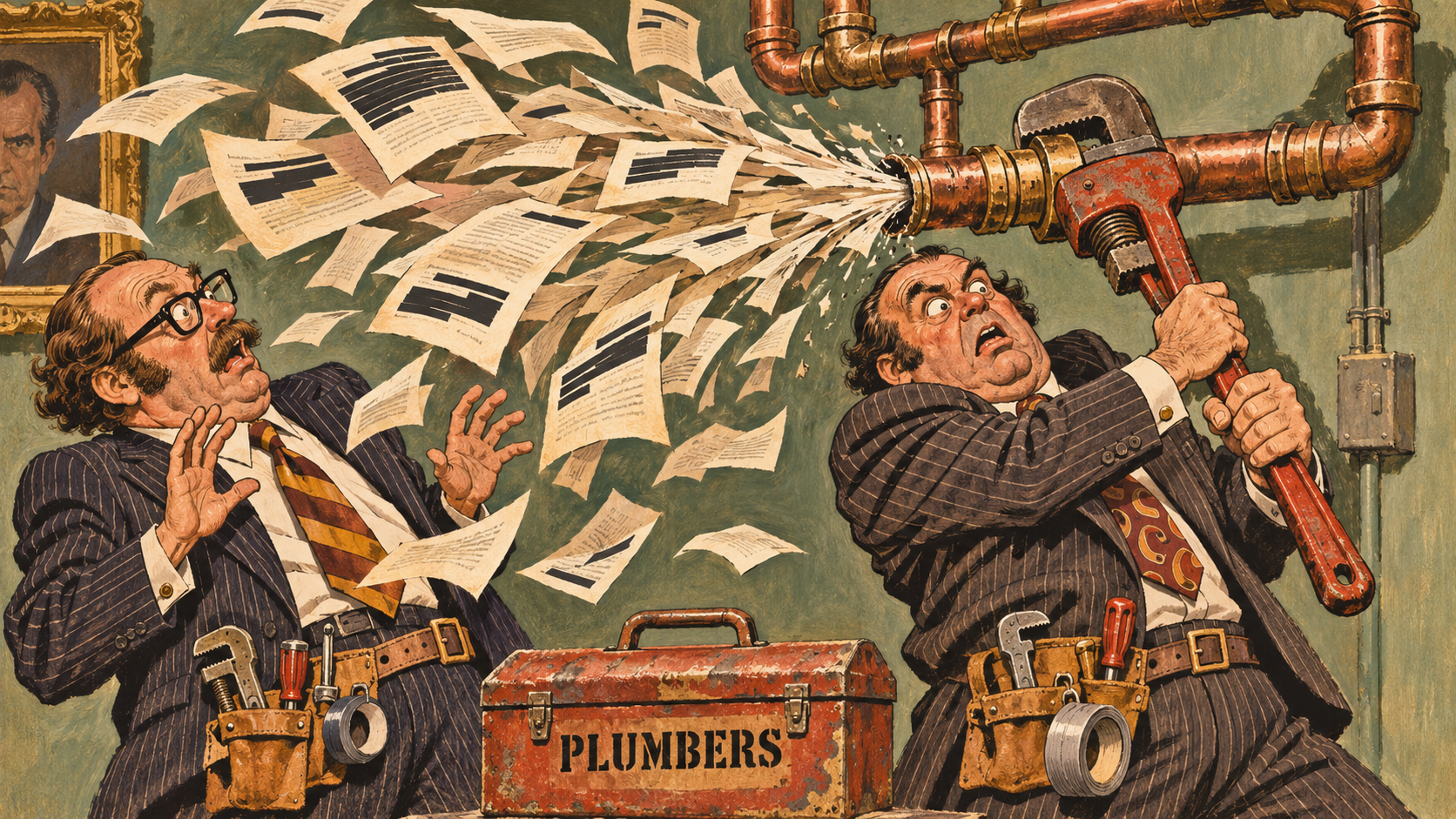
In July 1971 the White House Special Investigations Unit was born. It was co-directed by Egil “Bud” Krogh and David Young under domestic affairs adviser John Ehrlichman. Young hung a sign reading “Plumber” on his door, because the unit’s job was to plug leaks. Its field operatives were E. Howard Hunt, a former Central Intelligence Agency officer, and G. Gordon Liddy, a former Federal Bureau of Investigation agent. Their first major assignment was to discredit Ellsberg. On the night of September 3, 1971, Hunt and Liddy directed a team of Cuban American operatives who broke into the Beverly Hills office of Ellsberg’s psychiatrist, Dr. Lewis Fielding, searching for anything that could be used to smear him. Ehrlichman had approved a covert entry. They found nothing useful.
The men did not go home. Liddy moved to the Committee for the Re-Election of the President, the campaign organization popularly known as the Committee to Re-elect the President, as its counsel, and Hunt went with him into campaign espionage. With campaign money approved at the top, Liddy and Hunt planned the operation against the Democratic National Committee offices in the Watergate complex. After a first entry in May 1972, a team returned in the early morning of June 17, 1972. A security guard named Frank Wills noticed tape on a door lock, and police arrested five men: Bernard Barker, Virgilio Gonzalez, Eugenio Martinez, Frank Sturgis and James McCord, the campaign’s security coordinator. Barker and Martinez had also been inside Dr. Fielding’s office nine months earlier.
Two young Washington Post reporters, Bob Woodward and Carl Bernstein, picked up the story. On June 19, 1972, they reported that McCord was on the payroll of the Nixon reelection campaign. Under Bradlee as editor and Graham as publisher, the same two people who had chosen to publish the Pentagon Papers a year earlier, the Post kept digging through months of White House denials and pressure. In her Post essay “The Watergate Watershed,” Graham recalled that when Bernstein called Mitchell for comment in September 1972, the former attorney general threatened her personally in crude terms. Bradlee cut one vulgar word, and the Post printed that Graham was “gonna get caught in a big fat wringer.”
Then the institutions caught up. On February 7, 1973, the Senate voted 77 to 0 to create the Select Committee on Presidential Campaign Activities, chaired by Senator Sam Ervin of North Carolina. Its televised hearings opened on May 17, 1973. In April 1973 prosecutors told Judge Byrne about the Fielding burglary, which is how the Plumbers’ first crime helped end the Ellsberg prosecution. On July 16, 1973, White House aide Alexander Butterfield told the committee that Nixon had secretly recorded his own conversations. The president fought the subpoenas for those tapes all the way to the Supreme Court. On July 24, 1974, in United States v. Nixon, a unanimous Court, 8 to 0 with Justice William Rehnquist not taking part, ruled that executive privilege could not shield evidence needed in a criminal trial. Between July 27 and July 30, the House Judiciary Committee approved three articles of impeachment: obstruction of justice, abuse of power and contempt of Congress. On August 5 the White House released the June 23, 1972 “smoking gun” conversation, in which Nixon approved using the Central Intelligence Agency to block the Federal Bureau of Investigation’s Watergate investigation. His support in Congress collapsed. On August 9, 1974, Richard Nixon became the first American president to resign.
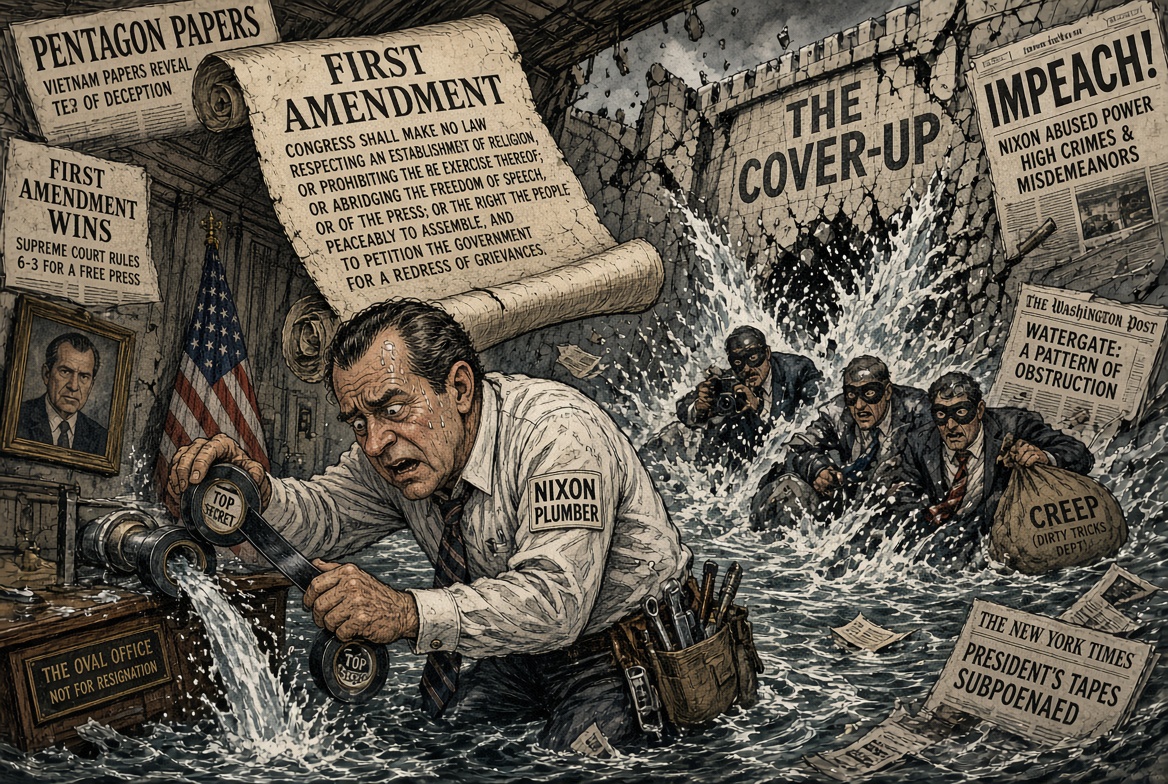
The line runs straight. An administration that could not stop the presses tried instead to destroy the man who leaked to them, built a secret squad to do it, and sent that squad’s leaders on to the Watergate. Every step of the attempt to silence the press and punish a leaker became evidence against the president who ordered it.
What the Two Stories Teach Together
The Pentagon Papers proved that governments lie, sometimes for decades, and that classification stamps often protect officials from embarrassment rather than the nation from danger. Watergate proved what happens when people in power decide the law does not apply to them. In both, a free press held the line long enough for courts, Congress and voters to act. The lesson for every newsroom, large or small, is simple. Publish the truth. Make the government prove its case in open court. And never ask permission to report on the people who hold power over you. Philip — Founder & Lead Investigator, Good Shepherd Media
Business & Government Law Reporter | Santa Clarita, CA
Sources
- Miller Center, University of Virginia: “Nixon and the Pentagon Papers”
- Miller Center: “The Pentagon Papers: The View from the Oval Office”
- Miller Center: “Watergate: The Break-in”
- Oyez: New York Times Company v. United States (1971)
- Oyez: United States v. Nixon (1974)
- Cornell Law School Legal Information Institute: Full text, New York Times Co. v. United States, 403 U.S. 713
- Justia: New York Times Co. v. United States, 403 U.S. 713 (1971)
- Justia: Nebraska Press Association v. Stuart, 427 U.S. 539 (1976)
- Library of Congress: United States v. Nixon, 418 U.S. 683 (1974)
- Federal Judicial Center: “The Pentagon Papers in the Federal Courts”
- National Archives: The Pentagon Papers (complete 2011 release)
- National Archives: Press release on the release of the Pentagon Papers, June 8, 2011
- National Security Archive, George Washington University: “The Pentagon Papers: Secrets, Lies and Audiotapes”
- The First Amendment Encyclopedia, Free Speech Center at Middle Tennessee State University: New York Times Co. v. United States
- United States Senate: The Watergate Investigation
- National Archives: “Watergate and the Constitution” chronology
- United States House of Representatives, History, Art and Archives: “Edition for Educators: Watergate”
- The Washington Post: “The Watergate Story”
- The Washington Post: Katharine Graham, “The Watergate Watershed”
- NPR Fresh Air: Katharine Graham on publishing the Pentagon Papers (1997 interview)
- New-York Historical Society: “Let’s Go, Let’s Publish: Katharine Graham and the Pentagon Papers”
- Graham Holdings Company (formerly The Washington Post Company): Company history
- The Pulitzer Prizes: “The Race to Publish the Pentagon Papers”
PUBLISHER’S NOTE: CORRECTIONS AND NUANCE TO THE SUPPLIED POINTS
1. The ruling (confirmed, with nuance). The 6 to 3 vote and the June 30, 1971 date are correct. The precise holding is narrower than “the press wins”: a three-paragraph unsigned per curiam opinion held only that the government had not met its heavy burden to justify a prior restraint in these cases. There was no majority reasoning, and Justices White and Stewart said post-publication criminal prosecution remained possible. Sources: Cornell Legal Information Institute opinion text; First Amendment Encyclopedia.2. The leak (nuance). Ellsberg photocopied the study in the fall of 1969 with Anthony Russo’s help, while at RAND. By the time he gave it to Neil Sheehan in March 1971 he had moved to the Massachusetts Institute of Technology. The Post did not obtain its copy independently: Ellsberg supplied it through Ben Bagdikian. Sources: Miller Center, “Nixon and the Pentagon Papers”; Federal Judicial Center.
3. The government’s response (correction). The government cited national security and the Espionage Act, but it did not secure a restraining order against the Post from the trial court: Judge Gesell refused. The Post’s temporary restraint came from the District of Columbia Circuit, 2 to 1, on June 19. The Espionage Act also contains no injunction provision; the government’s main theory was the president’s inherent power. Sources: Federal Judicial Center chronology; Justice Black’s and Justice Douglas’s concurrences.
4. The Washington Post’s “defiance” (nuance). The Post did not violate any court order directed at it. It began publishing on June 18 while the Times, a different paper, was under restraint, and it stopped when the appeals court ordered it to. The real risk was financial and criminal exposure. On June 15, 1971 the company offered Class B stock to the public at $26 a share, about $35 million. The “$100 million” figure sometimes cited refers to the value of its television stations, which Bradlee said a felony conviction could have cost. Sources: Graham Holdings company history; New-York Historical Society; NPR Fresh Air interviews with Graham (1997) and Bradlee (1995).
5. Size of the study (confirmed, with nuance). “About 7,000 pages, 47 volumes” is accurate. It covers 1945 to 1967, was commissioned in 1967 and was delivered in January 1969. “Political deception” is a fair summary, but the study is a historical record of decision-making, not a single exposé. Its official title is “United States-Vietnam Relations, 1945-1967,” and the National Archives catalogs it as the “Report of the Office of the Secretary of Defense Vietnam Task Force.” Sources: National Archives; Miller Center.
6. The Plumbers “led to” Watergate (nuance). The personnel link is direct: Hunt and Liddy ran the Fielding break-in and then planned the Watergate operation. Barker and Martinez took part in both. But the Watergate break-in was a reelection-campaign operation, not a formal Plumbers assignment, and McCord was never a Plumber. Nixon fell for the cover-up, not the burglary itself. The fair statement is that the Plumbers supplied the people, methods and mindset that produced Watergate. Sources: Federal Judicial Center; Miller Center; Senate Historical Office.
7. Campaign committee name (minor). The official name was the Committee for the Re-Election of the President; “Committee to Re-elect the President” is the popular name. Source: Senate and Washington Post historical accounts.