

Investigation · Government Accountability
Notified, and Still Not Reading: How West Hollywood Answered a Documented Safety Hazard by Inspecting the Wrong Building
A property owner told the City in writing, again and again, that water is destroying his building from the property next door. The City’s answer was to schedule an inspection of his building — then to declare his correction a “refusal.”
By Good Shepherd Media West Hollywood, Calif.
There is a difference between a city that cannot fix a problem and a city that will not read the complaint. Over the span of a single August in West Hollywood, a commercial property owner on Santa Monica Boulevard learned which kind of city he is dealing with. He documented water pouring through a shared wall from the property next door. He cited the exact statutes that obligate the City to act. He sent photographs and video. And the City — through its Assistant City Manager, under a Mayor who teaches law for a living — responded by aiming its inspectors at the wrong building and then treating the owner’s objection as a refusal to cooperate.
The Complaint the City Would Not Read
The facts, as documented by the property owner, are not complicated. His building shares a party wall with the adjacent bar space. After a City-permitted remodel of that neighboring space — a remodel the City itself inspected and signed off — water began intruding through the shared wall into his property. It had not done so before. He identified the probable sources at the neighbor’s address: an ice-machine drain at the shared wall, a broken roof drainage channel, and a plugged drain and broken pump.
On or about August 11, 2026, he sent the City a formal demand. It named the source property. It cited California Health & Safety Code sections 17920.3 and 17980. It requested inspection and abatement of the neighbor’s property, and it included a California Public Records Act request for the remodel’s permit and inspection file. This was not a vague grievance. It was a road map, written in the City’s own legal language, pointing at a single address.
A Record of Not Listening
What followed, according to the email record, is a sequence that speaks for itself:
- First, the City replied not with an inspection date for the source property, but with a cease-and-desist letter over the owner’s phone conduct — a response to the messenger rather than the message.
- Then, when scheduling finally came, the City’s Assistant City Manager offered dates to inspect — in his own written words — the owner’s own building, “to conduct an internal and external inspection of the premises” at the owner’s address, not the neighbor’s.
- The owner corrected the record, in writing and by a recorded voicemail, stating plainly that the property to be inspected is the neighbor’s — the source — not his own.
- The City’s answer was to write back that it was “interpreting [the] voice message as a denial for allowing the City to inspect” his building, and that it “will render findings absent such inspection.” In other words: having pointed at the wrong building, the City recast the owner’s correction as a refusal, and prepared to close the file on that basis.
Read that sequence again. A property owner reports that Building A is flooding his property. The City proposes to inspect Building B — his. He says no, inspect Building A. The City records that “no” as a refusal to cooperate. This is not the paperwork of an agency that misunderstood. It is the paperwork of an agency that was not listening, and then built a record to make the listener the problem.
The owner reported that the property next door was the source. The City scheduled an inspection of his building — then called his objection a refusal.
What the Law Actually Requires
The frustration here is sharpened by the fact that the law is not ambiguous. Under Health & Safety Code section 17920.3, a building is “substandard” when it exhibits, among other conditions, “[f]aulty weather protection,” expressly including “[d]eteriorated or ineffective waterproofing of exterior walls, roofs, foundations, or floors.” As amended by Senate Bill 1465, effective January 1, 2025, that section reaches “any building or portion thereof, regardless of zoning designation or approved uses,” and expressly extends its protection to “nearby residents.”
Once a substandard condition is found, the City’s discretion runs out. Section 17980(c)(1) provides that when an enforcement agency “has inspected or caused to be inspected a building and has determined that the building is a substandard building,” it “shall commence proceedings to abate the violation.” The operative word is shall. And where a public agency refuses to perform a clear, present, ministerial duty, California courts may compel that performance by writ of mandate under Code of Civil Procedure section 1085 — a remedy the Supreme Court has long recognized reaches duties “purely ministerial in character” (State of California v. Superior Court (1974) 12 Cal.3d 237).
The City will likely reach for its inspection immunity under Government Code section 818.6, and courts do construe that immunity broadly (Haggis v. City of Los Angeles (2000) 22 Cal.4th 490). But that immunity is a shield for how an agency inspects — not a license to ignore the separate, mandatory duty to abate once a hazard is determined (Gov. Code section 815.6). Nor does statutory immunity reach a claim for inverse condemnation, which rests on the California Constitution itself: “the immunities provided by the Tort Claims Act do not insulate a public entity from liability for inverse condemnation” (Pacific Bell v. City of San Diego (2000) 81 Cal.App.4th 596, 603). And because water intrusion is a continuing condition, each recurrence is a fresh wrong for which successive actions lie until it is abated (Baker v. Burbank-Glendale-Pasadena Airport Authority (1985) 39 Cal.3d 862).
Why Prevention Is the Whole Point
This is not a dispute about an inconvenience. Restoration and construction-defect specialists describe water intrusion into concealed wall cavities as the beginning of a chain, not an endpoint. Sustained moisture degrades framing and finishes; it feeds mold in enclosed spaces; and it corrodes the connections that hold a structure together. Left unabated over time, water that compromises structural elements can, in the worst cases, threaten the integrity of the building itself — and a compromised structure is a danger to every person and animal inside or beside it.
No one is predicting a collapse tomorrow. That is precisely the point of prevention: the entire purpose of the substandard-building statutes is to compel repair before deterioration becomes catastrophe. The Legislature did not write section 17980 to be invoked after a wall fails. It wrote it to prevent the failure. A city that receives documented notice of active, recurring water intrusion against structural elements — and responds by inspecting the wrong building and manufacturing a refusal — is not managing that risk. It is running out the clock on it.
The People Accountable
Accountability for how a city handles a safety complaint runs to named offices, and West Hollywood’s are a matter of public record.
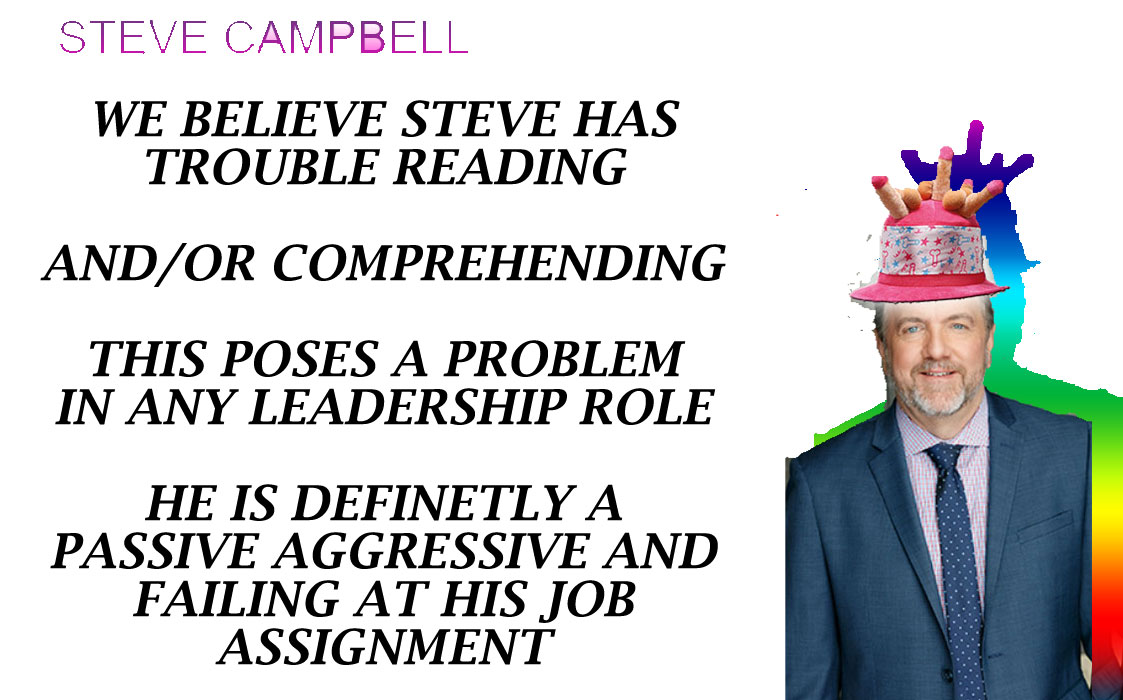
Steve Campbell, Assistant City Manager, is the official the City designated as the property owner’s sole point of contact and the author of the emails at the center of this account — including the one scheduling an inspection of the wrong building and the one recasting the owner’s correction as a “denial.” He is, by the City’s own instruction, the person responsible for moving this matter. On this record, he has moved it in the wrong direction.
Mayor John Heilman presides over the City in 2026. Heilman is not an ordinary elected official when it comes to this subject: a founder of the City who has served as mayor nine times, he holds a law degree from USC and teaches law as a professor at Southwestern Law School and USC. A city led by a law professor cannot credibly claim that the mandatory language of section 17980 — the word “shall” — is beyond its comprehension. The standard of understanding that West Hollywood should be held to is the one its own Mayor teaches in a classroom.
City Manager Jackie Rocco, appointed in 2026, sits atop the administration that received the complaint and the records request. When the Mayor installed her, he publicly stated that the Council must “hold staff accountable.” This matter is a test of whether that phrase means anything.
The City’s Position
The City of West Hollywood has stated in writing that it will respond to the property owner’s demand and produce responsive public records on a rolling basis. Good Shepherd Media will update this report to reflect any substantive response the City provides regarding the water-intrusion complaint, the choice of inspection target, and its characterization of the owner’s correction as a refusal.
The Question West Hollywood Must Answer
Strip away the back-and-forth and one question remains, and it is not rhetorical. A property owner delivered documented notice of a recurring, structure-threatening hazard, in the precise language of the statutes that govern it. The City had every tool it needed to act. Why, after all of that, did West Hollywood point its inspectors at the wrong building and prepare to close the file by calling the complainant uncooperative?
And the larger question, for a city of tens of thousands: if this is how West Hollywood treats a property owner who did everything right — who wrote it down, cited the code, and put the City on notice — what happens to the residents who do not know the statutes by number? Prevention is not a favor a city grants when it feels like it. Under California law, it is a duty. West Hollywood, so far, is failing that duty in writing. This guy Steve cannot seem to get the offending neighbor inspected for his water intrusion. Posing an ongoing risk to us for his dereliction of duties and incompetence at reading mixed with his passive aggressive attitude.
Editor’s note: Statements attributed to the property owner or to his demand and correspondence reflect his account and documentary materials, including the email record and a recorded voicemail, which Good Shepherd Media has reviewed as provided and reports as his account. Statutory text, case law, and public records concerning City offices and officials are drawn from primary and government sources. Named public officials are discussed solely in their official capacities. Nothing in this article states or implies that a structural failure is imminent; the discussion of structural risk describes the general, foreseeable progression of unabated water intrusion and the preventive purpose of the governing statutes.
© Good Shepherd Media. goodshepherdmedia.net