

IRAN NUCLEAR PROGRAM DEVASTATED! How bunker-busters and B-2 stealth bombers struck at the heart of Iran’s nuclear program
Code-named “Operation Midnight Hammer,” the top-secret U.S. precision attack on Iran’s nuclear facilities launched overnight was the largest strike using B2 bombers in history and it was the longest flight involving the fleet since 2001, Pentagon officials said Sunday.
The mission included the first use of the Massive Ordnance Penetrator bombs, or MOP, which had only previously been used in a testing role, according to officials.
“Iran’s nuclear ambitions have been obliterated,” U.S. Defense Secretary Pete Hegseth said during a Sunday morning press briefing at the Pentagon, following the attacks.

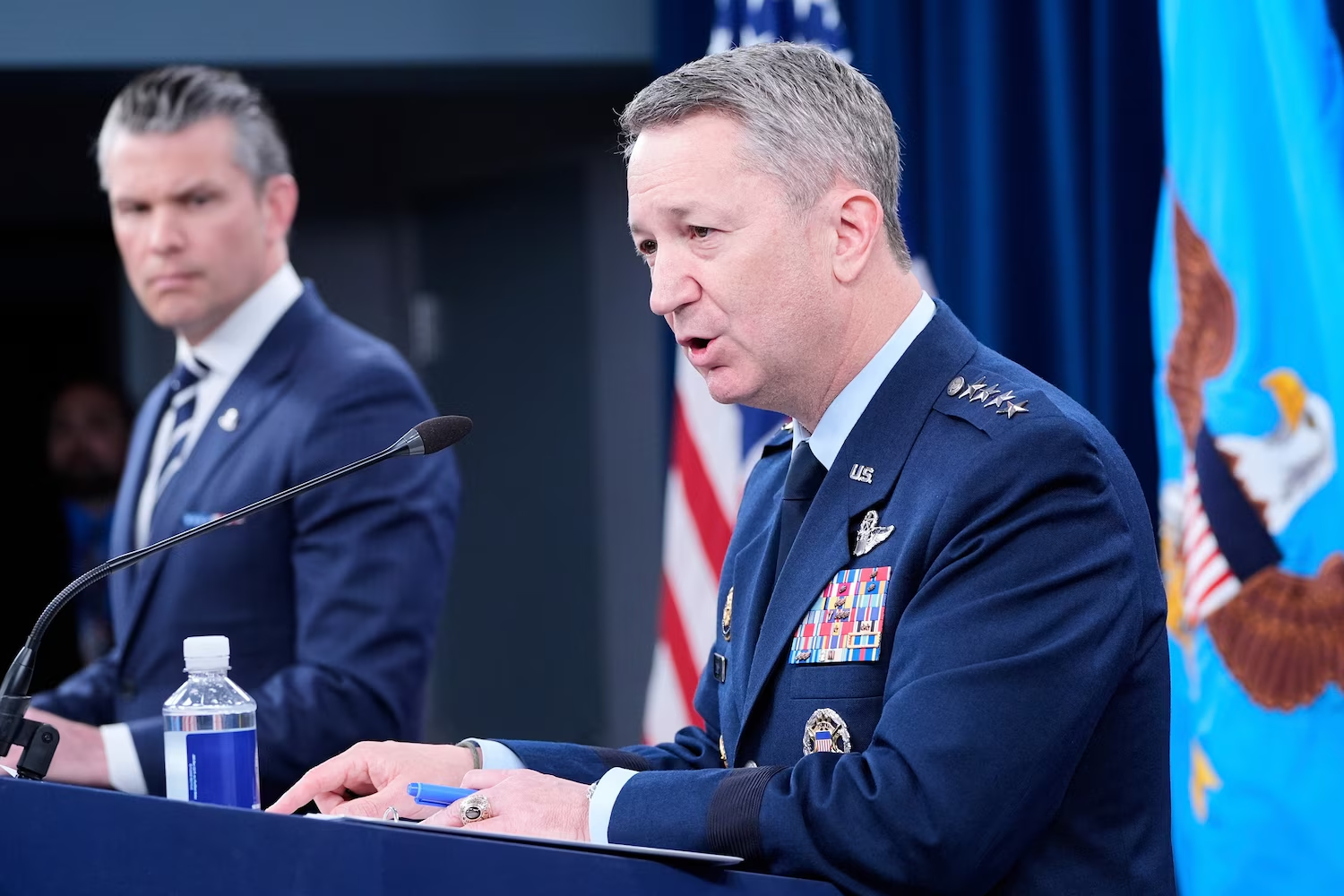
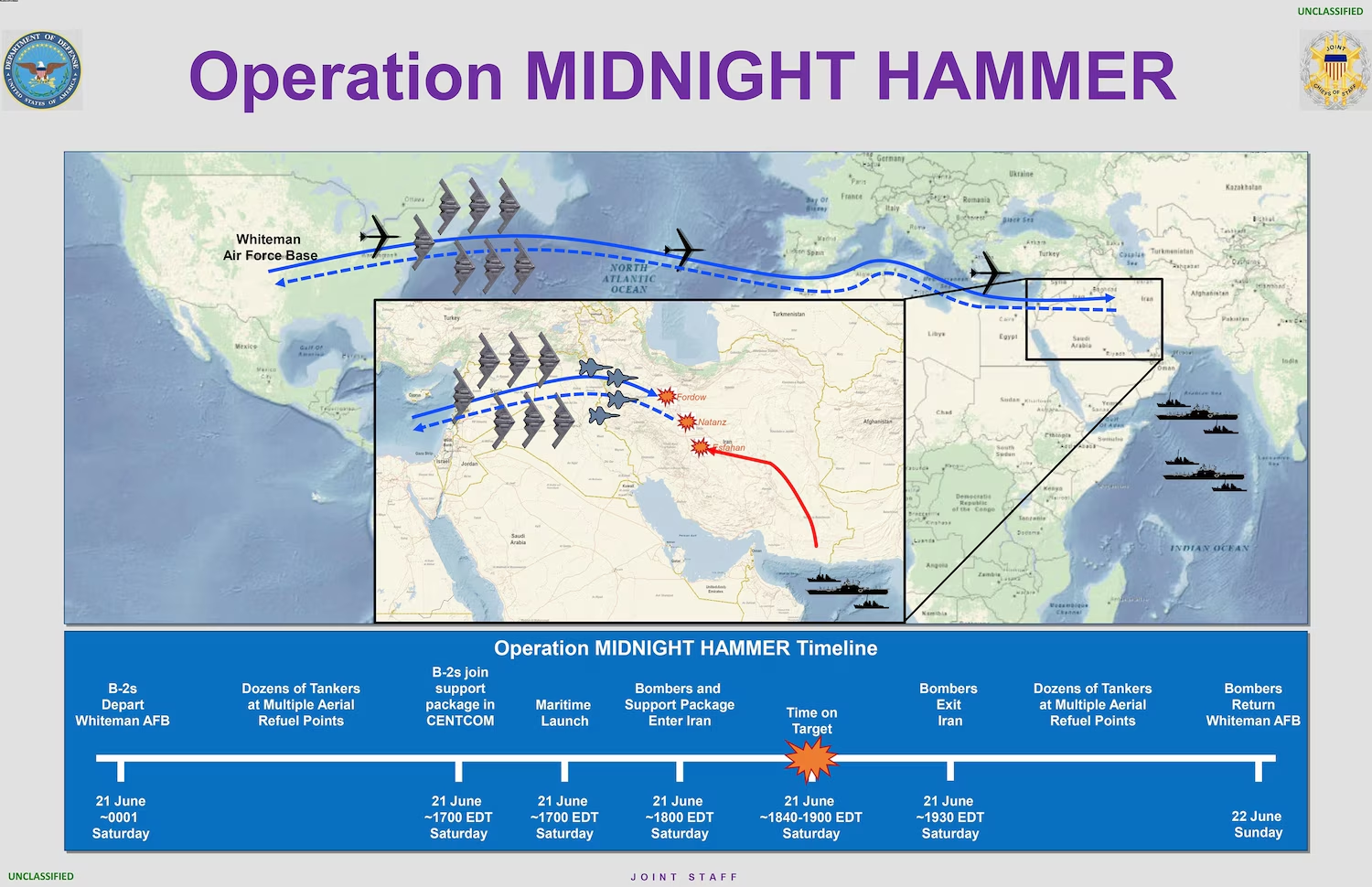
More than 125 aircraft participated in the mission, including seven B-2 Spirit stealth bombers which were launched from the continental United States shortly after midnight Eastern Time and refueled multiple times in midair as they flew 18 hours to reach their targets, Gen. Dan Caine, chairman of the Joint Chiefs of Staff, said during the press briefing. Other aircraft that participated in the mission included B-2 bombers used as decoys, as well as refueling tankers, fighter escorts, and drones that provided Intelligence, surveillance and target acquisition, according to U.S. officials.
IRAN NUCLEAR PROGRAM DEVASTATED!
Caine said that just after 2 a.m. Iran time, the B-2 bombers began dropping 14 MOP bombs in strikes on two of Iran’s nuclear facilities — the Natanz and Fordo sites. Each MOP bomb measures about 20 feet long, weighs 30,000 pounds and is capable of penetrating 200 feet deep inside a target before exploding.
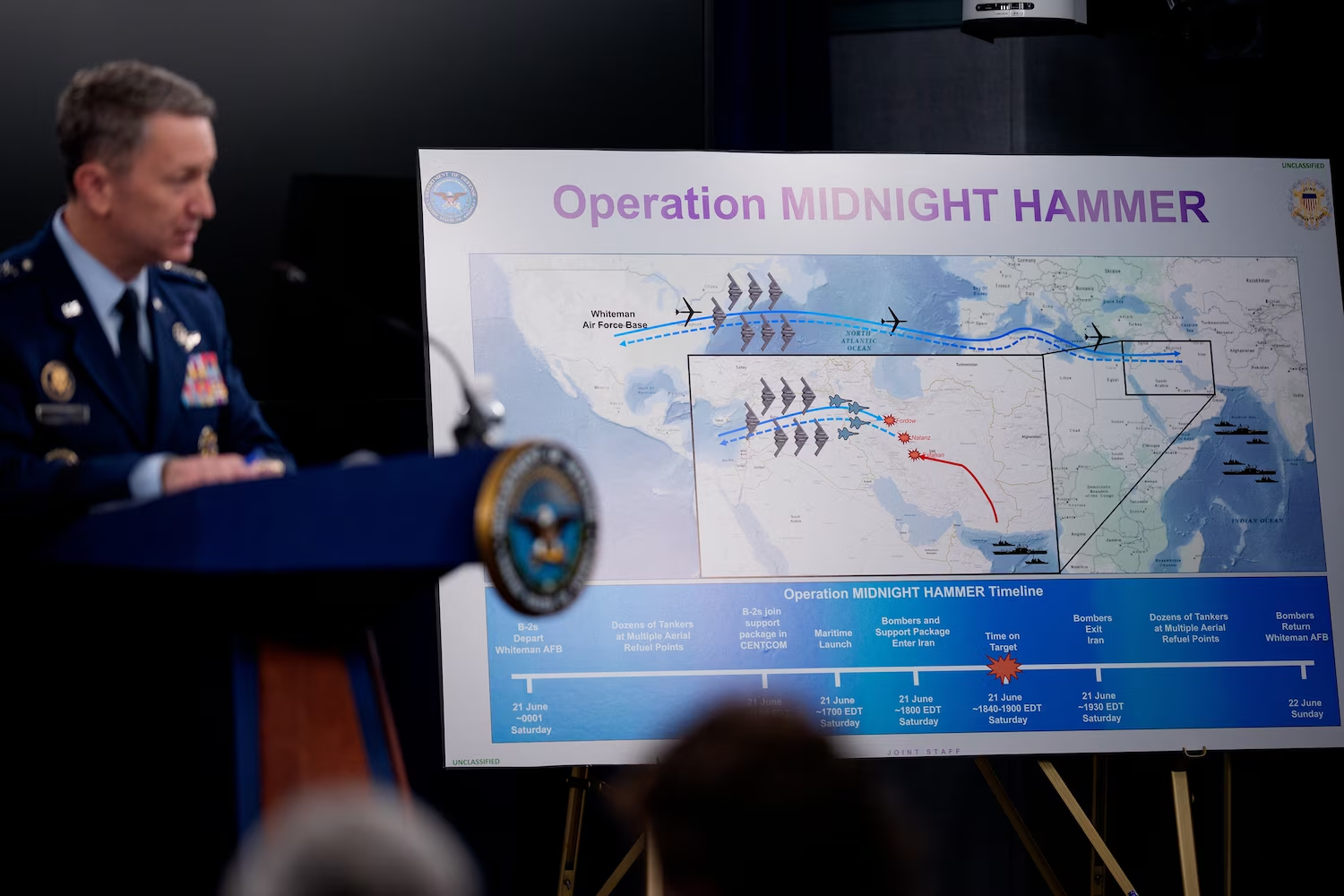
Caine called “Operation Midnight Hammer” a “complex and high-risk mission.”
A total of 13 B-2 bombers took off around the same time on Saturday morning from Whiteman Air Force Base in Missouri, according to Caine. Six B-2 bombers were sent to the Pacific Island of Guam as decoys while the seven bombers used to target Iran’s underground nuclear facilities quietly headed east to conduct the mission with little communication to avoid detection, Caine said.
Just before dropping their payloads on Iran’s nuclear facilities, Caine said two dozen Tomahawk cruise missiles were fired at the Isfahan nuclear site in Iran from a U.S. submarine positioned in the region.
The Tomahawks were fired before the B-2 bombers carried out their airstrikes, Caine said. However, because of their slower flight times and the distance they had to travel, the Tomahawk missiles did not strike their targets at Isfahan until shortly after the B-2 bombers had dropped their 14 bombs.
It was not immediately clear if the B-2 bombers sent to Guam ever landed there. All 13 bombers are expected to arrive back at Whiteman Air Force Base early Sunday afternoon, according to officials.
“A short time ago, the U.S. military carried out massive precision strikes on the three key nuclear facilities in the Iranian regime: Fordo, Natanz and Isfahan. Everybody heard those names for years as they built this horribly destructive enterprise. Our objective was the destruction of Iran’s nuclear enrichment capacity, and a stop to the nuclear threat posed by the world’s number-one state sponsor of terror,” Trump said.
The president added, “Tonight, I can report to the world that the strikes were a spectacular military success. Iran’s key nuclear enrichment facilities have been completely and totally obliterated.”
During Sunday’s press briefing, Hegseth said, “No other country on planet earth could have pulled off the operation,” echoing a statement Trump had posted on his Truth Social platform following the attack.
“This is a plan that took months and weeks of positioning and preparation so that we could be ready when the president of the United States called,’ Hegseth said. “It took a great deal of precision. It involved misdirection and the highest of operational security.”
Hegseth said the B-2 bombers, each with a two-person crew, reached the nuclear facility targets and struck them without ever being detected by Iranian forces, saying the stealth aircraft got “in and out and back without the world knowing at all.”
Iran did not deploy its fighter or surface-to-air missiles during the mission, Caine said.
Prior to the mission, Israeli forces had spent about 10 days crippling Iran’s air-defense capabilities, destroying much of its fighter aircraft and leaving the country’s military airfields severely damaged.
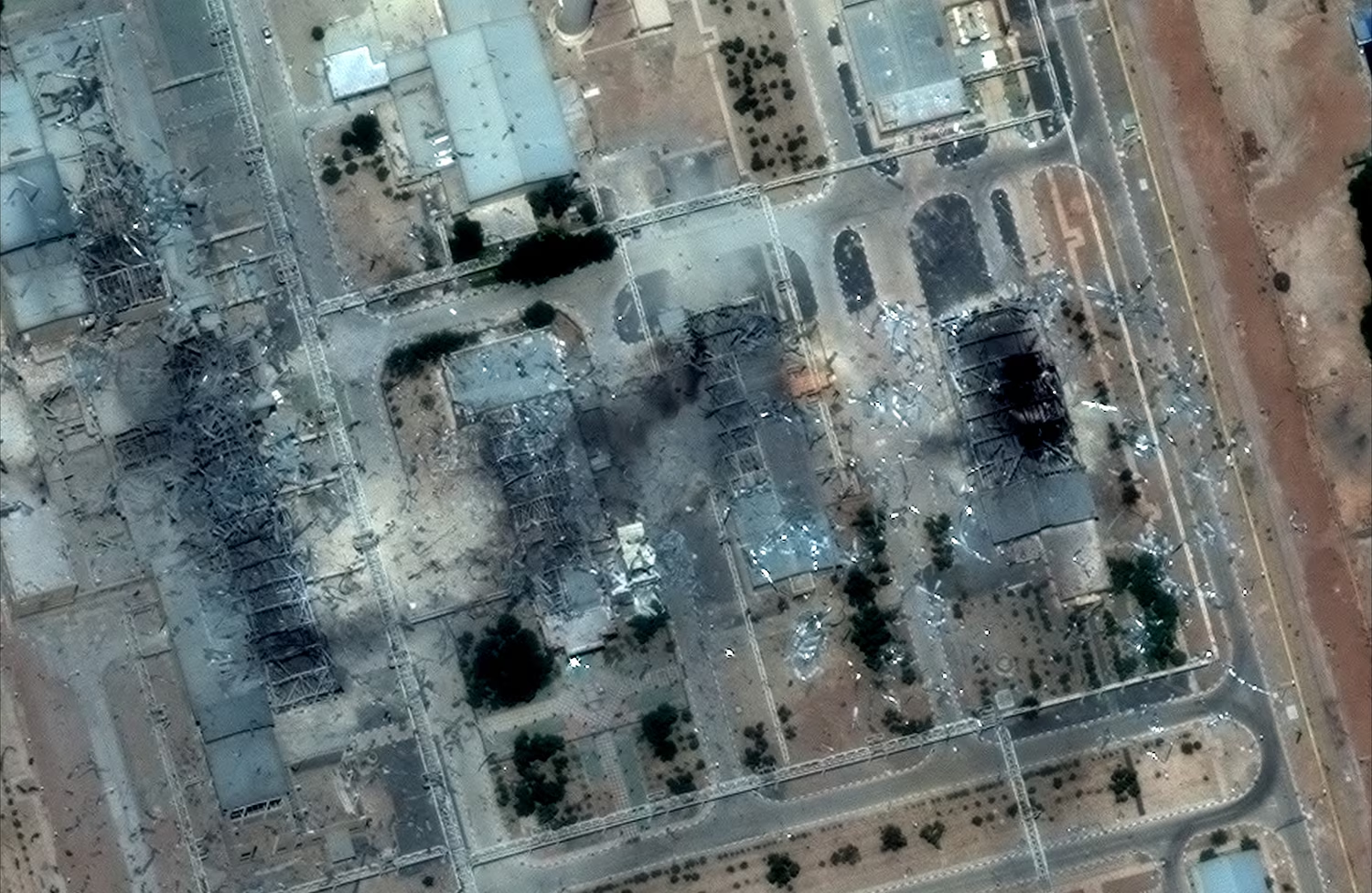
While Hegseth and the White House touted the mission as a huge success, an assessment is underway to determine extent of the damage to the nuclear facilities, Caine said during Sunday morning’s briefing.
Hegseth emphasized that the purpose of the mission was to prevent Iran from developing a nuclear bomb, a goal that, according to the White House, the country was just days away from achieving.
Hegseth also said that the mission was not aimed at a regime change in Iran. He said public and private messages are being directly delivered to the Iranians through multiple channels, “giving them every opportunity to come to the table” and negotiate a peace settlement.
“They understand precisely what the American position is, precisely what steps they can take to allow for peace, and we hope they do so,” Hegseth said.
Hegseth said that while “anything can happen in conflict,” the operation is not open-ended: “We acknowledge that but the scope of this was intentionally limited,” he said.
According to Caine, troops in the region were not given an advance warning of the attacks. In the wake of the strike, Gen. Michael Erik Kurilla, commander of U.S. Central Command (CENTCOM), overseeing military operations in the Middle East and Central Asia, elevated force protection measures across the region, especially in Iraq, Syria and the Gulf, said Caine.
“Our forces remain on high alert and are fully postured to respond to any Iranian retaliation or proxy attacks, which would be an incredibly poor choice,” Caine said. “We will defend ourselves. The safety of our service members and civilians remains our highest priority.”
Post-Strike Images At Fordow Nuclear Site Show Damage After US Bombed Iran
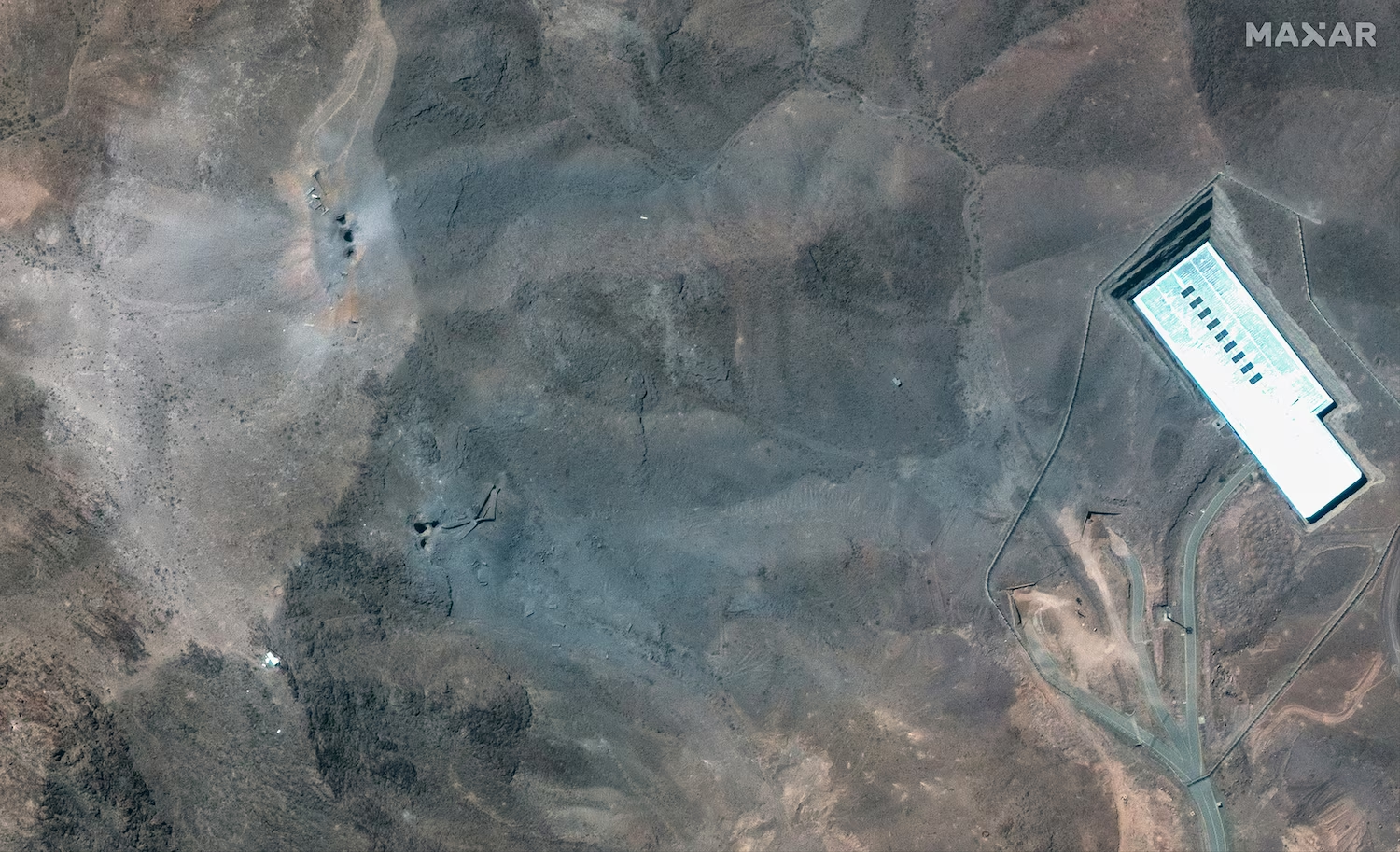
The post impact image of the Fordow nuclear facility shows two places which could have been possible bomb entry points. It also shows that the land had caved inwards post strike, whereas the tunnel entrances had been sealed with dirt.
A day after US President Donald Trump bashed the Nobel authorities for not acknowledging his anti-war efforts, the United States has carried out precision airstrikes on the three nuclear facilities in Iran – Isfahan, Natanz and Fordow.
Hi-resolution pre and post impact satellite images of the Fordow Fuel Enrichment Plant, which lies northeast of Qom, give a glimpse into the terrain in which the nuclear facility has been carved.
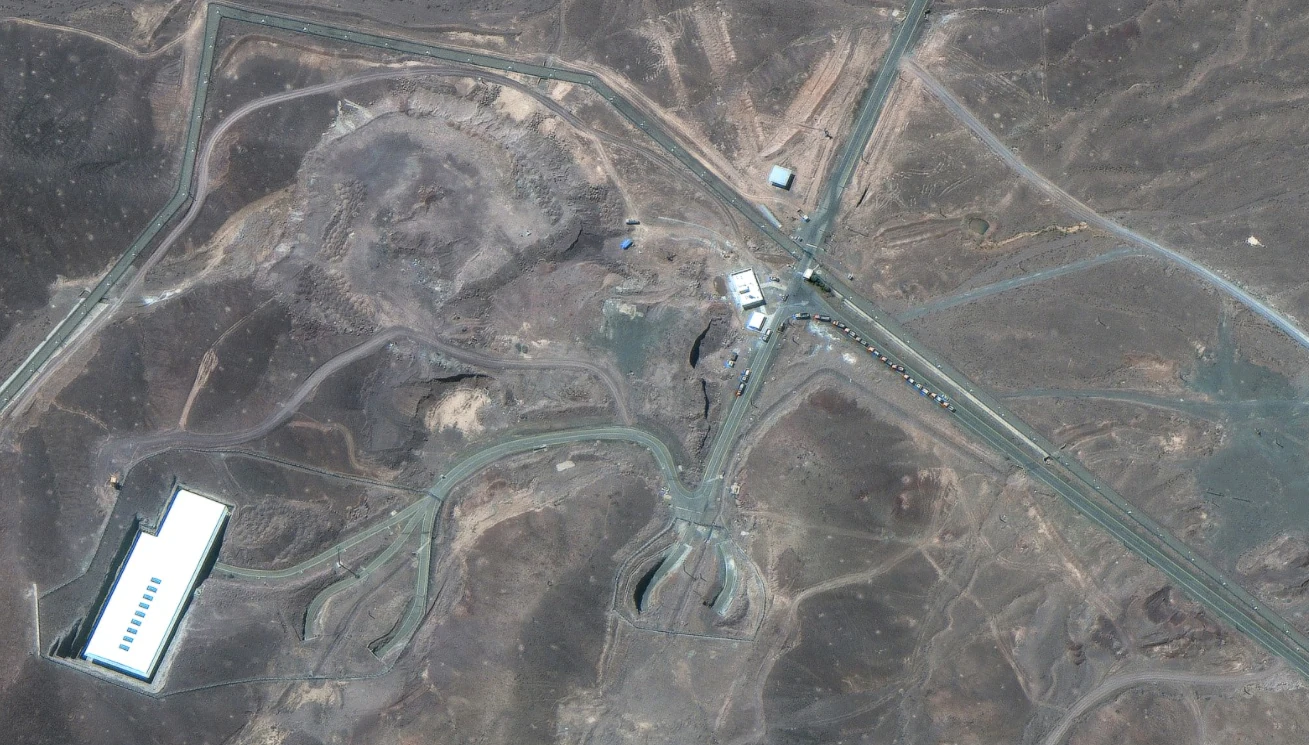
Photo Credit: Satellite image ©2025 Maxar Technologies (See high resolution image here)

There are an artery of roads that lead to the facility, and multiple points which go into the facility and the pre-images also show a number of vehicles lined up near the entry point of the plant.
The post impact image of the Fordow nuclear facility shows two places which could have been possible bomb entry points. It also shows that the land had caved inwards post strike, whereas the tunnel entrances had been sealed with dirt.
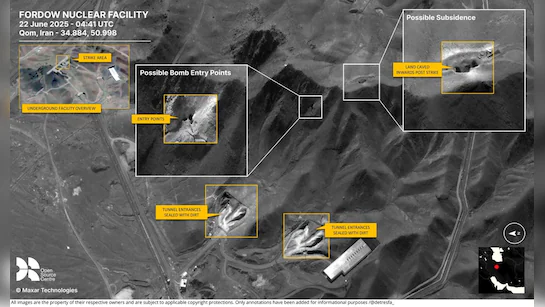
First images of missile impact at Fordow
Photo Credit: Damien Symon
Hassan Abedini, deputy political head of Iran’s state broadcaster, said Iran had evacuated the three sites some time ago. “The enriched uranium reserves had been transferred from the nuclear centres and there are no materials left there that, if targeted, would cause radiation and be harmful to our compatriots”, according to Reuters.
On June 20th, the US president sought a two-week deadline to decide whether or not to get involved in the Middle East crisis. However, a day later, heavy B-2 bombers were seen heading towards their target.
The next day, Trump said that the US military has carried out a “very successful attack” on three Iranian nuclear sites, including the underground uranium enrichment facility at Fordow. “We have completed our very successful attack on the three Nuclear sites in Iran, including Fordow, Natanz, and Esfahan,” Trump said in a post on his Truth Social platform.
The entire Fordow plant is underneath the mountain site; there are no overt structures or chimneys because the whole nuclear reactor is underground, which is why the United States had to penetrate into it with bunker-buster weaponry.
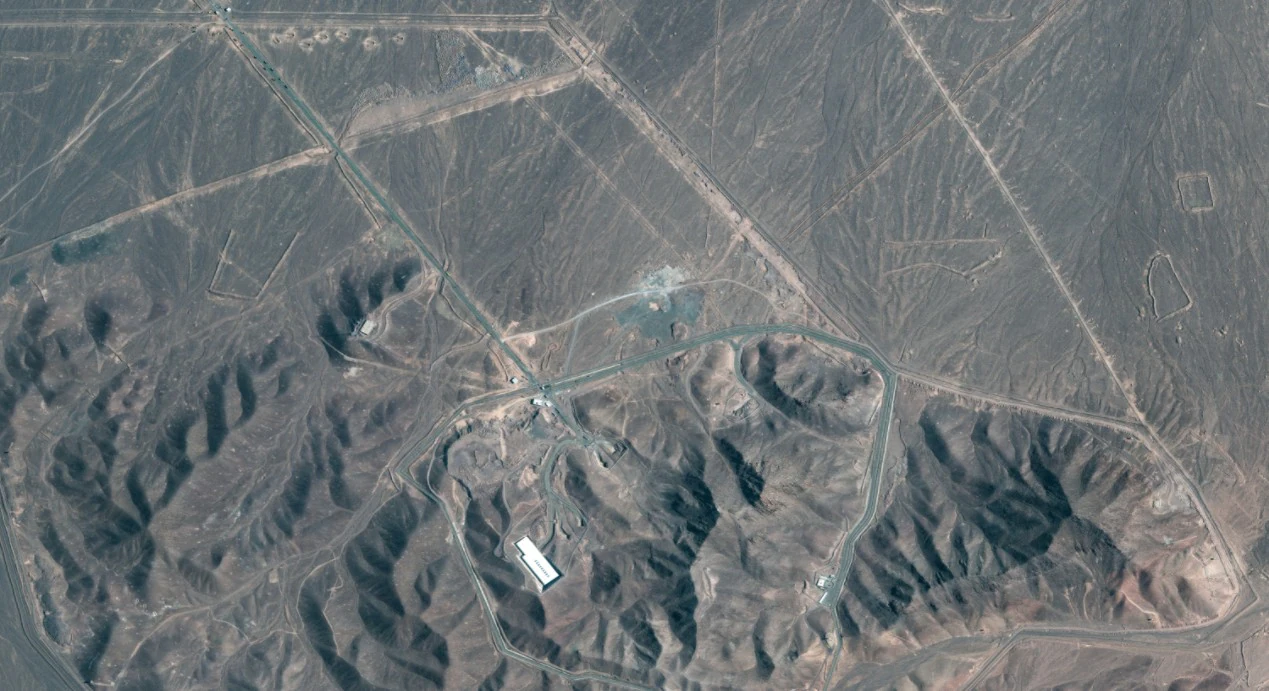
Photo Credit: Satellite image ©2025 Maxar Technologies (See high resolution image here)

America’s bunker-busting bomb is the only weapon capable of destroying Iran’s buried nuclear facilities. The GBU-57 is a 30,000-pound (13,607 kg) warhead capable of penetrating 200 feet (61 meters) underground before exploding. The design for the bomb began during the early 2000s, and it can even navigate through rock or concrete.
Trump also told Fox News that six bunker-buster bombs were dropped on Fordow, while 30 Tomahawk missiles were fired against other nuclear sites.
Per Reuters, given its fortification, it will likely be days, if not longer, before the impact of the strikes is known.
The International Atomic Energy Agency (IAEA), says that Iran has enriched Uranium up to 83.7 per cent purity at the Fordow facility. A total of 90 per cent purity is needed to make nuclear bombs. source