

Burned Wires, Toxic Fumes — and a $3,000 Bill if they want it fixed: An Elderly Couple’s Generator “Warranty” That Wasn’t
A Canoga Park contractor sold a Santa Clarita-area couple, ages 86 and 79, a whole-property backup power system with a five-year warranty. Three years later, one of its transfer switches is scorching wire insulation and filling their garage with acrid fumes — and documents reviewed by Good Shepherd Media show the installer first misstated the warranty, then blamed a light fixture, and now wants the couple to pay for the repair.
The garage should smell like sawdust and machine oil. Instead, on warm afternoons, it smells like burning plastic — a suffocating, chemical odor the homeowners say lingers in the air and makes it hard to breathe. The source is not a mystery. It is one of two automatic transfer switches installed roughly three years ago by Elite Generators Inc. of Canoga Park as part of a Generac 48-kilowatt standby power system, a project the couple — he is 86, she is 79 — commissioned chiefly to keep aquarium life-support systems running around the clock.
Photographs and video reviewed by Good Shepherd Media show heavy-gauge conductor insulation at the switch visibly charred and deformed. The homeowners report the switch’s metal enclosure runs hot to the touch. A few feet away, its twin — an identical switch installed by the same company on the same day — runs cool.
The difference between the two switches, and who should pay to fix the damaged one, is now the center of a dispute that touches on electrical code requirements, a disappearing-and-reappearing warranty, and California’s protections for elderly consumers.
One Switch Carries Almost Everything. The Other Carries Almost Nothing.
According to documents and site records reviewed by this publication, the installation routed two heavily loaded 200-amp electrical panels — one serving the main residence with two central air-conditioning units, electric ovens, and all interior and exterior lighting; the other serving a detached garage apartment with two more air-conditioning units, a welder circuit, nine heated aquariums, and computer equipment — through a single automatic transfer switch. The second transfer switch was wired to one panel whose typical draw, the homeowners say, is about a quarter of one amp.
A 48-kilowatt generator at 240 volts produces about 200 amps (48,000 W ÷ 240 V = 200 A) — roughly the capacity of one standard 200-amp residential panel. The National Electrical Code’s rules for optional standby systems (Article 702) require that when transfer equipment operates automatically, the standby source must be able to carry the full load transferred to it — or the installation must include equipment that automatically manages the load. Generac itself sells that equipment: its Smart Management Modules exist specifically to keep large loads from overloading a home standby generator.
Wire insulation does not char under a properly calculated load. Overheated conductors and burned sheathing are classic signatures of sustained overload — and according to national fire data, electrical wire and cable insulation is the item most often first ignited in residential electrical fires, which claim on the order of 24,000 homes a year in the United States.
The homeowners allege no load calculation was ever performed and no load-management modules were ever installed. They say the generator itself can be heard laboring during test runs on hot days when the air conditioning is on — a symptom, in their view, of a system asked to carry more than it can supply.
“I Don’t Know Why It Was Wired This Way”
On June 13, 2026, the company’s owner personally inspected the switch, according to the homeowners, observed the heat and the fumes, and said the unit would be removed and replaced under warranty through Generac. On July 1, two of the company’s technicians returned to bypass and remove it. In a recording lawfully made on the property — which is conspicuously posted with recording notices — one of the company’s own technicians, shown the scorched wiring and the cool, nearly unloaded second switch, said he did not know why the system had been wired that way. Company personnel then proposed moving part of the load from the hot switch to the cool one.
That proposal matters. Loads are not shuffled between switches to fix a defective part. They are rebalanced to fix an overload.
The Three-Year Warranty That Was Actually Five
When the couple pressed for the promised warranty repair, a company representative told them by email that their warranty had been for three years and had expired, according to correspondence reviewed by Good Shepherd Media. The couple produced the company’s own sales email promising a five-year warranty. The company checked its records and conceded, in writing, that the couple was right.
Then came a second reversal. The company reported that Generac would not honor the warranty on the part. Generac’s published five-year transfer-switch warranty covers defects in materials and workmanship — but it expressly excludes failures caused by incorrect installation, incorrect sizing, or operation with loads other than those Generac specifies. The homeowners say the company relayed that Generac’s stated basis for declining coverage is improper installation or assembly by the installer. Generac was asked to confirm or clarify that account; its response is noted below.
In other words: by the homeowners’ account, the manufacturer looked at the failure and pointed at the installation. The installer’s response was to send the couple a bill — approximately $3,000 in parts and labor to repair the switch and wiring.
Blaming a Light Bulb
In written correspondence reviewed by this publication, the company offered an explanation for the failure: a 720-watt LED fixture in the garage. The arithmetic does not cooperate. The property’s two such fixtures draw 1,440 watts combined — about three percent of the 48,000-watt system’s rating — and the homeowners say only one is ever on at a time. A single 5-ton air conditioner on the same switch draws more than both fixtures together, three times over. The fixtures predate the installation by years; they were part of the load the company was hired to serve.
The explanation also cuts against the company in a subtler way: to blame a specific appliance is to claim knowledge of the property’s specific loads. If the installer knows the loads now, it knew or could have known them when it designed the system — which is precisely when the electrical code required them to be calculated.
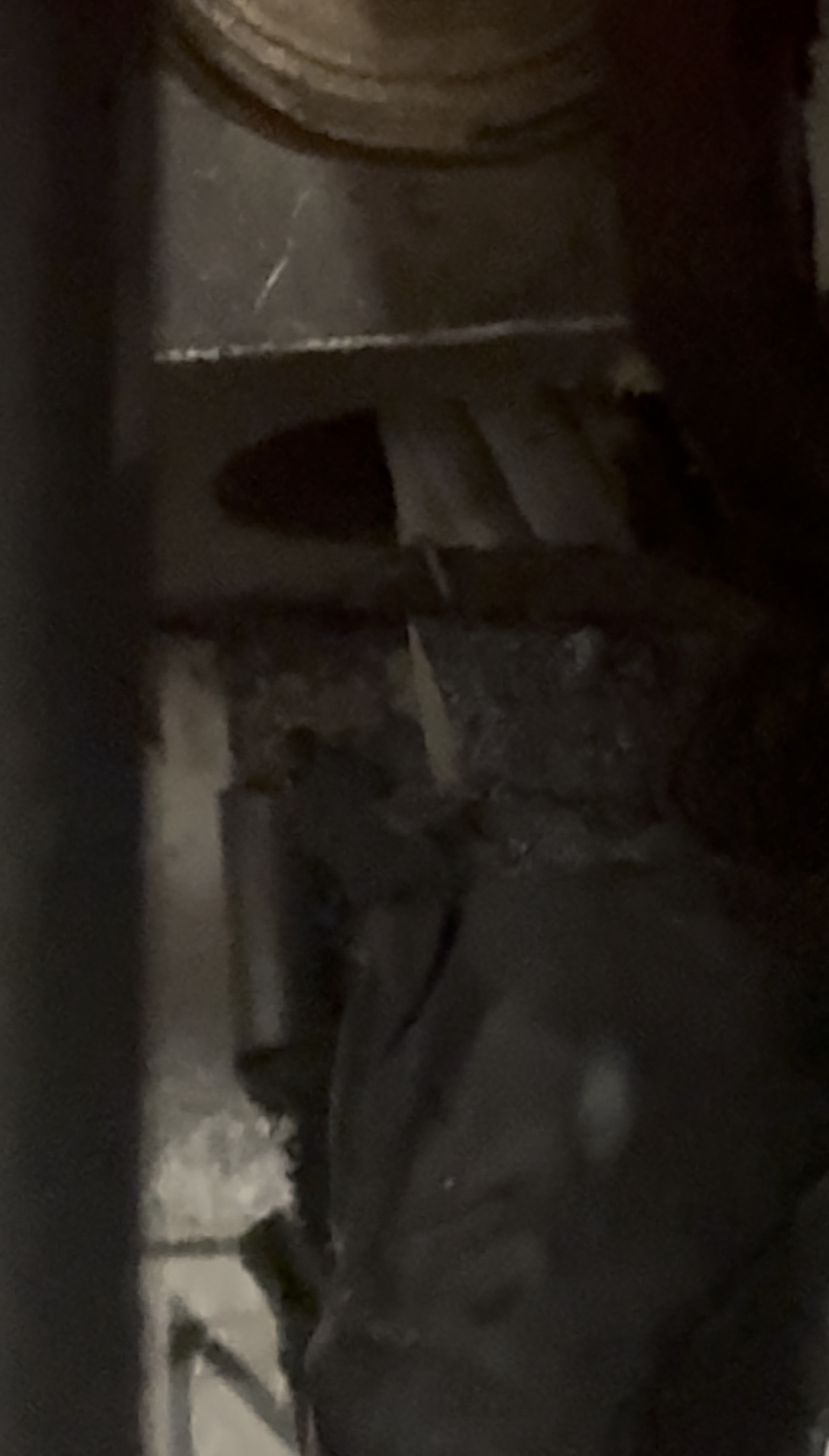
Charred conductor sheathing at the transfer switch serving two 200-amp panels. Photo: documents reviewed by Good Shepherd Media.
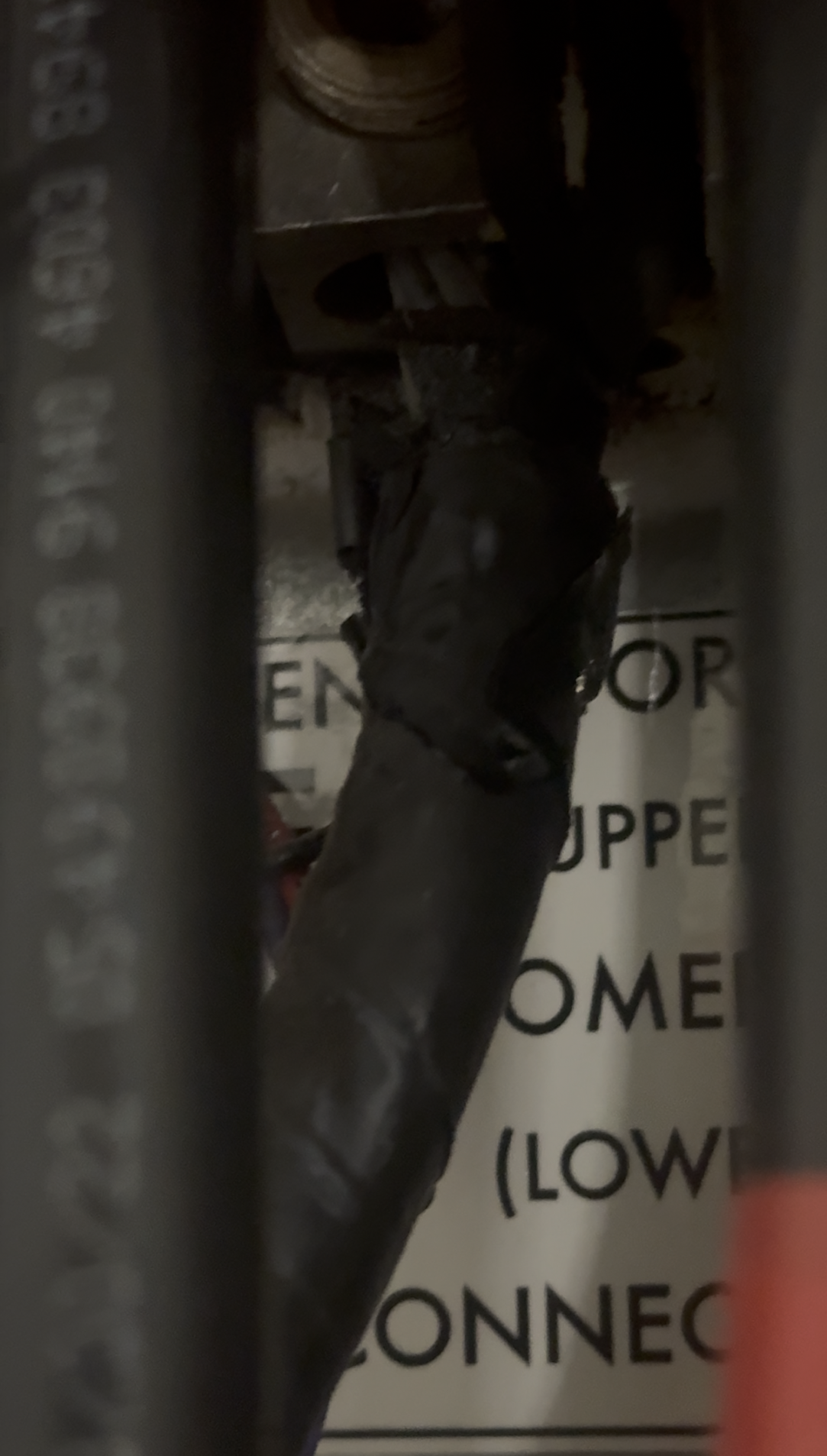
Heat damage inside the enclosure. The identical switch a few feet away, carrying a fraction of one amp, shows no damage.
Video documentation of the switch condition, reviewed by Good Shepherd Media.
The Company
Elite Generators Inc. holds an active California electrical contractor’s license (CSLB License #467587, expiring July 31, 2026, per state licensing records reviewed for this report), is incorporated in California, and describes itself publicly as a Generac dealer with factory-trained technicians. Generac’s own consumer guidance recommends that transfer-switch installations be performed by its authorized dealers — installers held out to the public as expert in exactly the sizing and transfer-switch work at issue here. No disciplinary actions against the company were disclosed in the licensing records reviewed as of publication.
What California Law Says
Good Shepherd Media takes no position on how a regulator or court would rule. But the legal framework a reader — or an authority — could apply is not obscure. California’s Contractors State License Law makes a willful departure from accepted trade standards, and willful disregard of state and local building codes, grounds for discipline (Bus. & Prof. Code §§ 7109, 7110) — and passing a municipal inspection does not excuse code-noncompliant work. California’s Elder Abuse and Dependent Adult Civil Protection Act separately provides that taking or retaining an elder’s property is “for a wrongful use” when the taker knew or should have known the conduct was likely to harm the elder (Welf. & Inst. Code § 15610.30) — a framework courts have applied to businesses that withhold what a contract owes to a senior. Whether demanding $3,000 from an 86-year-old and a 79-year-old to repair damage a manufacturer reportedly attributed to the installer fits that framework is a question the couple’s pending demand puts squarely on the table.
Elite Generators INC is located at 7921 Canoga Ave # G, Canoga Park, CA 91304
Yelp Reviews seem to state similar grievances

Verify the license at cslb.ca.gov before hiring, and keep every email — warranty promises in writing are enforceable promises. Ask for the load calculation on any generator project; a competent installer can show you the math. Photograph problems early, and get an independent electrician’s opinion before accepting a contractor’s explanation. Complaints are free: the Contractors State License Board accepts complaints against licensees, and its Senior Scam Stopper program exists because contractors targeting older homeowners is common enough to need one. Suspected financial abuse of an elder can be reported to Adult Protective Services and the county District Attorney.
Requests for Comment
Good Shepherd Media contacted Elite Generators Inc. with detailed written questions about the load allocation, the absence of a documented load calculation, the warranty correspondence, the grow-light explanation, and the $3,000 charge. Generac Power Systems was asked to confirm the basis on which warranty coverage was declined. As of [PUBLICATION DATE], [neither company had responded / responses are included below]. This article will be updated with any response received.
Meanwhile, the switch is still in the garage. The wire casing is still burned. And on warm days, the couple says, the smell still comes back.
Good Shepherd Media reports on matters of public concern affecting consumers in the Santa Clarita Valley and beyond. This report is based on documents, photographs, video, correspondence, public licensing records, and published technical standards (NEC Article 702; UL 1008; NFPA/USFA fire data) reviewed by our investigative team. Statements attributed to the homeowners or to recordings are allegations of the parties, reported as such. Elite Generators Inc. and Generac Power Systems were asked for comment.
© 2026 Good News Media LLC | Good News Media Investigative Reporters